
Why Display Military Badges: Honouring Service in the UK
More than five million military badges are currently displayed by British service members and veterans across the United Kingdom. For those who served in the British Army, these badges are not only marks of achievement but also reminders of shared heritage and dedication. Every emblem carries layers of history and personal meaning, connecting individuals to regimental traditions and fostering pride. Discover how these symbols reinforce unity, tell your story, and help honor your British military journey.
Table of Contents
- What Military Badges Symbolise for British Forces
- Main Types of Military Badges Displayed
- Eligibility, Entitlement and Badge Award Process
- Traditions and Etiquette of Badge Display
- Practical Benefits and Common Pitfalls
Key Takeaways
| Point | Details |
|---|---|
| Symbolism of Badges | Military badges in the UK embody identity, heritage, and a sense of belonging among service personnel. |
| Categories of Badges | Badges signify achievements, recognised through specific categories like gallantry awards, campaign medals, and qualification badges. |
| Awarding Process | Earning badges involves strict eligibility criteria and a formal application process to ensure genuine recognition of service. |
| Etiquette and Maintenance | Proper display and maintenance of badges are essential for upholding military traditions and reflecting personal pride. |
What Military Badges Symbolise for British Forces
In the United Kingdom, military badges represent far more than simple decorative emblems. They are profound symbols of identity, heritage, and collective pride for British Armed Forces personnel. Regimental badges encapsulate centuries of military tradition, connecting contemporary service members to their historical roots and unit lineage.
Each badge tells a complex narrative about the specific regiment, battalion, or corps. These intricate designs communicate a soldier’s geographic origins, battle honours, and regimental affiliations through carefully crafted heraldic elements. The badge becomes a visual language that speaks volumes about an individual’s military journey, commemorating not just personal achievements but collective sacrifices and historical moments that have shaped British military identity.
Beyond their aesthetic value, military badges serve critical psychological functions within military culture. They foster a powerful sense of belonging and esprit de corps by creating immediate visual recognition and mutual respect among service personnel. A badge instantly communicates shared experiences, training, and commitment to military service. Whether displayed on a dress uniform, blazer, or regimental memorabilia, these symbols represent an unbroken connection between past, present, and future generations of British military personnel.
Pro Tip - Badge Understanding: Learn the specific symbolism of your regimental badge by researching its unique heraldic design and historical background, which will deepen your appreciation of your unit’s proud military heritage.
Main Types of Military Badges Displayed
British military badges represent a complex system of recognition that spans multiple categories, each with profound significance within the Armed Forces. Awards and decorations encompass a wide range of badge types that meticulously document a service member’s career, achievements, and contributions to military service.
The primary categories of military badges include campaign and operational service medals, which commemorate specific military engagements and deployments. Gallantry awards recognise extraordinary bravery and heroism, while long service badges honour commitment and sustained dedication to military service. Regimental and branch insignia provide immediate visual identification of a soldier’s unit and specialisation, creating a powerful sense of belonging and institutional pride.
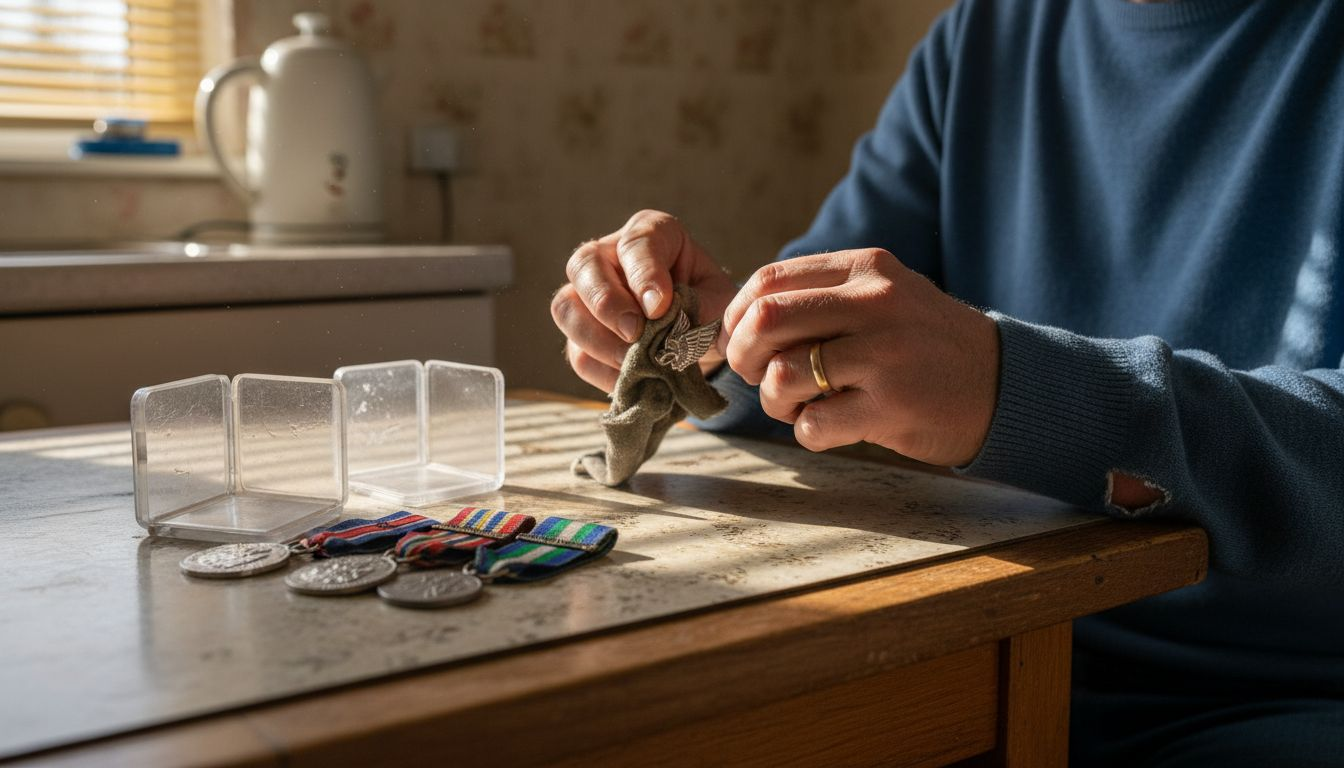
Additionally, military badges include qualification badges that highlight specific skills and expertise, such as marksmanship, parachute training, or technical specialisations. These detailed insignia not only recognise individual accomplishments but also serve as a motivation for professional development within the military hierarchy. The precise arrangement and presentation of these badges follow strict protocols, reflecting the disciplined nature of military traditions and the deep respect for institutional history.
The following table summarises the main categories of British military badges and their essential significance:
| Badge Category | Core Purpose | Common Criteria |
|---|---|---|
| Campaign Medals | Recognise involvement in specific operations | Participation in designated campaigns |
| Gallantry Awards | Honour acts of bravery and heroism | Exceptional courage in military action |
| Long Service Badges | Reward sustained commitment | Length of service milestones |
| Regimental Insignia | Identify unit and specialisation | Official assignment to a regiment |
| Qualification Badges | Certify specific skills or training | Successful completion of specialised courses |
Pro Tip - Badge Knowledge: Study the precise meaning and placement of military badges to understand the rich narrative of service and achievement they represent, which can provide profound insights into a service member’s military journey.
Eligibility, Entitlement and Badge Award Process
The process of earning and receiving military badges in the United Kingdom follows a meticulous and structured approach governed by official regulations. Medal eligibility criteria are carefully defined by the Ministry of Defence, ensuring that each badge represents genuine service, achievement, or operational participation.
Eligibility for military badges typically encompasses several key dimensions. Service duration plays a critical role, with many badges requiring minimum periods of service or deployment. Operational participation is another crucial factor, where badges are awarded for specific military campaigns, missions, or theatres of conflict. Individual achievements, such as exceptional performance, acts of bravery, or specialised skills, can also trigger badge entitlement. These criteria ensure that each badge carries significant meaning and represents genuine military contribution.
The award process itself involves multiple stages of verification and documentation. Service members must typically submit detailed applications through their chain of command, providing evidence of their service, achievements, or operational deployments. Some badges are automatically processed upon discharge, while others require more extensive documentation and review. Posthumous awards and replacement badges also follow specific procedural guidelines, demonstrating the Ministry of Defence’s commitment to recognising and preserving military service records with the utmost respect and precision.
Pro Tip - Badge Application: Maintain comprehensive and organised service documentation throughout your military career, as this will significantly streamline the process of applying for and receiving well-deserved military badges and recognition.
Traditions and Etiquette of Badge Display
Military badge display in the United Kingdom represents a profound tradition deeply rooted in historical protocol and institutional respect. Regimental badge traditions reflect a meticulous approach to honouring service, with each placement and presentation carrying significant meaning beyond mere decoration.
The etiquette surrounding badge wear is governed by intricate rules that vary across different military branches and units. Formal occasions demand precise positioning and strict adherence to hierarchical guidelines, with badges arranged in a specific order reflecting service length, operational experience, and individual achievements. The vertical and horizontal placement of badges communicates a silent narrative about a service member’s military journey, with each insignia carefully positioned to demonstrate respect for institutional heritage.
Military badge protocols extend beyond simple visual representation, embodying a complex system of honour and recognition. Different uniforms require distinct badge arrangements, with dress uniforms, service dress, and ceremonial attire each having unique specifications. The condition of badges matters equally, with immaculate presentation considered a reflection of personal pride and professional standards. Veteran organisations and regimental associations maintain these traditions, ensuring that the symbolism and dignity of military service continue to be respected and understood by current and future generations.
Pro Tip - Badge Preservation: Regularly clean and maintain your military badges using specialised preservation techniques, ensuring they remain pristine and continue to represent your service with the highest level of dignity and respect.
Practical Benefits and Common Pitfalls
Displaying military badges offers numerous significant advantages for service members and veterans in the United Kingdom. Regimental badge recognition provides a powerful mechanism for communicating personal achievements, unit identity, and professional credibility across military and civilian contexts.
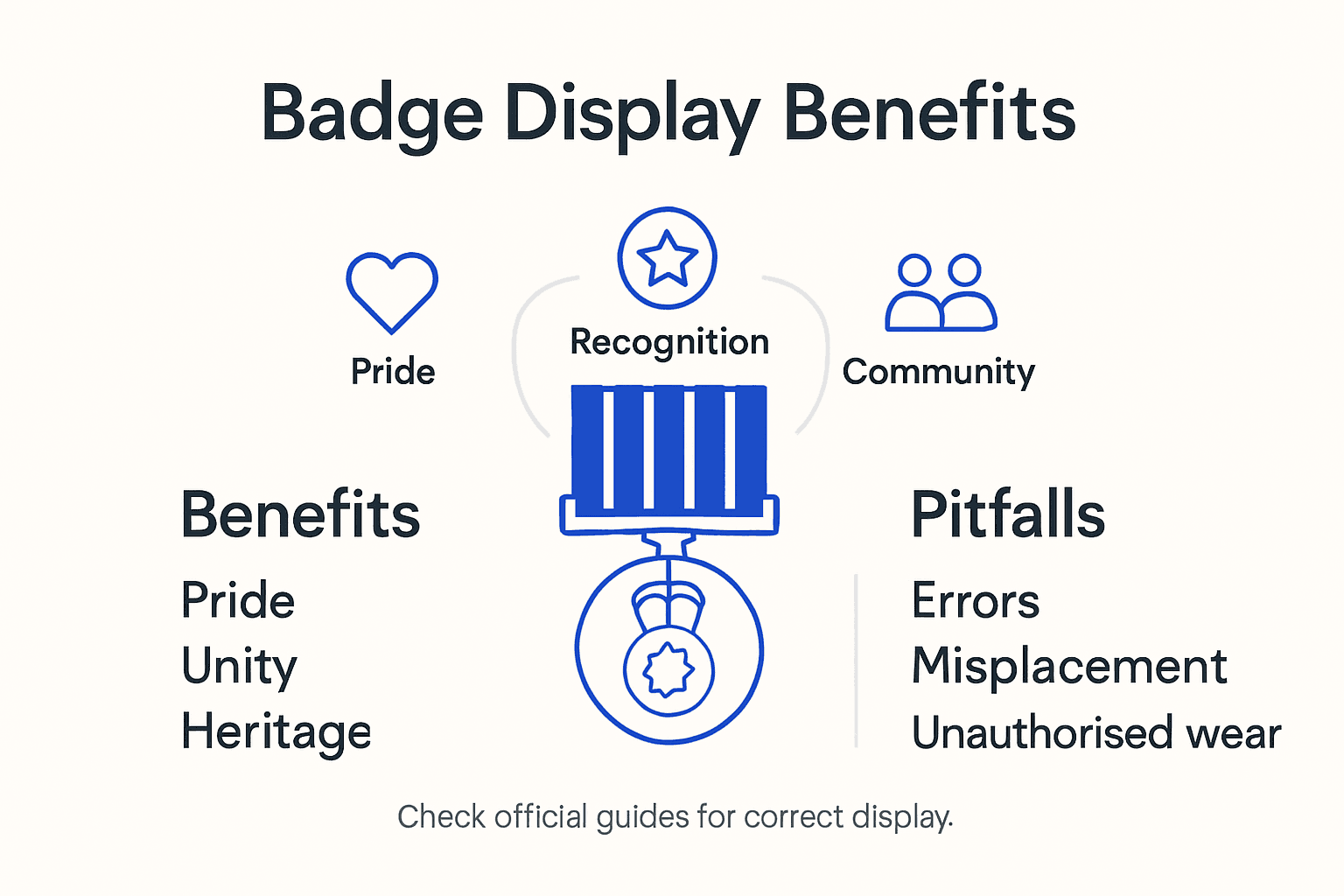
The practical benefits extend beyond mere visual representation. Unit cohesion is substantially strengthened through badge display, creating an immediate sense of shared experience and mutual respect among service personnel. These insignia serve as tangible representations of professional accomplishments, potentially opening networking opportunities and demonstrating commitment to potential employers. However, the advantages come with critical responsibilities, including maintaining absolute accuracy in badge presentation and understanding the precise protocols governing their display.
Navigating the potential pitfalls requires meticulous attention to detail. Common mistakes include wearing unauthorised badges, incorrect placement, or displaying outdated insignia, which can inadvertently undermine one’s professional reputation. Service members must remain vigilant about the condition of their badges, ensuring they are immaculately maintained and accurately represent their service history. Improper badge display not only risks technical breaches of military etiquette but can also be perceived as a lack of respect for the institution’s rich traditions and the achievements they commemorate.
Below is a comparison of correct and incorrect badge display practices to help avoid common mistakes:
| Display Practice | Correct Approach | Typical Error |
|---|---|---|
| Badge Placement | Follows strict official order | Random or incorrect positioning |
| Badge Condition | Immaculately clean and maintained | Worn, tarnished, or damaged insignia |
| Badge Authorisation | Only entitled insignia worn | Use of unauthorised or outdated badges |
Pro Tip - Badge Verification: Regularly consult official military reference guides and seek guidance from regimental associations to ensure your badge display remains accurate, compliant, and professionally presented.
Honour Your Military Service with Authentic Badges and Gifts
Recognising and displaying military badges is more than tradition it is a powerful symbol of identity, achievement and belonging for every serving member and veteran of the British Armed Forces. If you want to celebrate your service or that of a loved one with respect and pride explore our carefully curated Gifts and Personalised Presentation for Veteran and Serving UK Army. These items are crafted to reflect the rich heritage and traditions that military badges represent.
Take this opportunity to honour your military journey with authentic presentation products from The Regimental Store Ltd. Whether for ceremonial occasions or personal keepsakes, our collection helps you preserve and display your badge with dignity. Start your selection today and embrace the legacy that your badge represents.
Frequently Asked Questions
What do military badges symbolise for British Forces?
Military badges represent identity, heritage, and pride within the British Armed Forces, connecting service members to their regimental history and collective sacrifices.
How are military badges awarded in the UK?
Military badges are awarded based on eligibility criteria, such as service duration, operational participation, and individual achievements, following a structured application process.
What are the different types of military badges?
The main types of military badges include campaign medals, gallantry awards, long service badges, regimental insignia, and qualification badges, each serving a specific purpose in recognising achievements and service.
What are the etiquette and traditions surrounding the display of military badges?
Display etiquette requires precise positioning and adherence to specific protocols, reflecting service length, operational achievements, and must be maintained in pristine condition to honour the military traditions they represent.
Recommended
- Role of Presentation in Military: Complete Guide – The Regimental Store Ltd
- Military Gifts Eligibility: Complete Guide for the UK – The Regimental Store Ltd
- Complete Guide to the Meaning of Veteran Memorabilia – The Regimental Store Ltd
- 7 Best Veterans Keepsakes Every Hero Will Cherish – The Regimental Store Ltd