
Complete Guide to Why Collect Military Souvenirs
Every british family has at least one treasured item passed down from a relative who served. These objects might look ordinary, yet they hold immense value for collectors and history lovers alike. More than 60 percent of military collectors in Britain say personal connection drives their passion. Exploring military souvenirs reveals not only their physical beauty, but also the rich stories, pride, and sacrifices they represent through generations.
Table of Contents
- What Are Military Souvenirs And Their Meaning
- Types Of Military Souvenirs Collected In Britain
- Historical, Emotional, And Investment Value Explained
- Legal Framework For Collecting In The United Kingdom
- Common Pitfalls And Responsible Collecting Practices
Key Takeaways
| Point | Details |
|---|---|
| Significance of Military Souvenirs | Military souvenirs serve as historical markers that connect present generations with past military narratives and provide emotional resonance related to national sacrifice. |
| Diverse Collectibles | Collectors in Britain seek a wide range of military artefacts, including medals, uniforms, and regimental badges, each representing unique historical stories. |
| Value of Souvenirs | Military souvenirs encapsulate historical, emotional, and investment values, making them significant for both personal connection and potential financial appreciation. |
| Responsible Collecting | Collectors must adhere to legal frameworks and ethical considerations, ensuring proper provenance and conservation of items while respecting historical narratives. |
What Are Military Souvenirs And Their Meaning
Military souvenirs are tangible artefacts and commemorative items that capture the historical essence, personal experiences, and collective memories of military service. These treasured objects range from medals and uniforms to small personal keepsakes that represent individual or collective military experiences. Whether inherited from a family member or carefully collected over time, military souvenirs serve as powerful historical markers connecting present generations with past military narratives.
One of the most poignant examples of military commemoration is the remembrance poppy, a symbolic artificial flower worn to honour military personnel who have sacrificed their lives during wartime. This tradition, particularly strong in Commonwealth countries like the United Kingdom, demonstrates how military souvenirs transcend mere objects and become profound symbols of national memory and respect. Another fascinating historical example is the Princess Mary Christmas gift box, a brass tin distributed to British armed forces during World War I, which represents more than just a gift - it symbolises morale, appreciation, and solidarity during challenging times.
Military souvenirs capture multiple dimensions of military history: personal stories, institutional memory, technological evolution, and emotional connections. They might include:
- Service medals and decorations
- Regimental badges and patches
- Photographs and personal letters
- Military equipment and replica weapons
- Commemorative coins and insignia
These items are not simply collected for their material value, but for their deep emotional and historical significance. They represent individual and collective sacrifices, tell stories of bravery, and preserve memories that might otherwise be forgotten. For many collectors, military souvenirs are a form of living history - tangible links to remarkable stories of courage, service, and national heritage.
Types Of Military Souvenirs Collected In Britain
British military souvenir collectors are passionate about preserving historical artefacts that represent the rich military heritage of the United Kingdom. These collections span diverse periods and encompass a wide range of items that reflect the country’s extensive military history. From ancient archaeological finds to modern military memorabilia, British collectors seek out pieces that tell compelling stories of national service and sacrifice.
Historical archaeological items form a fascinating subset of military souvenirs in Britain. For instance, Dragonesque brooches represent an intriguing category of Romano-British military artefacts dating between AD 75 and 175, which are highly prized by collectors interested in ancient military history. Another popular collectible category includes military figurines, with Britains’ Deetail toy soldiers from the 1970s and 1980s being particularly sought after by enthusiasts who appreciate their detailed design and historical significance.
The most common types of military souvenirs collected in Britain include:
- Service medals and decorations from various conflicts
- Regimental badges and patches
- Military uniforms and insignia
- Personal equipment and kit items
- Photographs and documentary evidence
- Militaria from specific historical periods
- Commemorative items and presentation pieces
Collectors are often driven by deep historical interest, personal connections to military service, or a desire to preserve important national narratives. Each item tells a unique story, whether it represents a specific battle, a particular regiment, or an individual soldier’s experience. The military memorabilia guide provides deeper insights into the nuanced world of British military souvenir collecting, highlighting the cultural significance of these treasured historical objects.
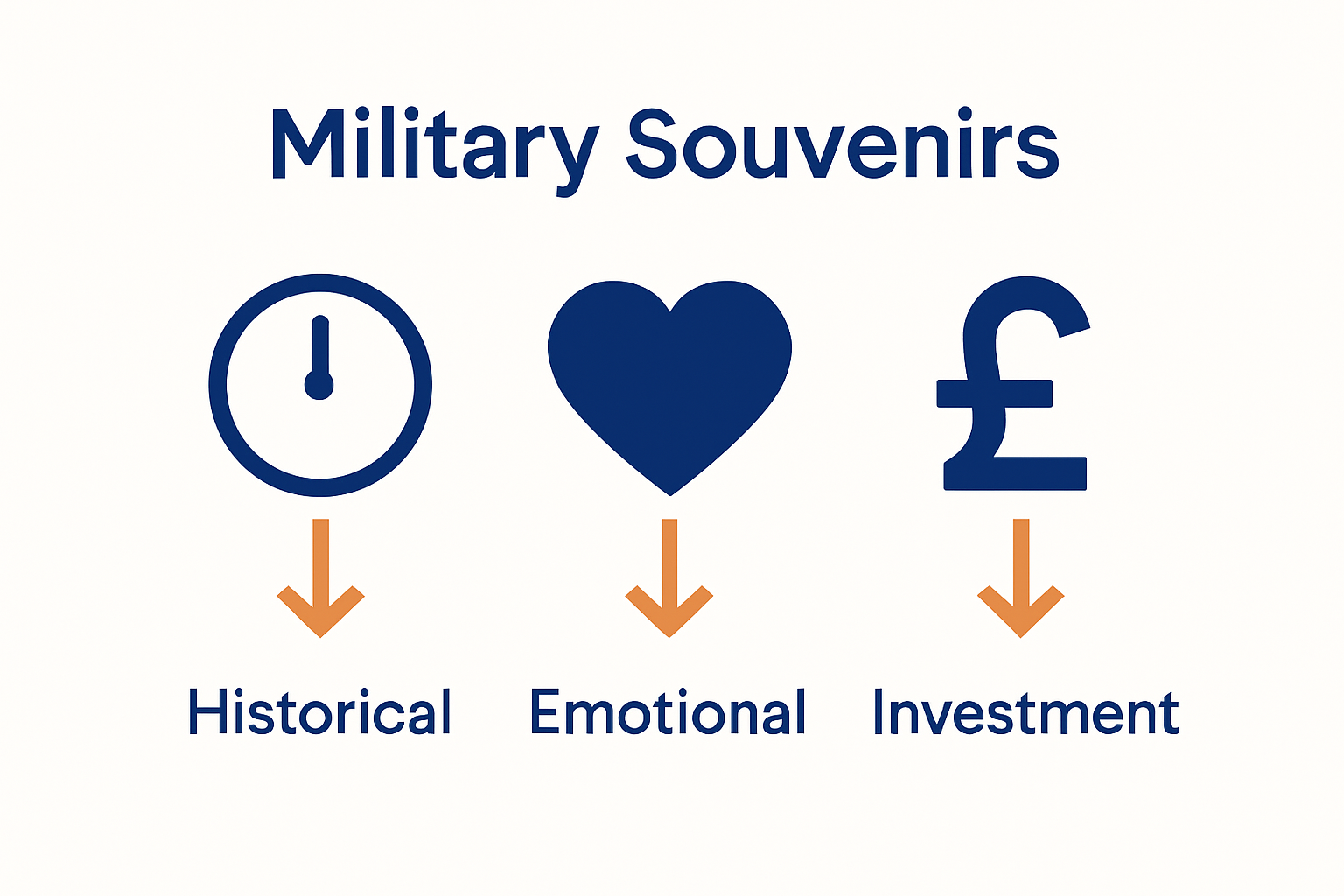
Historical, Emotional, And Investment Value Explained
Military souvenirs represent far more than mere collectible objects; they are multifaceted artefacts that encapsulate historical narratives, emotional connections, and potential financial investments. Each piece tells a profound story, bridging generations and preserving memories of extraordinary human experiences through tangible historical evidence.

The emotional resonance of military souvenirs is particularly powerful. Take, for instance, the remembrance poppy, which transcends its physical form to become a deeply symbolic representation of sacrifice and national memory. Similarly, the Princess Mary Christmas gift box from World War I represents more than a simple gift - it embodies the emotional support and appreciation for soldiers during challenging times, serving as a poignant reminder of human compassion amidst conflict.
The value of military souvenirs can be categorised into three key dimensions:
- Historical Value: Documenting specific periods, conflicts, and military technologies
- Emotional Value: Preserving personal and collective memories
- Investment Value: Potential financial appreciation over time
Serious collectors understand that military souvenirs are not just passive objects, but active repositories of national heritage. Rare items can appreciate significantly in value, especially those with documented provenance, unique historical significance, or connection to pivotal military moments. The symbolism of military gifts offers deeper insights into understanding the nuanced worth of these remarkable historical artefacts.
Legal Framework For Collecting In The United Kingdom
Collecting military souvenirs in the United Kingdom involves navigating a complex legal landscape that balances historical preservation with public safety regulations. Collectors must be acutely aware of various legislative requirements that govern the acquisition, possession, and display of military memorabilia, ensuring their passion remains both legally compliant and ethically responsible.
Particular attention must be paid to items that might involve potentially restricted materials. The firearms licensing guidance provides critical framework for collectors, especially those interested in military weapons, deactivated firearms, or antique military equipment. This regulatory environment requires collectors to obtain appropriate permissions, maintain proper documentation, and adhere to strict guidelines regarding storage, transportation, and potential transfer of military artefacts.
Key legal considerations for military souvenir collectors include:
- Compliance with firearms and weapons regulations
- Verification of item provenance and historical authenticity
- Understanding restrictions on certain historical artefacts
- Adherence to export and import regulations
- Proper documentation and record-keeping
- Respect for cultural heritage preservation laws
The British Army gift traditions guide provides additional context for understanding the nuanced legal landscape surrounding military memorabilia collection. Responsible collectors recognise that their hobby is not just about acquiring objects, but about preserving historical narratives while maintaining strict legal and ethical standards.
Common Pitfalls And Responsible Collecting Practices
Military souvenir collecting is a nuanced hobby that requires careful navigation of historical, ethical, and legal considerations. Enthusiasts must develop a sophisticated approach that goes beyond simple acquisition, focusing instead on responsible preservation, authentic documentation, and respectful engagement with historical narratives.
The most significant pitfalls in military memorabilia collecting often stem from insufficient research, impulsive purchasing, and a lack of understanding about provenance and authenticity. Collectors can inadvertently purchase fraudulent items, damage fragile historical artefacts through improper handling, or unintentionally violate legal restrictions. Professional collectors recommend thorough verification processes, including expert authentication, detailed historical research, and careful condition assessment before making any acquisitions.
Key responsible collecting practices include:
- Conducting comprehensive historical research
- Verifying item authenticity through expert consultation
- Maintaining proper conservation and storage conditions
- Documenting provenance meticulously
- Respecting cultural and legal boundaries
- Avoiding items with questionable ethical origins
- Prioritising preservation over monetary value
The meaning of veteran memorabilia guide offers deeper insights into understanding the profound significance behind military souvenirs. Ultimately, responsible collecting is about honoring historical narratives, preserving cultural heritage, and maintaining the integrity of these important historical artefacts for future generations to learn from and appreciate.
Discover Meaningful Military Souvenirs That Honour History and Heritage
Collecting military souvenirs is much more than gathering objects. It is about preserving the emotional and historical significance behind each piece. If you are seeking authentic British military gifts and personalised presentation items that celebrate service and sacrifice, our Featured Gift Ideas provide carefully selected memorabilia that reflect true heritage.
Explore our range today at The Regimental Store Ltd to find exceptional keepsakes and presentation awards that connect you with the stories of bravery and national pride. Whether you appreciate the craftsmanship behind the REME Shop for gifts and personalised presentation awards or the distinctive offerings at the Royal Artillery Shop for Gifts and personalised presentation awards, now is the perfect time to choose meaningful tokens that honour service while ensuring your collection or gift stands with authenticity and respect.
Frequently Asked Questions
What are military souvenirs and why are they significant?
Military souvenirs are artefacts that capture the historical essence and personal experiences of military service. They serve as powerful historical markers connecting present generations with past military narratives and represent individual and collective sacrifices.
What types of military souvenirs are commonly collected?
Common military souvenirs include service medals, regimental badges, military uniforms, personal letters, photographs, and commemorative coins. Each item reflects a unique story related to specific battles or individual soldiers’ experiences.
How can I determine the emotional value of a military souvenir?
The emotional value of a military souvenir is derived from its connection to personal and collective memories. Items like the remembrance poppy or the Princess Mary Christmas gift box evoke deep feelings of sacrifice and appreciation, making them significant beyond their material worth.
What legal considerations should I be aware of when collecting military souvenirs?
Collectors should comply with firearms regulations, verify item provenance, understand restrictions on certain artefacts, and adhere to export/import laws. Proper documentation and respect for cultural heritage preservation laws are also essential for responsible collecting.
Recommended
- 7 Essential Steps for Your Army Memorabilia Checklist – The Regimental Store Ltd
- Complete Guide to Military Memorabilia in the UK – The Regimental Store Ltd
- Complete Guide to the Meaning of Veteran Memorabilia – The Regimental Store Ltd
- Military Gifts: Everything You Need to Know – The Regimental Store Ltd
- Art for Collectors Guide: Expert Insights and Strategies – Eman’s Gallery
- 7 Unique Sports Gift Ideas for Every Enthusiast – FunLifeNow