
What Is a Staff Sergeant? Key Role in UK Forces
Choosing the right recognition for someone with years of service is not always straightforward. For many in the British Armed Forces, the title Staff Sergeant carries weight, signifying both experience and authority within a unit. This senior Non-Commissioned Officer manages personnel, resources, and daily operations, often commanding around 120 soldiers. By understanding the unique duties and leadership responsibilities of a Staff Sergeant, you will gain insight into their rank’s significance and why tailored gifts or acknowledgements matter for military personnel and veterans.
Table of Contents
- Defining A Staff Sergeant In The UK
- Staff Sergeant Vs Colour Sergeant Distinctions
- Key Responsibilities And Daily Duties
- Rank Insignia, Pathways And Progression
- Gifting For Staff Sergeants And Veterans
Key Takeaways
| Point | Details |
|---|---|
| Staff Sergeant Role | A Staff Sergeant is a senior Non-Commissioned Officer in the British Army, responsible for managing around 120 soldiers and significant operational decisions. |
| Insignia Recognition | The distinctive insignia of three chevrons with a crown above signifies the rank’s seniority within the military hierarchy. |
| Responsibilities | Core responsibilities include personnel management, training delivery, and operational planning, serving as a key bridge between enlisted soldiers and commissioned officers. |
| Career Progression | Promotion to Staff Sergeant is a major milestone in a military career, leading to further advancement opportunities towards Warrant Officer roles. |
Defining a Staff Sergeant in the UK
A Staff Sergeant is a senior Non-Commissioned Officer (NCO) rank in the British Army, positioned above the standard Sergeant. This role carries substantial responsibility and authority within the military structure.
The rank represents considerable experience and leadership capability. Staff Sergeants hold senior NCO positions that bridge the gap between enlisted soldiers and commissioned officers, managing personnel and resources with considerable autonomy.
In terms of command scope, a Staff Sergeant typically manages around 120 soldiers or commands a platoon or troop. This makes them responsible for significant numbers of personnel and critical operational decisions.
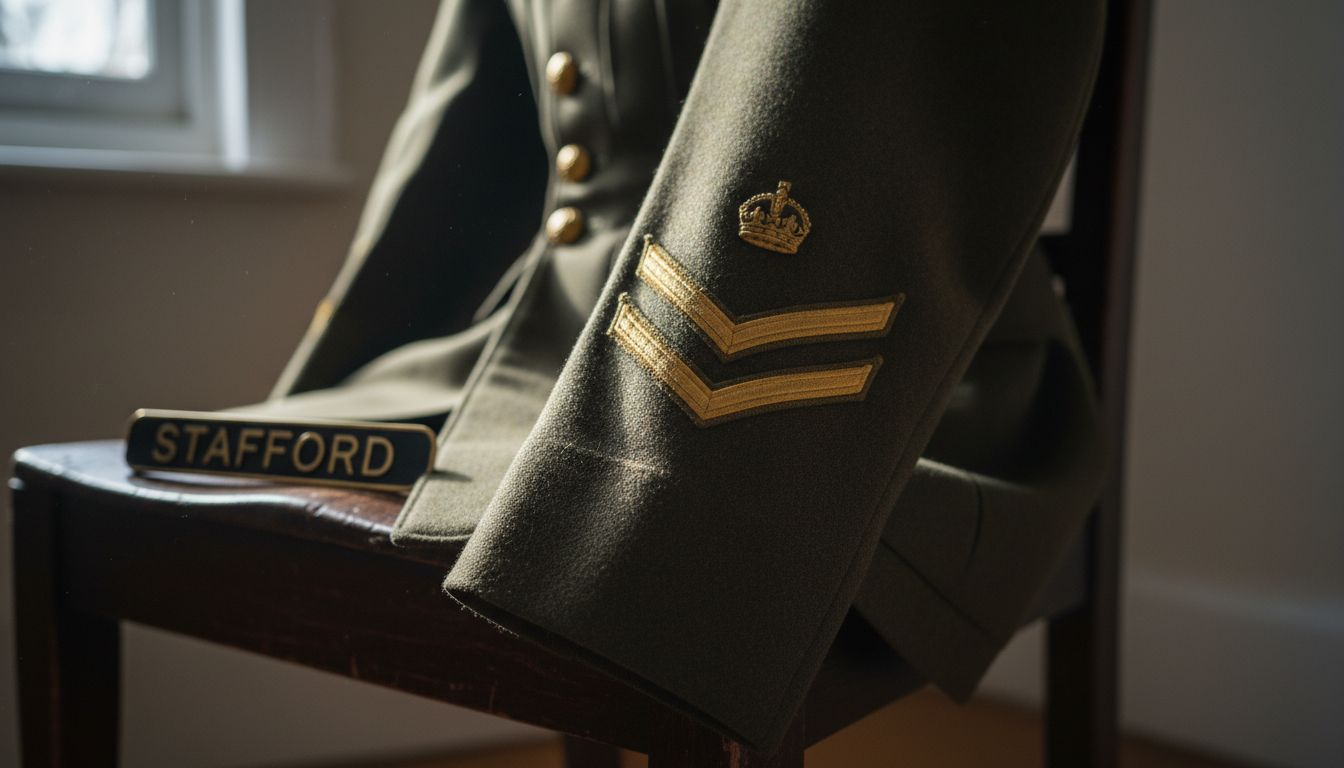
The distinctive insignia features three chevrons with a small crown positioned above them. This visual marker immediately identifies the rank’s seniority within the NCO structure.
Where You’ll Find Staff Sergeants
Staff Sergeants are prevalent across many units within the British Armed Forces:
- Non-infantry units rely heavily on this rank
- Support and specialist roles frequently use Staff Sergeants
- Administrative and logistical positions often hold this rank
- Infantry units have an equivalent rank called Colour Sergeant (performing identical responsibilities)
Staff Sergeants occupy a crucial middle ground—experienced enough to lead troops independently, yet working alongside officers to execute strategic direction.
Key Responsibilities
This senior NCO role encompasses multiple critical areas:
- Personnel management: Direct supervision of squads and sections
- Resource allocation: Managing equipment, supplies, and operational assets
- Training delivery: Mentoring junior ranks and conducting skill development
- Operational planning: Contributing to tactical decisions and execution
- Discipline and standards: Maintaining unit cohesion and military standards
The Rank Within the Hierarchy
Understanding where Staff Sergeant sits within the broader structure matters. They rank above standard Sergeants but below Warrant Officers. This positioning gives them leadership authority without the additional responsibilities that come with commissioned officer status.
If you’re interested in the ranks above this level, Warrant Officers hold distinct senior NCO positions with different career trajectories and responsibilities.
Pro tip: When purchasing gifts for a Staff Sergeant, the three-chevron-and-crown insignia appears on rank slides, shoulder boards, and ceremonial dress—these make meaningful, personalised presentation items that acknowledge their specific rank and achievement.
Staff Sergeant vs Colour Sergeant Distinctions
At first glance, Staff Sergeant and Colour Sergeant sound like completely different ranks. In reality, they are functionally equivalent positions operating in different unit types within the British Army.
The key distinction comes down to tradition and organisational structure rather than actual authority or responsibility level. Colour Sergeants serve as the infantry equivalent of Staff Sergeants, holding identical seniority and command scope.
Both ranks manage around 120 soldiers and oversee critical personnel and resource responsibilities. The roles are interchangeable in terms of what gets done day-to-day.
Where Each Rank Operates
Understanding which units use which rank helps clarify the distinction:
- Staff Sergeants: Non-infantry units, support roles, specialist operations, administrative positions
- Colour Sergeants: Infantry regiments, rifle companies, foot guards, mechanised infantry units
- Royal Marines: Use the Colour Sergeant equivalent, often appointed as Company Quartermaster Sergeant (CQMS)
The unit type determines the title, not the competency level required.
Here’s how Staff Sergeant and Colour Sergeant compare across unit types and duties:
| Aspect | Staff Sergeant (Non-Infantry) | Colour Sergeant (Infantry) |
|---|---|---|
| Typical Units | Engineers, Logistics, Signals | Rifles, Guards, Infantry |
| Ceremonial Role | Limited | Extensive, includes parades |
| Key Title | Staff Sergeant | Colour Sergeant |
| Equivalent Authority | Yes | Yes |
| Special Appointment | Company Quartermaster | Company Quartermaster |
| Insignia Detail | Three chevrons, crown | Three chevrons, crown |
Ceremonial and Tradition Differences
Where these ranks truly diverge is in ceremonial duties. Colour Sergeants in infantry regiments carry additional responsibilities tied to regimental heritage and tradition. These officers often participate in honour guards and formal military ceremonies unique to their regiments.
Staff Sergeants in non-infantry units typically focus on operational and administrative duties without the same ceremonial obligations.
Both ranks represent the pinnacle of the Non-Commissioned Officer structure—experienced leaders trusted with substantial command authority and personnel management.
Similarities That Matter
These positions share far more than they differ:
- Direct leadership of platoons and troops
- Personnel development and training delivery
- Equipment and resource management
- Administrative responsibility and record-keeping
- Bridge role between enlisted soldiers and commissioned officers
- Similar insignia variations reflecting their seniority
Career Progression
Promoting to either rank represents a major career milestone. Both positions sit at the top of the NCO hierarchy, with only Warrant Officer appointments available above them.
Soldiers from infantry backgrounds who transfer to non-infantry roles may find their Colour Sergeant rank redesignated as Staff Sergeant to reflect their new unit structure.
Pro tip: When selecting gifts for either rank, recognise their equivalent status—both deserve recognition of their seniority, whether you’re purchasing rank insignia, ceremonial items, or regimental gifts appropriate to their unit type.
Key Responsibilities and Daily Duties
A Staff Sergeant’s day rarely follows a predictable pattern. Their responsibilities span personnel management, operational planning, training delivery, and administrative oversight—all happening simultaneously across a unit of around 120 soldiers.
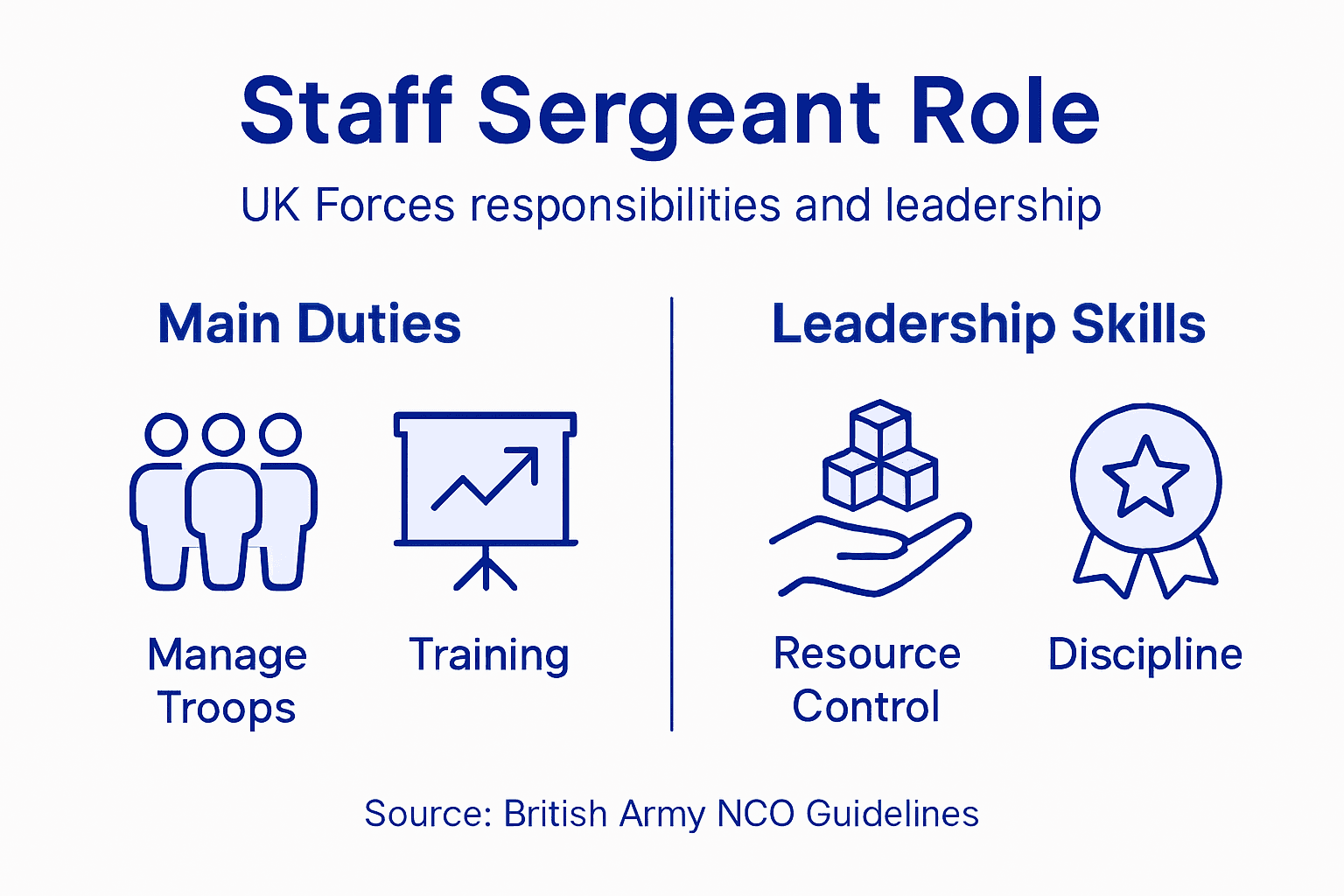
These senior NCOs act as the backbone between enlisted soldiers and commissioned officers. Staff Sergeants manage personnel and resources whilst commanding platoons or troops with significant autonomy and decision-making authority.
Core Operational Duties
Day-to-day operations consume much of a Staff Sergeant’s attention:
- Training coordination: Planning and delivering skill development sessions across the unit
- Discipline and standards: Enforcing military regulations and maintaining unit cohesion
- Operational readiness: Ensuring soldiers, equipment, and logistics are prepared for deployment or operations
- Direct leadership: Commanding squads and sections during exercises and live operations
- Health and welfare: Monitoring soldier wellbeing, morale, and addressing personal concerns
Each responsibility requires constant attention and quick decision-making under pressure.
Administrative and Logistical Functions
Behind every successful operation lies substantial administrative work. Staff Sergeants often hold appointments like Company Quartermaster Sergeant, managing equipment procurement, maintenance records, and supply chains.
They oversee personnel records, conduct performance evaluations, and prepare reports for commanding officers. This administrative foundation keeps units functioning smoothly.
A Staff Sergeant’s effectiveness depends equally on their ability to lead soldiers and manage paperwork—both are critical to unit success.
Planning and Coordination
Staff Sergeants contribute to tactical planning alongside officers. They assess soldier capabilities, identify training gaps, and advise on realistic timelines for operations or exercises.
They coordinate between multiple teams, ensuring resources flow where needed and schedules align across departments. This bridging role prevents breakdowns in communication.
Mentoring and Development
These senior NCOs shape the next generation of military leaders. They mentor junior sergeants, develop corporals seeking promotion, and spot talent early within the ranks.
Training junior leaders consumes time but produces exponential returns for unit capability over years.
Special Appointments
Some Staff Sergeants take on specialist roles beyond standard command. These might include training officer appointments, recruitment duties, or specialist tactical positions within their branch.
Pro tip: Recognise the breadth of a Staff Sergeant’s role when selecting gifts—items supporting either their leadership duties (such as professional journals or regimental items) or personal appreciation work equally well for someone balancing so many responsibilities.
Rank Insignia, Pathways and Progression
The three chevrons with a small crown represent one of the most recognisable insignia in the British Army. This distinctive marking appears on rank slides, shoulder boards, and dress uniforms, immediately identifying a Staff Sergeant to anyone familiar with military hierarchy.
The crown above the chevrons signifies the transition from junior NCO ranks to senior leadership positions. Staff Sergeant insignia reflects NATO OR-7 rank classification within the structured British Army hierarchy.
Understanding the Insignia
Visual recognition matters in military settings. The distinctive three chevrons and crown design serves multiple purposes:
- Immediate recognition: Soldiers instantly know who holds authority
- Formal presentation: Appears on ceremonial dress and official documents
- Professional identity: Forms part of regimental and unit identity
- Career milestone: Represents achievement and advancement
Unlike junior NCO ranks, military badges and insignia carry deeper meaning tied to identity, legacy, and belonging within your unit.
The Pathway to Staff Sergeant
Reaching this rank requires sustained commitment and demonstrated capability. Most soldiers spend several years as a Sergeant before promotion consideration.
The typical progression involves:
- Service as Private and Lance Corporal
- Advancement to Corporal
- Promotion to Sergeant (usually 3-5 years minimum service)
- Selection for Staff Sergeant (competitive process)
Each step demands increasing responsibility and leadership skill development.
Career Progression Beyond Staff Sergeant
This rank marks a significant milestone, but not the final destination. Senior NCOs can progress toward Warrant Officer Class 2, then Warrant Officer Class 1.
These senior positions involve broader strategic responsibilities, mentoring larger groups of NCOs, and advisory roles to commanding officers.
Promotion to Staff Sergeant represents recognition of leadership potential—it opens doors to specialised training, advanced responsibilities, and expanded career opportunities within the military.
Specialist Pathways
Some Staff Sergeants pursue specialist roles rather than traditional promotion routes. These include:
- Training and development roles: Instructor or training wing appointments
- Technical specialist positions: Subject matter expert in specific military disciplines
- Command appointments: Acting in higher temporary positions during operations
Timeline and Expectations
Progression from Sergeant to Staff Sergeant typically requires 2-4 years of proven performance. Competitive selection processes evaluate leadership capability, technical knowledge, and unit contribution.
Once appointed, Staff Sergeants should expect opportunities for advanced leadership courses, including senior NCO training programmes.
Here is a summary of Staff Sergeant career progression and expected timelines:
| Stage | Typical Duration | Main Requirement |
|---|---|---|
| Sergeant | 3-5 years | Proven leadership experience |
| Staff Sergeant | 2-4 years post-Sergeant | Competitive selection, advanced skills |
| Warrant Officer Class 2 | Follows Staff Sergeant | Strategic leadership responsibilities |
| Warrant Officer Class 1 | Senior WO role | Advises commanding officers |
Pro tip: When acknowledging a Staff Sergeant’s achievement or selecting presentation items, consider commissioning or engraving their rank insignia on gifts—personalised rank slides, regimental cufflinks, or framed insignia make meaningful recognition of their progression and status.
Gifting for Staff Sergeants and Veterans
Finding the right gift for a Staff Sergeant or military veteran requires understanding what resonates with someone who has dedicated years to service. These individuals value recognition that acknowledges their rank, sacrifice, and professional identity.
Meaningful gifts go beyond generic items—they reflect the recipient’s achievements and the respect you hold for their service. Gifting for veterans involves honouring their service through thoughtful selection that demonstrates genuine appreciation.
Rank-Specific Gift Ideas
Staff Sergeants appreciate gifts that acknowledge their specific rank and position:
- Rank insignia items: Engraved rank slides, cufflinks featuring the three chevrons and crown
- Regimental presentation pieces: Unit-specific items such as regimental ties, embroidered items, or framed insignia
- Professional recognition: Personalised desk plaques, officer’s notebooks, or ceremonial items
- Ceremonial dress accessories: Belt buckles, lanyard clips, or shoulder board holders
Each option carries meaning beyond its practical function.
Gifts for Career Recognition
When marking a promotion to Staff Sergeant or recognising long service, consider items that commemorate the achievement. Personalisation transforms standard gifts into treasured keepsakes.
Engraved presentations work particularly well—adding names, dates, or unit insignia creates lasting recognition of their milestone.
Gifts that acknowledge rank and service provide deeper satisfaction than generic alternatives—they show you understand the significance of their achievement.
Gifts Supporting Wellbeing
Veterans and serving staff appreciate gifts that support their personal wellbeing. Gifts impact veteran wellbeing significantly, particularly when they demonstrate connection to military identity and community.
Consider items that blend military heritage with personal comfort—quality clothing featuring regimental colours, heritage-inspired accessories, or items supporting hobbies and interests.
Presentation and Occasion
The context matters. Retirement gifts, promotion celebrations, or long-service recognition each require different approaches.
Retirement gifts often work best when they’re keepsake items—something displayed at home or worn regularly. Promotion gifts should emphasise achievement and future potential.
Personalisation and Customisation
Adding personal touches elevates any gift. Engraving names, dates, or unit badges transforms standard items into bespoke presentations.
Military personnel respond well to gifts that blend their service identity with personal recognition—this combination creates genuine emotional value.
Where to Source Appropriate Gifts
Specialised military gift retailers understand the nuances of appropriate gifting. They stock items specifically designed for military culture and understand rank-appropriate selections.
Avoiding generic high street gifts ensures you’re selecting something genuinely meaningful to the recipient.
Pro tip: When selecting a gift for a Staff Sergeant, choose items featuring their rank insignia or regimental colours—personalise with their name and service dates if possible, making the gift a lasting recognition of their achievement rather than a temporary token.
Honour the Leadership and Service of a Staff Sergeant with Meaningful Gifts
The article highlights the crucial role a Staff Sergeant plays in managing personnel, resources, and maintaining discipline within the British Army. Recognising their dedication and leadership through personalised gifts can deeply resonate with them. You understand the importance of insignia like the three chevrons and crown, which symbolize their senior Non-Commissioned Officer status. Whether it is a promotion or a special milestone, choosing a gift that reflects their rank and service is key to showing genuine appreciation.
Explore premium UK military gifts that celebrate the honour and responsibilities carried by Staff Sergeants at https://regimentalstore.co.uk. From engraved rank insignia to regimental presentation pieces, every item is designed to acknowledge their commitment and achievement. Embrace the opportunity to give a timeless keepsake that matches their leadership journey. Discover more about gifts for military ranks including Veterans and Serving Personnel to find the perfect tribute today.
Frequently Asked Questions
What is the role of a Staff Sergeant in the UK military?
A Staff Sergeant is a senior Non-Commissioned Officer responsible for managing around 120 soldiers, overseeing operational planning, personnel management, and training delivery within their unit.
How does a Staff Sergeant differ from a Colour Sergeant?
While both ranks are functionally equivalent and hold similar responsibilities, a Staff Sergeant typically operates in non-infantry units, whereas a Colour Sergeant serves in infantry regiments, often with additional ceremonial duties tied to regimental heritage.
What are the key responsibilities of a Staff Sergeant?
Key responsibilities include personnel management, resource allocation, training delivery, operational planning, and maintaining discipline and standards within their unit.
How can one progress to the rank of Staff Sergeant?
Promotion to Staff Sergeant usually requires several years of service, experience in the role of Sergeant, and a competitive selection process that assesses leadership capability and performance.
Recommended
- What Is a Military Warrant Officer in the UK Forces – The Regimental Store Ltd
- Honour Guard: Significance in British Military Ceremonies – The Regimental Store Ltd
- Long Service Awards – Honouring UK Military Dedication – The Regimental Store Ltd
- History of the SAS – Impact on British Forces – The Regimental Store Ltd
- How to Write Job Descriptions for UK Security Roles