
What Is a Service Pin and Its Meaning for UK Veterans
Wearing a service pin speaks volumes before you even say a word. For those who have served with the British Army, Royal Navy, or Royal Air Force, these small but meaningful badges capture the pride and unity of the entire Armed Forces community. More than a decorative item, a service pin makes your contribution visible, connecting you instantly with fellow veterans and inviting well-earned recognition from your community.
Table of Contents
- Service Pins: Defining Their Purpose And Meaning
- Types Of Service Pins In British Military
- Design Elements And Symbolism Explained
- Eligibility And How To Obtain A Service Pin
- Practical Benefits And Common Misconceptions
Key Takeaways
| Point | Details |
|---|---|
| Importance of Service Pins | Service pins signify commitment and honour, offering a visible cue of veteran status to society. |
| Eligibility for HM Armed Forces Veterans Badge | All members who served in Regular or Volunteer Reserve roles in the UK Armed Forces can qualify for this badge. |
| Practical Benefits of Wearing the Pin | The pin facilitates access to veteran-specific services and recognitions, such as discounts and prioritised healthcare. |
| Common Misconceptions | The service pin does not provide financial benefits; it serves as an identification tool to access existing support. |
Service pins: Defining their purpose and meaning
Service pins represent far more than decorative badges. They symbolise your commitment, sacrifice, and years of dedicated service to the United Kingdom. For veterans and serving personnel, these pins carry profound personal and social significance.
A service pin is a physical symbol of military service that identifies you as part of the Armed Forces community. Unlike medals, which recognise specific achievements or campaigns, service pins mark your overall contribution to the nation. They serve as visible tokens of honour and belonging.
The most prominent example is the HM Armed Forces Veterans Lapel Badge, launched in May 2004. This enamelled badge features tri-service symbols: an anchor, crossed swords, and an eagle. Together, these motifs represent the unity of all veterans across the Royal Navy, British Army, and Royal Air Force.
Why service pins matter
These badges serve several important purposes:
- Public recognition – They help society identify and acknowledge your veteran status
- Community connection – They foster a sense of belonging among veterans from all three services
- Personal pride – They represent your commitment to serving your country
- Conversation starter – They prompt public acknowledgement and respect for your service
The badge was initially designed for World War II veterans but has since extended to all eligible veterans, recognising that service spans generations and backgrounds.
Wearing a service pin transforms how others perceive you. Colleagues, strangers, and community members recognise your status immediately. This visible acknowledgement provides quiet dignity and respect that many veterans deeply value.
Service pins differ from operational medals or campaign medals. Whilst those recognise specific actions or deployments, service pins acknowledge your overall commitment. You earn them simply through serving, making them universally available to those who qualify.
The purpose extends beyond personal recognition. These badges promote a collective identity, reminding society that veterans form a unified community regardless of service branch or era.
Pro tip: Wear your service pin on your lapel, jacket, or formal attire where it’s clearly visible—it signals your pride in service and often leads to meaningful conversations with fellow veterans and grateful members of the public.
Types of service pins in British military
The British military offers several distinct types of service pins and badges, each with specific purposes and eligibility criteria. Understanding the differences helps you identify which pins you qualify for and what they represent about your service.
The HM Armed Forces Veterans Badge stands as the primary service pin for former military personnel. This badge applies to those who completed Regular or Reserve service in the Royal Navy, Royal Marines, British Army, or Royal Air Force. It’s designed exclusively for those who served directly in these forces, not support roles or cadet organisations.
Main types of service pins
British military service pins fall into several categories:
- Veterans badges – Recognise completion of service in the tri-services
- Long service and good conduct medals – Honour extended service periods and conduct standards
- Operational service medals – Mark specific campaigns or deployments
- Commemorative badges – Recognise particular historical periods or service types
Each type carries its own criteria and significance. The HM Armed Forces Veterans Badge remains the most commonly recognised pin for identifying former service members to the general public.
Eligibility depends entirely on your service record—whether you served in a regular or reserve capacity and which Armed Forces branch you joined.
The Ministry of Defence Medal Office manages all service pin applications and awards. They maintain detailed records and verify eligibility based on your service discharge documents. Getting the correct pin requires accurate documentation of your service period and branch.
Some pins, like service medals for conduct and recognition, have additional requirements beyond simple service completion. Others focus purely on tenure—wearing one acknowledges years of commitment regardless of rank or role.
Distinguishing between pin types matters when displaying them. Many veterans wear multiple pins reflecting different service aspects. Understanding what each represents strengthens your personal narrative and helps others appreciate your full military background.
The Veterans Badge works across all three services equally. Whether you served in the Navy, Army, or RAF, you wear the same pin, symbolising unified service to the nation.
Here’s how key British military service pins differ in eligibility and purpose:
| Pin Type | Who Qualifies | Main Purpose | Distinct Feature |
|---|---|---|---|
| Veteran’s Badge | All ex-regular/reserve forces | Overall service recognition | Tri-service design |
| Long Service & Good Conduct | Personnel with extended tenure | Honours length and conduct | Requires minimum years served |
| Operational Service Medal | Campaign/deployment veterans | Specific campaign participation | Related to particular operation |
| Commemorative Badge | Selected historic events | Highlight special service periods | Event-specific symbols |
Pro tip: Check your discharge paperwork carefully before applying for any service pin—your exact service dates and branch classification determine your eligibility, and providing accurate information speeds up the approval process.
Design elements and symbolism explained
Every element on a service pin carries deliberate meaning. The design isn’t decorative—it tells the story of your service and the unity of the British Armed Forces. Understanding these symbols deepens your appreciation for what the pin represents.
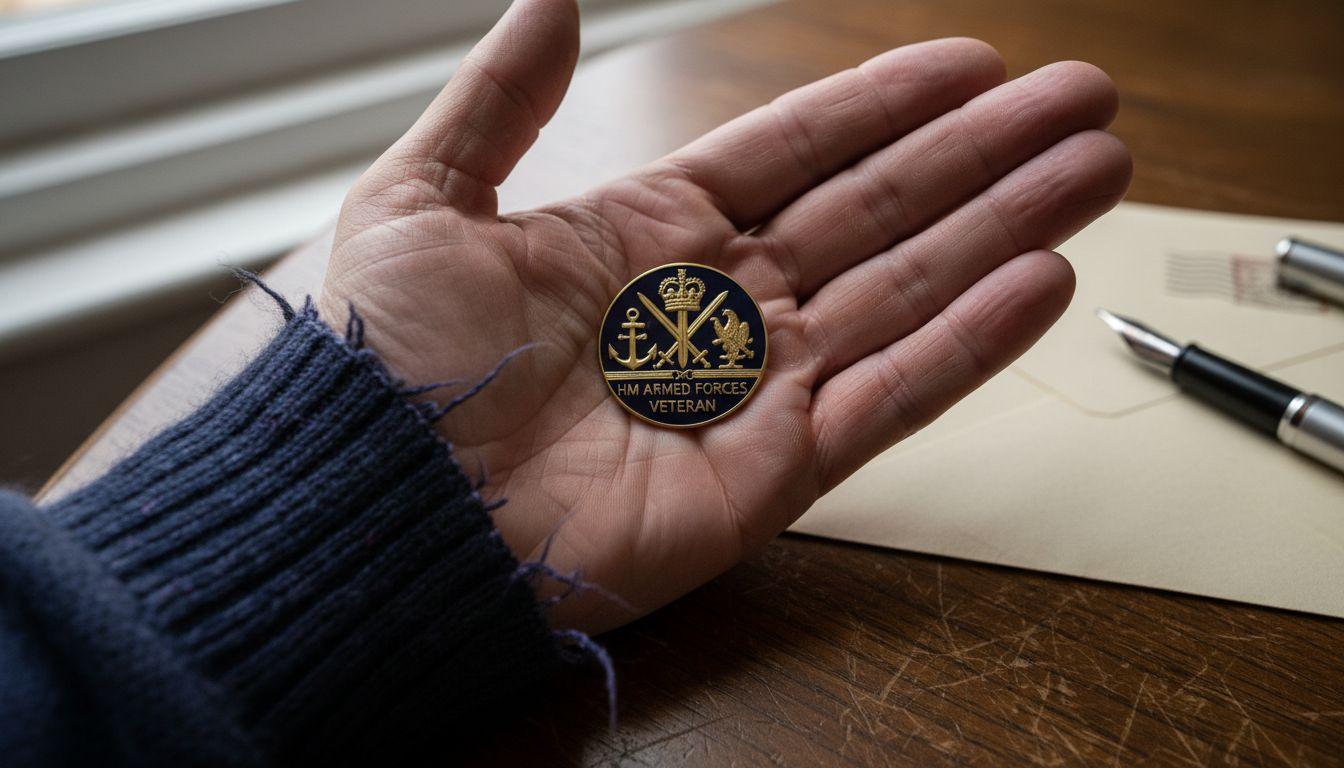
The HM Armed Forces Veterans Badge features tri-service symbols that work together as one cohesive design. Each component represents a different branch, yet they’re unified on a single badge. This visual approach mirrors how the Armed Forces operate—distinct services working as one nation’s defence.
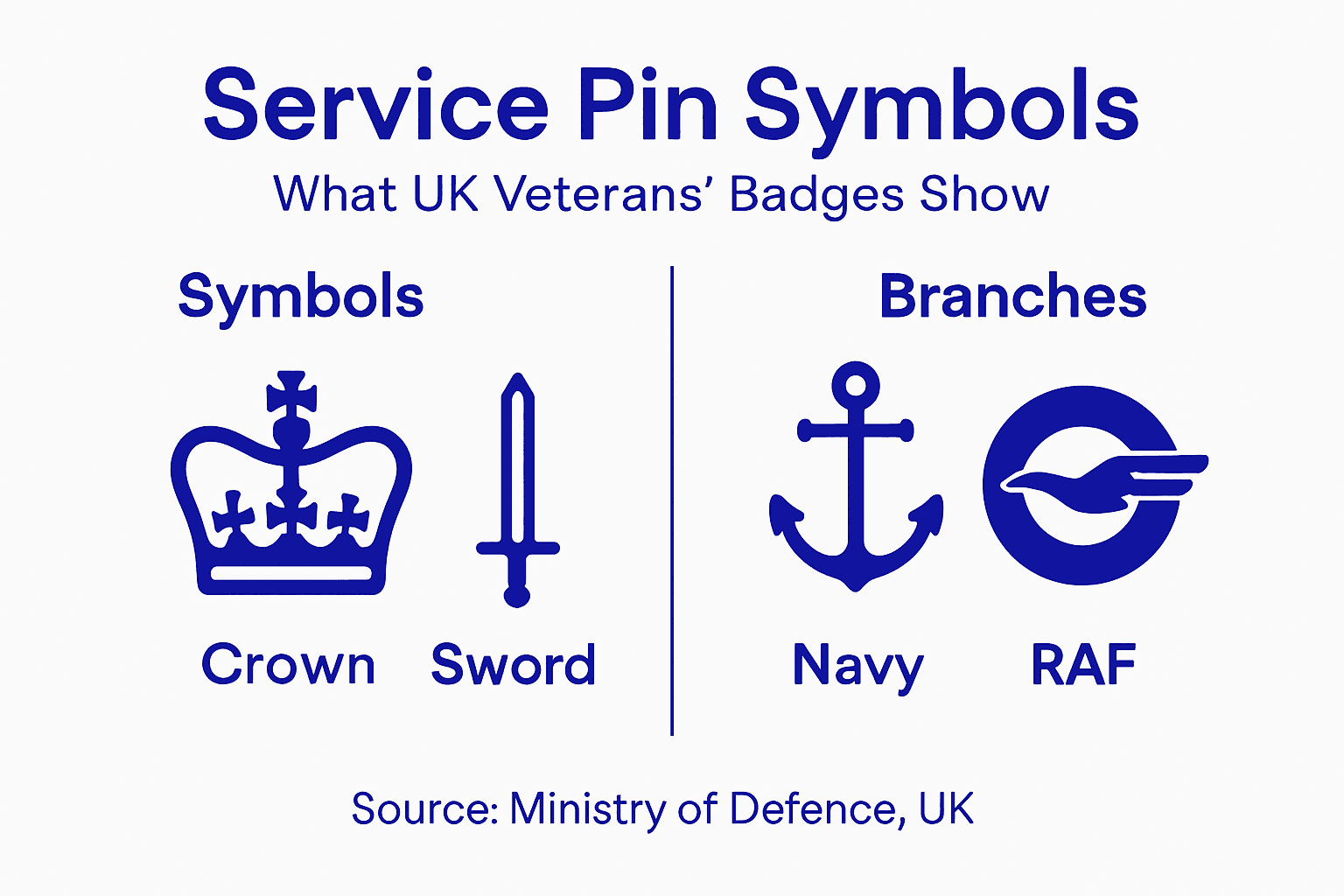
The tri-service motifs
The badge incorporates three distinct symbols:
- Anchor – Represents the Royal Navy and maritime tradition
- Crossed swords – Symbolise the British Army and land operations
- Eagle – Embodies the Royal Air Force and air supremacy
Together, these motifs create a powerful image of complete military service. No single symbol dominates; each holds equal visual weight. This equality reflects how all three services contribute equally to national defence.
The design deliberately avoids ranking one service above another, reinforcing that all veterans share equal honour regardless of which branch they served.
The badge is enamelled, giving it a smooth, polished appearance that catches light and draws attention. The enamel work is meticulous, with each colour carefully applied to distinguish the different symbols and create visual impact. This craftsmanship reflects the dignity the nation accords to veterans.
Engraved text reading “HM Armed Forces – Veteran” appears on the badge itself. These words make your status unmistakable to anyone viewing the pin. The inclusion of “HM” acknowledges the reigning Monarch’s authority and the constitutional foundation of military service.
The Monarch’s Crown symbol crowns the entire design, representing royal authority and the honour bestowed upon those who served the Crown. This isn’t mere ceremony—it signifies that your service was to the nation’s highest authority. The crown elevates the pin from a simple badge to a mark of genuine national recognition.
The overall shape and proportion follow traditional British military badge standards. Veterans immediately recognise the format, whilst the public learns to associate this distinctive appearance with military service and sacrifice.
Here’s a quick reference to the symbolic elements found on the HM Armed Forces Veterans Badge:
| Symbol | Branch Represented | Visual Meaning |
|---|---|---|
| Anchor | Royal Navy | Maritime tradition |
| Crossed swords | British Army | Land operations |
| Eagle | Royal Air Force | Air power and supremacy |
| Monarch’s Crown | All branches | Royal authority and honour |
Pro tip: Polish your service pin regularly with a soft cloth to maintain its enamel finish and ensure the symbols remain vibrant—a well-maintained badge shows respect for what it represents and makes the symbolism more visually striking when worn.
Eligibility and how to obtain a service pin
Obtaining your service pin is straightforward, but eligibility rules matter. You need to understand what qualifies you and what documents you’ll need to gather before applying. The process itself takes weeks, not months.
You’re eligible for the HM Armed Forces Veterans Badge if you served in the British Armed Forces as a Regular or Volunteer Reserve member. This includes all three services: Royal Navy, British Army, and Royal Air Force. Your service must have been directly with these forces, not with overseas forces or organisations serving alongside them.
Who qualifies
Eligible service includes:
- Regular service in any of the three Armed Forces
- Volunteer Reserve service with full commitment
- Any rank or role within these services
- Service during any era or conflict period
The badge is not available if you served exclusively with overseas forces or support organisations not directly part of HM Armed Forces. This distinction matters—check your discharge papers to confirm your service type.
The badge is a survivor’s award, meaning you must be alive to receive it—it’s not issued posthumously except to eligible War Widows or Widowers receiving Ministry of Defence pensions.
The application process
Applying is simple and free. The Ministry of Defence Medal Office handles all applications and can process them online or by post.
You’ll need:
- Proof of service (discharge papers, service record, or military ID)
- Your full name and contact details
- Service dates and Armed Forces branch
- Current postal address for badge delivery
Submit your application online through the government website or request a postal form. Processing typically takes 6 to 8 weeks from submission. Badges are sent free of charge—replacements cost nothing if yours is lost or damaged.
Once approved, your badge arrives ready to wear. No additional steps are needed. Many veterans choose to wear theirs immediately on jackets, blazers, or formal attire.
The process is intentionally straightforward. The government recognises that obtaining your pin should be hassle-free—you’ve already done the hard part by serving.
Pro tip: Gather your discharge papers now and photograph them before applying—having clear images of your service documentation speeds up verification and reduces the risk of losing original documents during posting.
Practical benefits and common misconceptions
Your service pin opens doors in ways many veterans don’t realise. However, misconceptions about what the pin actually does can lead to disappointment. Understanding the real benefits helps you use it effectively.
The primary benefit is proof of veteran status. Your pin acts as a visible identifier that simplifies access to specialist support services across healthcare, housing, employment, and travel. Many organisations recognise the badge immediately and adjust their approach accordingly.
Real benefits you’ll experience
Wearing your service pin genuinely provides:
- Faster service access – Healthcare providers and support organisations prioritise veteran cases
- Discounts and offers – Many retailers and services offer veteran-specific pricing
- Community recognition – Fellow veterans and the public acknowledge your service
- Employment opportunities – Employers actively seek veterans and recognise the pin immediately
- Housing support – Local authorities and charities prioritise housing applications from veterans
These benefits exist because your pin signals veteran status without requiring lengthy explanations. Staff at GP surgeries, housing offices, and support centres understand immediately what your service means.
The badge itself doesn’t grant automatic entitlements, but it’s your fastest route to accessing veteran-focused schemes and support programmes already available to you.
Common misconceptions
Many veterans misunderstand what the pin provides. Here’s what it doesn’t do:
Your pin doesn’t guarantee financial payments or legal privileges. It’s not a compensation document or a pass to free services. Some veterans expect the pin alone to unlock benefits—that’s not how it works. The pin is a tool for accessing services you’re already eligible for, not a benefit in itself.
Another misconception involves thinking the badge covers all veteran needs. Using a veteran card proves service status, but you still need to apply individually for specific support programmes. The pin removes friction from that process—you’re recognised immediately rather than having to prove your background repeatedly.
Some believe wearing the pin obligates organisations to provide services. That’s false. What it does is make your status obvious, prompting organisations to explain what support they offer veterans. You then choose whether to access those services.
The badge also doesn’t replace official military documentation. Keep your discharge papers safe—they’re the official proof of service. Your pin is the convenient, visible version for daily life.
Pro tip: When accessing services, mention your veteran status upfront rather than waiting to be asked—many organisations don’t automatically check for veteran badges, so proactively stating your status ensures you receive available discounts and prioritised support.
Honour Your Service with Meaningful Military Gifts and Presentation Products
Understanding the significance of a service pin reveals the deep pride and recognition that UK veterans hold dear. If you want to celebrate this commitment and the symbolism behind the HM Armed Forces Veterans Badge, finding the right military gift or presentation product can make all the difference. Many veterans seek items that serve as lasting reminders of their dedication while proudly showcasing their service to friends and family.
Explore unique and respectful products at Regimental Store designed specifically for all serving personnel and veterans of the British Army, Royal Navy and Royal Air Force. Whether you are looking to complement your service pin with a special keepsake or searching for the perfect gift that honours military service, you can discover a wide range of options. Act now to find something that acknowledges your pride and supports your veteran identity with dignity and distinction. Start your journey here at Regimental Store and enhance how you commemorate your service today.
Frequently Asked Questions
What is a service pin for UK veterans?
A service pin is a physical symbol that represents military service, identifying individuals as part of the Armed Forces community and acknowledging their overall contribution to the nation.
What is the purpose of wearing a service pin?
Wearing a service pin publicly recognises your veteran status, fosters community among veterans, provides personal pride, and can initiate respectful conversations about your service.
How do I obtain a service pin as a veteran?
To obtain a service pin, you need to apply through the Ministry of Defence Medal Office, providing proof of service, your personal details, and service dates. The process is free and typically takes 6 to 8 weeks.
What types of service pins are available for UK veterans?
The main types of service pins are the Veterans Badge, Long Service and Good Conduct medals, Operational Service medals, and Commemorative badges, each serving different purposes and having specific eligibility criteria.
Recommended
- Why Display Military Badges: Honouring Service in the UK – The Regimental Store Ltd
- What Is a Commemorative Plaque for UK Veterans – The Regimental Store Ltd
- Purpose of Veteran Reunion Gifts – Honouring Shared Service – The Regimental Store Ltd
- Long Service Awards – Honouring UK Military Dedication – The Regimental Store Ltd