
What Is a Sapper? The Role in British Army Life
Serving in the British Army means you quickly learn the real significance behind the word ‘sapper’. It is a title built on centuries of history, stretching back to the formation of the Corps of Royal Engineers in 1716. The sapper’s role blends combat engineering with technical skills, making them invaluable whether building bridges under fire or deploying globally for humanitarian support. If you value tradition and practical impact, understanding multi-skilled combat engineers offers insight for personal enrichment and informed gift choices.
Table of Contents
- Meaning of Sapper in the British Army
- Qualifications and Training for Sappers
- Key Roles and Operational Responsibilities
- Risks, Recognition and Career Pathways
Key Takeaways
| Point | Details |
|---|---|
| Role of Sappers | Sappers are multi-skilled combat engineers in the British Army who perform critical engineering and tactical tasks in various environments. |
| Training and Qualifications | Becoming a sapper involves extensive training that leads to civilian-recognised qualifications, enhancing employability post-service. |
| Combat and Humanitarian Missions | Sappers provide vital support in combat situations and humanitarian efforts, proving their versatility and essential role in military operations. |
| Career Progression | The Army offers clear promotion pathways for sappers, recognising their contributions through career advancement and skills development. |
Meaning of Sapper in the British Army
A sapper is a soldier of the Corps of Royal Engineers, the backbone of British military engineering. The term dates back centuries and carries real weight in Army culture.
The word “sapper” originally referred to soldiers who dug saps—trenches used to approach enemy fortifications during siege warfare. Today, it means something much broader: a multi-skilled combat engineer and tradesperson who handles everything from infrastructure to explosives.
Sappers aren’t just construction workers in uniform. They’re combat-trained soldiers first, engineers second. This dual capability sets them apart from civilian engineers.
What Sappers Actually Do
Sappers provide vital support in peacetime and during operations worldwide. Their responsibilities include:
- Building and repairing roads, bridges, and fortifications
- Creating and maintaining military maps and surveys
- Operating communications infrastructure
- Handling explosives and bomb disposal
- Providing field engineering support in combat zones
- Assisting with civil construction projects globally
These aren’t ceremonial roles. Sappers operate under real pressure, often in hostile environments where their work directly affects mission success and soldier safety.
Why the Name Matters
The title “sapper” carries pride within the Regiment. It represents a lineage stretching back to 1716 when the Corps was formed. Calling yourself a sapper means you’re part of an elite technical and combat tradition.
Former and serving personnel understand this immediately. The uniform, the cap badge, the expertise—it all reflects what sappers genuinely are: soldiers who build, repair, and fight.
To clarify the unique nature of the sapper role, here is a comparison between sappers, standard infantry, and civilian engineers:
| Aspect | Sapper (Royal Engineers) | Infantry Soldier | Civilian Engineer |
|---|---|---|---|
| Primary Skillset | Combat engineering and trade expertise | Combat and operational tactics | Technical engineering knowledge |
| Work Environment | Frontline and field-based | Battlefield and field-based | Offices, construction sites |
| Technical Training Level | High (military + trade certifications) | Moderate (combat-focused) | High (academic-based) |
| Civilian Qualification | Widely recognised in trades | Limited civilian application | Fully civilian-recognised |
| Exposure to Danger | Regular high-risk operational exposure | High operational risk | Generally low risk |
| Leadership Pathways | Available through technical and command | Available through command roles | Engineering or managerial roles |
A sapper is both combatant and craftsperson, equally comfortable handling explosives or constructing critical infrastructure under fire.
Understanding Sapper Ranks
Sappers operate across all ranks within the Corps structure. Each rank carries different responsibilities and expertise levels. Understanding this hierarchy matters if you’re exploring military recognition or gifts for serving personnel.
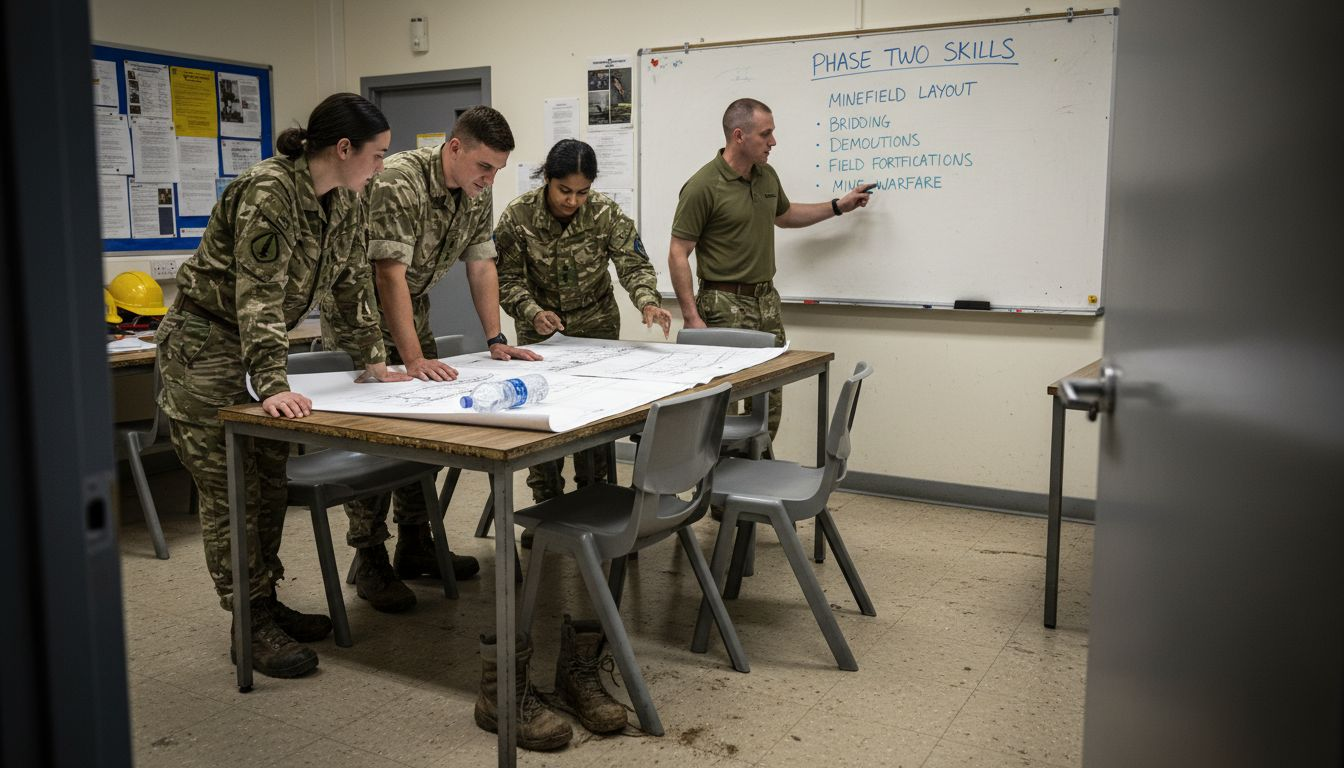
The rank system ensures skilled trades personnel receive recognition alongside traditional military hierarchy. A sapper might specialise in specific trades like electrical work, carpentry, or mechanical engineering whilst maintaining combat readiness.
Pro tip: When selecting gifts or recognition items for sappers, research their specific trade or specialisation within the Corps—this shows genuine understanding of their role beyond the general sapper title.
Qualifications and Training for Sappers
Becoming a sapper demands commitment and versatility. The training pathway transforms civilians into skilled combat engineers capable of handling complex technical tasks under pressure.
There’s no single “sapper qualification” you hold on paper. Instead, you complete a structured progression that builds competency layer by layer. Each phase prepares you for real operational demands.
The journey starts with basic training, where you learn to be a soldier first. Physical fitness tests are mandatory—you need genuine strength and endurance, not just desk competence.
The Three-Phase Training Structure
After basic training, you enter combat engineer trade training. This specialised phase teaches you the practical skills sappers actually use in the field.
Phase two covers critical operational skills:
- Bridging rivers and crossing obstacles
- Clearing minefields and unexploded ordnance
- Demolitions and controlled explosions
- Building fortifications and defensive positions
- Water crossing operations
Phase three happens at the 1 Royal School of Military Engineering Regiment, where you specialise in a specific trade. This is where the training becomes genuinely practical.
Sapper training transforms recruits into adaptable professionals. This table summarises the three-phase training structure:
| Phase | Main Focus | Key Outcome |
|---|---|---|
| Basic Training | Soldiering skills and fitness | Combat-ready foundation |
| Trade Training | Core engineering skills | Practical field engineering expertise |
| Trade Specialism | Advanced trade and specialisation | Civilian-standard trade qualifications |
Civilian-Recognised Qualifications
Sappers earn civilian-recognised qualifications throughout their training. These matter beyond military service. You might qualify in bricklaying, carpentry, electrical fitting, or mechanical engineering.
These aren’t token credentials. Employers recognise them. When you leave the Army, your sapper training opens civilian career doors.
Specialisation Trades
The Regiment offers training in multiple specialist areas:
- Bricklaying and masonry
- Carpentry and joinery
- Electrical fitting
- Mechanical engineering
- Plant operation
- Watermanship and boat operations
- Surveying and mapping
You develop genuine expertise in your chosen trade whilst maintaining combat readiness. This dual capability is what makes sappers different from civilian tradespeople.
Sapper training combines combat effectiveness with civilian-standard trade qualifications—making you operationally capable and employable in the civilian sector.
What Happens After Training
Once you complete all three phases, you’re posted to operational units. Your training never stops, though. Sappers constantly refine skills and adapt to new equipment and techniques.
The training prepares you for real-world roles: humanitarian support, infrastructure repair, military operations, and disaster response. You’re genuinely ready for whatever comes next.
Pro tip: If you’re considering joining the Royal Engineers or know someone who is, research the specific trade specialisation carefully—your choice shapes your entire sapper career and post-military employment options.
Key Roles and Operational Responsibilities
Sappers don’t sit in offices. They’re operational soldiers embedded across every combat scenario, peacekeeping mission, and humanitarian crisis the Army faces.
Their responsibilities span far beyond what civilians typically associate with engineers. Sappers are combat personnel first—they operate under fire, make split-second decisions, and adapt to unpredictable situations.
Understanding what sappers actually do reveals why they’re so critical to modern military operations.
Combat Engineering Tasks
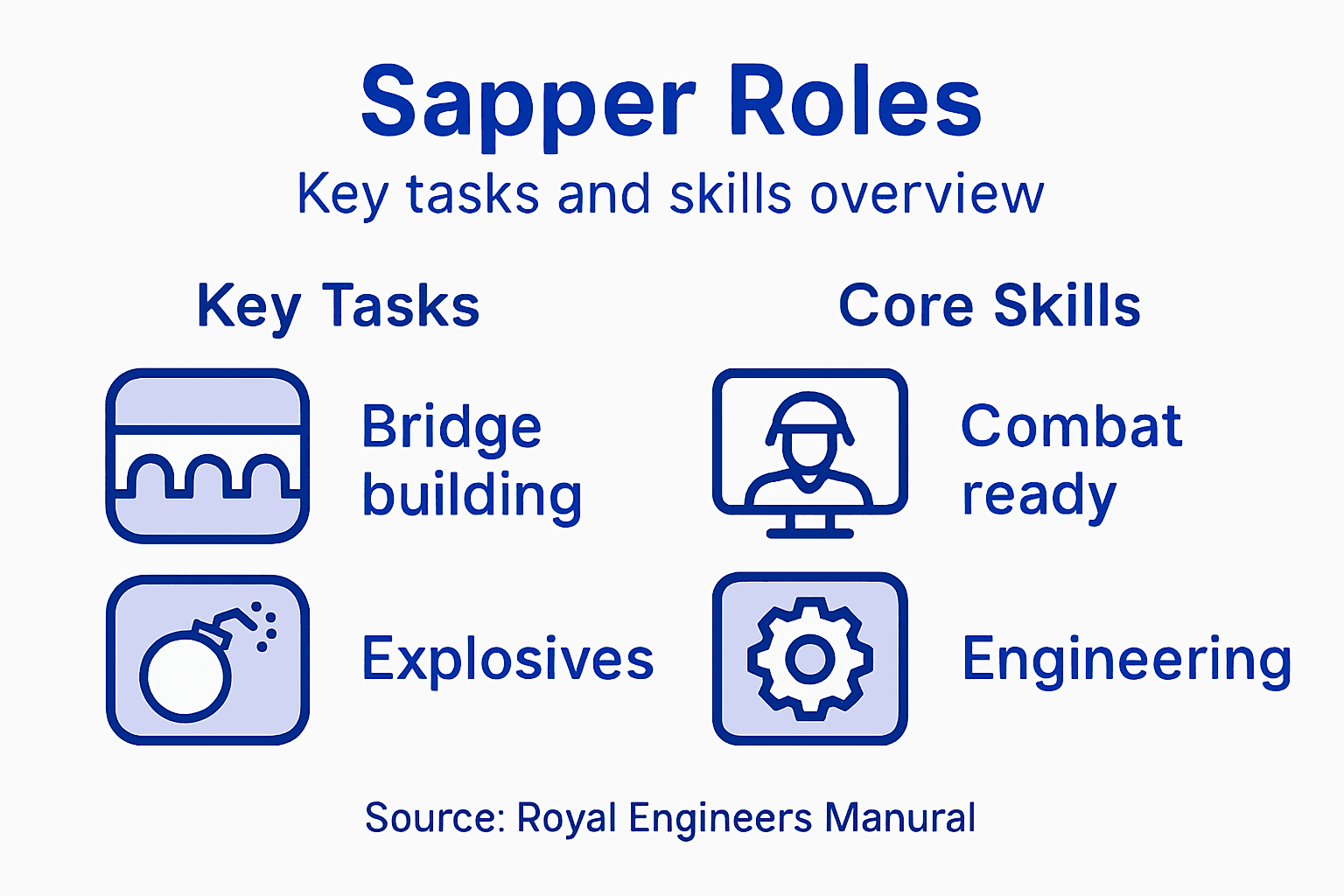
Sappers serve across all Defence areas in both peacetime and operations, providing essential technical support. Their core combat responsibilities include:
- Bridge building and water crossings – Creating routes across rivers and obstacles that infantry and vehicles depend on
- Mine clearance and route clearance – Detecting and removing explosive hazards to enable troop movement
- Demolitions and explosive ordnance disposal – Safely handling, dismantling, and destroying munitions and obstacles
- Defensive position construction – Building fortifications, trenches, and protective structures
- Camp and runway construction – Establishing military infrastructure in austere environments
These tasks happen on active battlefields. A sapper might be clearing a minefield whilst under indirect fire or constructing a bridge knowing enemy forces are nearby.
Beyond the Battlefield
Sappers operate in every area of the battlefield, supporting troops through mobility and survivability. But their responsibilities extend further.
Humanitarian work forms a significant part of sapper operations:
- Post-conflict rebuilding and infrastructure repair
- Disaster relief and emergency response
- Water purification and sanitation engineering
- Medical facility construction
- Community infrastructure projects
When earthquakes strike, floods devastate regions, or conflict leaves infrastructure destroyed, sappers deploy. They rebuild schools, water systems, and bridges that civilians depend on.
What Makes Sappers Unique
The distinction between sappers and other soldiers is critical. Sappers combine technical expertise with combat capability. They’re not attached specialists—they’re soldiers who happen to be trained engineers.
This means sappers fight when needed, support when required, and engineer always. Most military engineers are civilians or rear-echelon personnel. Sappers work on the frontline.
Sappers enable military operations through technical skill and combat readiness—they’re the solution when the Army needs mobility, survivability, and engineering expertise simultaneously.
Training Never Stops
Responsibilities evolve constantly. New equipment arrives. Tactics change. Sappers adapt. A sapper might master minefield clearance using current techniques, then retrain when new detection equipment arrives.
This continuous development keeps sappers operationally effective across decades of service.
Pro tip: When considering gifts or recognition for serving sappers, focus on items that support their specific operational role—protective equipment, specialist tools, or unit memorabilia resonate far more than generic military items.
Risks, Recognition and Career Pathways
Sapper work carries genuine danger. This isn’t theoretical risk management—sappers face explosive hazards, unstable structures, and hostile environments regularly. Understanding these risks matters when considering the role or recognising serving personnel.
But risk comes with reward. The Army recognises sapper contributions through concrete career progression and advancement opportunities that extend well beyond basic military service.
The Reality of Sapper Risks
Mine clearance, demolitions, and frontline support create inherent hazards. A sapper might spend hours detecting and neutralising explosive devices in environments where mistakes are fatal.
These aren’t desk-bound risks. Sappers operate physically, exposed to elements and enemy fire. Combat engineers have historically suffered significant casualty rates because they work where dangers concentrate.
Yet sappers accept these risks willingly. Training instils confidence in technique and equipment. Experience builds judgment about acceptable versus unacceptable danger. Unit cohesion provides mutual protection.
Recognition and Advancement
Sappers receive recognition for critical contributions through promotions, medals, and honours. This recognition isn’t ceremonial—it reflects genuine achievement in demanding circumstances.
Promotion pathways are clear:
- Private through to Corporal based on competence and time in role
- Sergeant ranks for those demonstrating leadership capability
- Senior non-commissioned officer positions for experienced personnel
- Warrant officer appointments for those with extensive expertise
Each rank brings increased responsibility and compensation. More importantly, each advancement signals that your contributions matter.
Long-Term Career Development
Career pathways in the British Army offer progression from entry to senior positions, with continuous professional development. Sappers can expect:
- Specialist trade training and advanced qualifications
- Leadership development courses
- Higher education support and academic study
- Opportunity to become training instructors
- Potential for roles in military planning and strategy
The Army invests heavily in sapper development because experienced technical personnel are irreplaceable. A sapper with fifteen years’ service possesses knowledge that takes years to replicate.
Transition to Civilian Life
Sapper careers aren’t dead ends. Military engineering experience opens civilian doors. Construction companies, infrastructure firms, and engineering consultancies actively recruit former sappers.
Your trade qualifications, leadership experience, and problem-solving skills translate directly. Veterans often find civilian work less demanding than military operations, making career transitions smoother.
Sapper risk is real, but recognition and career progression reflect the genuine value the Army places on combat engineering expertise.
Service Recognition
Medals, commendations, and ceremonial recognition acknowledge sapper sacrifice. These matter profoundly to personnel and families. Understanding sapper achievements helps when selecting appropriate recognition gifts or memorabilia.
Unit distinctions, campaign medals, and service records represent tangible proof of contribution. They’re not just pieces of metal—they’re evidence of commitment in demanding circumstances.
Pro tip: When acknowledging sapper service, research specific unit achievements and campaign participation—personalised recognition that reflects individual contributions resonates infinitely more than generic military gifts.
Honour the Courage and Craftsmanship of Sappers with Unique Military Gifts
Understanding the challenging role of a sapper reveals their remarkable blend of combat bravery and skilled engineering. Whether you are recognising a serving sapper or a veteran who has dedicated years to building, clearing, and protecting, personalised gifts that reflect their commitment make a powerful statement. The pride in being a sapper comes from their elite status within the Corps of Royal Engineers and their life-risking work that deserves genuine appreciation.

Explore a wide selection of UK military gifts designed specifically for those who serve in the British Army, including exclusive items that acknowledge sapper trades and achievements. Show your respect with presents that honour their technical expertise and frontline sacrifices. Visit Regimental Store now to find meaningful keepsakes and customised memorabilia that celebrate sapper service. Don’t wait – recognise their invaluable contribution today and support the spirit of these exceptional soldiers.
Frequently Asked Questions
What is a sapper in the British Army?
A sapper is a soldier in the Corps of Royal Engineers, responsible for various engineering tasks related to military operations and combat.
What skills do sappers possess?
Sappers are multi-skilled combat engineers trained in construction, explosives handling, and various technical trades, making them essential for both combat and support roles.
What training do sappers undergo?
Sappers complete a three-phase training structure that includes basic soldier training, trade training in core engineering skills, and specialised training in their chosen trade.
What are the main responsibilities of a sapper?
Sappers are involved in tasks such as building and repairing infrastructure, clearing mines, demolitions, and providing humanitarian support during disaster response and reconstruction efforts.