
Territorial Army: Key Role and Lasting Benefits
Balancing a civilian career with military service has shaped the United Kingdom’s defence for generations. For many British Army members and veterans, understanding the role of the Territorial Army unlocks fresh paths for personal growth and active community involvement. From its formal origins in 1908 to its ongoing contribution as a flexible reserve force, the Territorial Army remains a vital option for those seeking meaningful service, skill development, and a lasting sense of national pride.
Table of Contents
- Territorial Army History And Core Purpose
- Army Reserve Structure And Main Categories
- Joining Requirements And Common Misconceptions
- Training, Duties, And Deployment Expectations
- Personal Growth, Pay, And Community Benefits
- Rights, Responsibilities, And Legal Protections
Key Takeaways
| Point | Details |
|---|---|
| Territorial Army Evolution | Established on 1 April 1908, the Territorial Army emerged to provide flexible, trained reservists that support the Regular Army during national emergencies. |
| Role and Structure of Reserves | The British Army Reserve consists of various specialised units, ensuring operational readiness while allowing individual flexibility to maintain civilian careers. |
| Entry and Integration | Joining the Army Reserve is more accessible than perceived, accommodating diverse backgrounds and ensuring individuals can balance military service with civilian employment. |
| Legal Protections and Responsibilities | The Armed Forces Covenant provides essential legal rights to reservists, protecting them from discrimination and ensuring fair access to public services while maintaining their military obligations. |
Territorial Army History and Core Purpose
The British military’s approach to national defence has long been shaped by innovative, adaptable part-time military structures. Territorial Force origins emerged from a strategic need to maintain flexible defence capabilities without maintaining an excessively large standing army.
Historically, Britain developed unique military models that prioritised efficiency and citizen participation. The Territorial Army represented a sophisticated evolution of earlier defence mechanisms, consolidating various volunteer and militia organisations into a cohesive, trained reserve force. By 1908, this transformation meant Britain could rapidly mobilise trained citizen-soldiers when national security demanded.
Key Historical Developments include:
- Formal establishment on 1 April 1908
- Incorporation of existing Militia, Volunteer Force, and Yeomanry units
- Creation of fourteen infantry divisions and fourteen cavalry brigades
- Civilian management through Territorial Associations
The Territorial Force was distinctly different from other wartime recruitment efforts. Its primary purpose was providing trained reservists capable of rapidly reinforcing the Regular Army during national emergencies. Territorial Force organisation addressed critical training and mobilisation deficiencies observed in earlier part-time military units.
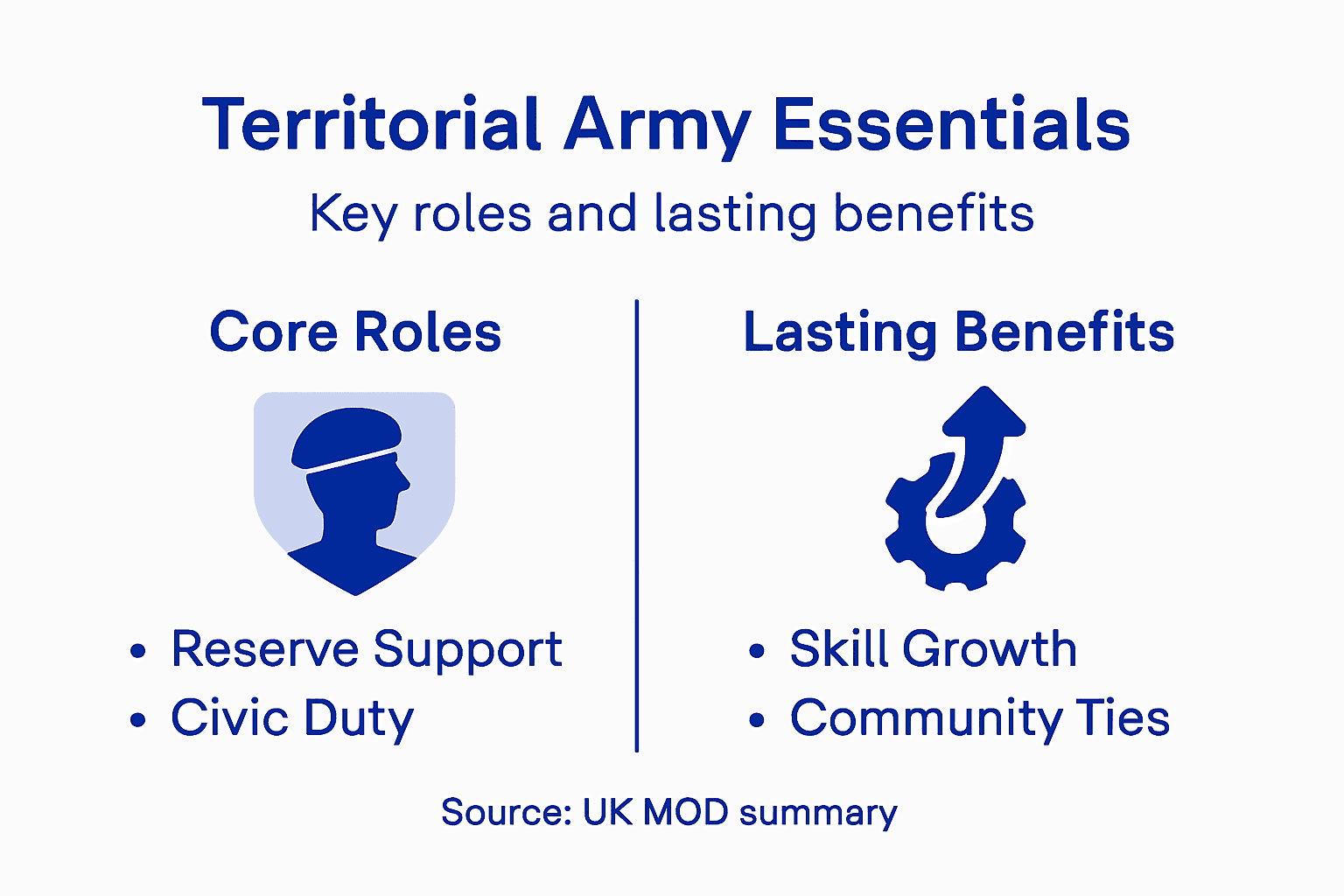
Modern Territorial Army units continue this proud tradition of citizen-soldier service, representing an essential component of United Kingdom defence strategy. They embody a long-standing British military principle: combining professional expertise with community-driven commitment.
Here is a concise comparison of the Territorial Army and Regular Army roles:
| Aspect | Territorial Army | Regular Army |
|---|---|---|
| Primary Purpose | Reserve support & rapid mobilisation | Full-time national defence |
| Membership | Part-time citizen-soldiers | Professional military personnel |
| Civilian Career | Maintained alongside service | Not typically permitted |
| Deployment | Domestic & international as required | Unlimited global deployment |
| Training Commitment | Flexible, often weekends & annual camps | Continuous, year-round |
Pro tip: Research your local Territorial Army unit’s specific history to understand its unique regional contributions and heritage.
Army Reserve Structure and Main Categories
The British Army Reserve represents a complex and sophisticated military organisation, strategically integrated within the national defence framework. Unlike traditional standing armies, this structure provides remarkable flexibility and depth to military capabilities, combining professional expertise with community-driven commitment.
Key Reserve Force Categories include:
- Infantry Reserve Units
- Artillery Reserve Regiments
- Engineering and Technical Support Corps
- Medical and Logistical Support Battalions
- Specialised Communication and Intelligence Units
Reserve units maintain strong connections to their parent regiments, ensuring operational cohesion and preserving rich military traditions. Regimental structures support diverse military engagement ranging from operational readiness to ceremonial responsibilities, with units like the Honourable Artillery Company exemplifying this multifaceted approach.
The modern Army Reserve system allows individuals to contribute meaningful military service while maintaining civilian careers. Reservists undergo rigorous training, enabling rapid mobilisation during national emergencies and providing essential supplementary capabilities to the Regular Army. This model reflects Britain’s historical approach of maintaining a lean yet adaptable defence infrastructure.

Recruitment and engagement pathways are deliberately designed to accommodate varied personal commitments, offering flexible service models that range from annual training commitments to potential full-time deployments. The integration ensures that Reserve forces remain a critical component of United Kingdom’s comprehensive defence strategy.
Key Reserve unit categories and unique contributions:
| Unit Type | Primary Role | Unique Contribution |
|---|---|---|
| Infantry | Ground combat support | Flexible reinforcement capacity |
| Artillery | Firepower and defence | Strategic long-range capabilities |
| Engineering | Construction & repair | Technical civilian expertise leveraged |
| Medical | Health & casualty care | Dual civilian-medical skill sets |
| Intelligence | Communication & signals | Enhanced security through specialisation |
Pro tip: Contact your local Army Reserve unit to understand specific entry requirements and potential career opportunities.
Joining Requirements and Common Misconceptions
Army Reserve entry requirements are more flexible and accessible than many potential candidates realise. Contrary to popular belief, joining does not necessitate a complete career change or full-time military commitment, but rather offers a unique opportunity to serve while maintaining existing civilian employment.
Key Entry Requirements include:
- Minimum age of 18 (some roles available from 16)
- British citizenship or residency status
- Ability to pass medical and fitness assessments
- Commitment to minimum annual training days
- Background security clearance
Common misconceptions about Reserve service persist, often deterring potential candidates. Many individuals incorrectly assume that Reserve membership automatically means immediate overseas deployment or requires extensive prior military experience. Historical volunteer traditions reveal that these units have always been designed to accommodate individuals balancing civilian and military responsibilities.
The recruitment process is deliberately designed to be inclusive, offering multiple entry pathways for individuals with diverse backgrounds and skills. Graduates may enter specialist roles or officer training, while those without formal academic qualifications can still find meaningful positions that leverage their unique talents and motivations.
Recruiters actively seek individuals who can bring transferable skills from civilian careers, recognising that professional expertise in areas like project management, technology, or healthcare can be directly applicable to military roles. The Army Reserve values diversity and individual potential more than traditional military stereotypes might suggest.
Pro tip: Attend a local recruitment event to gain first-hand insights into Reserve opportunities and dispel personal misconceptions.
Training, Duties, and Deployment Expectations
Territorial Army training exercises represent a comprehensive approach to military preparedness, blending rigorous skill development with realistic operational scenarios. Reservists undergo intense training designed to seamlessly integrate them with Regular Army units, ensuring they can perform effectively in diverse and challenging environments.
Key Training Components include:
- Combat skills and tactical movement
- Advanced first aid and medical response
- Navigation and survival techniques
- Equipment handling and maintenance
- Operational coordination strategies
Deployment expectations have significantly evolved since 1967, with Territorial Army roles expanding globally. Modern reservists are no longer confined to home defence, but can be mobilised for international operations, humanitarian missions, and critical support roles that leverage their unique civilian skill sets.
The training philosophy emphasises adaptability and self-sufficiency. Reservists learn to operate in austere conditions, often with limited resupply options, developing a robust skill set that bridges civilian professional expertise with military operational requirements. This approach allows individuals to maintain their primary careers while providing flexible, valuable military service.
Recruiters and training teams carefully balance the demands of military preparedness with the understanding that most reservists have significant civilian commitments. Training programmes are designed to be intensive yet manageable, typically involving weekend sessions, annual camps, and periodic intensive training periods that build comprehensive military capabilities.
Pro tip: Maintain peak physical fitness and develop transferable skills to enhance your effectiveness in Army Reserve training.
Personal Growth, Pay, and Community Benefits
Armed Forces remuneration policies offer Territorial Army members comprehensive financial recognition and career development opportunities. The pay structure is designed to reward reservists’ commitment, providing competitive compensation that reflects their dual responsibilities of civilian and military service.
Key Financial and Personal Benefits include:
- Competitive pay during training and deployments
- Career progression opportunities
- Professional skills development
- Leadership training
- Potential for additional qualifications
Community engagement and personal growth represent fundamental advantages of Territorial Army service. Reservists develop transferable skills such as leadership, teamwork, and strategic thinking that directly enhance their civilian career prospects. The experience provides unique opportunities for personal challenge and professional development.
The welfare support system ensures reservists and their families receive comprehensive assistance. This includes support networks, counselling services, and resources designed to help manage the complex balance between military commitments and civilian life. Such provisions demonstrate the Army’s commitment to supporting individuals throughout their service journey.
Beyond financial compensation, the Territorial Army offers intangible rewards of community service, personal achievement, and national contribution. Reservists gain access to exclusive training, potential international experiences, and a sense of pride in serving their country while maintaining their primary civilian careers.
Pro tip: Document your military skills and training to maximise their impact on your civilian career progression.
Rights, Responsibilities, and Legal Protections
Armed Forces Covenant legal principles establish comprehensive legal protections for Territorial Army members, ensuring fair treatment across public services and professional environments. These frameworks guarantee that reservists do not face disadvantages in healthcare, housing, education, or employment due to their military commitments.
Key Legal Rights and Protections include:
- Protection against service-related discrimination
- Guaranteed access to public services
- Employment rights and job security
- Healthcare support
- Educational opportunities
Territorial Army service obligations come with corresponding responsibilities that balance individual commitments with national defence requirements. Reservists must maintain operational readiness, attend mandatory training, and uphold rigorous military standards while being protected by comprehensive legal frameworks.
The legal protections extend beyond immediate service conditions, encompassing welfare support for both serving members and their families. This holistic approach recognises the broader impact of military service and provides structured support mechanisms that acknowledge the unique challenges faced by reservists.
Public bodies are now legally required to consider the specific needs of Armed Forces personnel, creating a robust support system that acknowledges the distinctive nature of military service. These provisions ensure that reservists can confidently balance their civilian and military responsibilities without fear of systemic disadvantage.
Pro tip: Familiarise yourself with the Armed Forces Covenant to understand your full range of legal protections and rights.
Honour the Legacy of the Territorial Army with Authentic British Military Gifts
The article highlights the remarkable dedication and service of Territorial Army members who balance civilian careers with vital defence duties. Their commitment to rapid mobilisation, rigorous training, and community service deserves more than recognition. Discover unique UK military gifts and presentation products that celebrate this enduring tradition and acknowledge the personal growth, leadership, and sacrifice embodied by Reservists.
Explore our MOD Guards collection for authentic memorabilia that reflects the core values of the Territorial Army. Whether you are a serving Reservist, veteran, or looking for the perfect gift to mark a special achievement, our carefully curated products pay tribute to your service. Act now to browse exclusive items on our Home page – The Regimental Store Ltd and keep the spirit of nation-wide citizen soldiers alive with proudly British presentation pieces. Visit https://regimentalstore.co.uk today and celebrate commitment that lasts a lifetime.
Frequently Asked Questions
What is the primary role of the Territorial Army?
The primary role of the Territorial Army is to provide trained reservists who can rapidly support and reinforce the Regular Army during national emergencies, combining civilian careers with military service.
How does the training commitment of the Territorial Army differ from the Regular Army?
The training commitment for the Territorial Army is flexible, often involving weekends and annual camps, whereas the Regular Army requires continuous year-round training and full-time dedication.
What are the key benefits of joining the Territorial Army for individuals?
Key benefits include competitive pay, opportunities for career progression, professional skills development, and the chance to gain unique experiences while serving the community and maintaining a civilian career.
Are there any misconceptions about serving in the Territorial Army?
Yes, common misconceptions include the belief that joining requires full-time military commitment or guarantees immediate overseas deployment, whereas it allows individuals to serve part-time while balancing civilian responsibilities.
Recommended
- Regimental System Explained: Heritage and Daily Impact – The Regimental Store Ltd
- Royal Artillery: Why It Matters for UK Defence – The Regimental Store Ltd
- History of the Royal Engineers: Lasting Impact on Service – The Regimental Store Ltd
- Parachute Regiment History: Britain’s Airborne Legacy – The Regimental Store Ltd
- Army Pledges Kinetic, Non-kinetic Efforts To Improve Securit / Naijatipsland