
Significance of Arm Badges in British Army Life
Every British soldier knows that a single embroidered badge can carry a lifetime of stories. Arm badges stand out not only as uniform details but as bold markers of honor and belonging within the British Army. More than ninety percent of veterans say their regimental or qualification badges remain cherished symbols long after service ends. Understanding how these badges signal achievements and heritage gives deeper meaning to every stitch, reinforcing the shared pride found only among British military ranks.
Table of Contents
- Arm Badges Defined: Meaning and Origins
- Types of Military Arm Badges Explained
- Symbolism and Traditions in Regimental Badges
- Badge Placement, Eligibility and Wearing Rules
- Common Misunderstandings and Collecting Risks
Key Takeaways
| Point | Details |
|---|---|
| Arm Badges’ Significance | Arm badges in the British Army symbolise soldiers’ identities, achievements, and regimental heritage, serving as powerful visual representations of their military journey. |
| Badge Types and Functions | Different types of badges, such as Qualification, Operational, and Regimental Badges, signify specialised training, campaign participation, and unit affiliation, respectively. |
| Regulations on Placement and Eligibility | The strict regulations regarding badge placement and eligibility ensure that each badge accurately reflects a soldier’s qualifications and service history. |
| Collecting Risks and Authentication | Collectors must be cautious about historical variations and counterfeit badges, necessitating in-depth knowledge and verification skills to ensure authenticity and value. |
Arm Badges Defined: Meaning and Origins
Arm badges in the British Army represent far more than simple decorative elements. These intricate insignia serve as powerful visual representations of a soldier’s identity, achievements, and regimental heritage. Military uniform badges are detachable metal or cloth symbols strategically positioned on various parts of the military uniform, communicating critical information about an individual’s military journey.
Historically, arm badges emerged from practical identification needs within military units. Initially designed to distinguish soldiers from different regiments, these badges quickly evolved into complex systems of communication. Each badge tells a unique story of service, showcasing qualifications, specialist skills, battle honours, and long-service commitments. Regimental insignia traditionally reflected a unit’s colours and historical achievements, creating a tangible connection between contemporary soldiers and their proud military lineage.
The design and placement of arm badges follow strict regulations within the British Army. Typically positioned on the upper arm or sleeve, these badges communicate precise details about a soldier’s capabilities and experiences. They might indicate specialised training, operational deployments, qualification levels, or commemorative service. Beyond their practical purpose, arm badges serve as a source of pride, representing personal and collective military accomplishments that symbolise dedication, skill, and commitment to serving the United Kingdom.
Pro tip: When examining an Army veteran’s arm badges, each symbol represents a chapter of their unique military story, offering a silent but powerful narrative of service and achievement.
Types of Military Arm Badges Explained
The British Army employs a diverse range of military arm badges that communicate vital information about a soldier’s service, skills, and achievements. These badges are not merely decorative elements but sophisticated communication systems that provide immediate visual insights into a soldier’s professional identity and capabilities.
Typically, arm badges can be categorised into several key types. Qualification Badges represent specific skills or training achievements, such as those earned by aircrew, medical personnel, or specialist trade groups. Operational Badges commemorate service in particular military campaigns or deployments, allowing soldiers to proudly display their involvement in significant missions. Regimental Badges signify a soldier’s unit affiliation, representing their connection to a specific regiment’s proud history and traditions.
The placement, design, and material of these badges are strictly regulated. Cloth and metal insignia are positioned carefully on uniforms, with each location carrying specific meaning. Some badges are permanent fixtures, while others might be temporary and awarded for specific achievements or periods of service. The intricate system of arm badges reflects the British Army’s commitment to recognising individual accomplishments while maintaining a strong sense of collective identity and heritage.
Here is a comparison of common British Army arm badge types and what they signify:
| Badge Type | Typical Placement | Main Purpose |
|---|---|---|
| Qualification Badge | Upper arm or sleeve | Indicates specialised training |
| Operational Badge | Lower sleeve | Recognises campaign participation |
| Regimental Badge | Upper sleeve/shoulder | Shows unit affiliation |
| Service Badge | Lower sleeve | Marks long or distinguished service |
Pro tip: When studying a soldier’s arm badges, look beyond the visual design and understand the rich narrative of service and expertise each symbol represents.
Symbolism and Traditions in Regimental Badges
Regimental badges represent far more than simple insignia - they are living historical narratives that encapsulate the spirit, courage, and collective identity of British military units. Regimental traditions sustain profound connections between past achievements and present-day service, with each badge telling a unique story of valour and commitment.
The symbolic elements within these badges are meticulously designed to reflect a regiment’s heritage. Royal arms, battle honours, and distinctive mottos are carefully integrated into the badge design, representing not just visual markers but deep emotional connections to military history. Heraldic Elements often include specific colours, animals, and historical references that trace the regiment’s lineage, commemorating significant battles, heroic actions, and the unique character of each military unit.
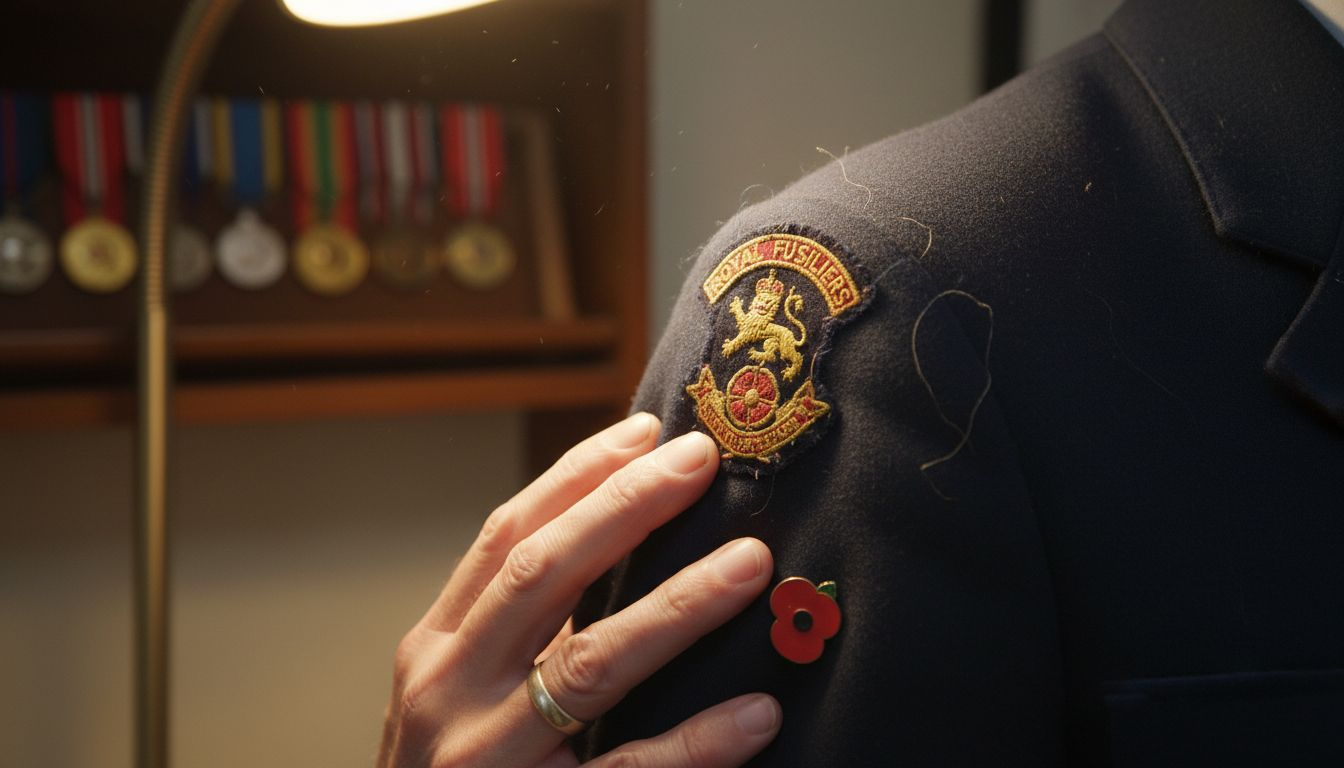
These badges serve multiple critical functions beyond mere identification. They represent a soldier’s connection to their regiment’s proud history, boost morale, and create a sense of belonging. The intricate designs communicate a complex language of military achievement, with each symbol and colour carefully chosen to represent specific accomplishments, geographical origins, and regimental specialisations. This visual heritage ensures that the stories of courage and sacrifice are permanently woven into the fabric of military identity.
Pro tip: When examining a regimental badge, look beyond its aesthetic and understand the rich historical narrative embedded in every carefully crafted detail.
Badge Placement, Eligibility and Wearing Rules
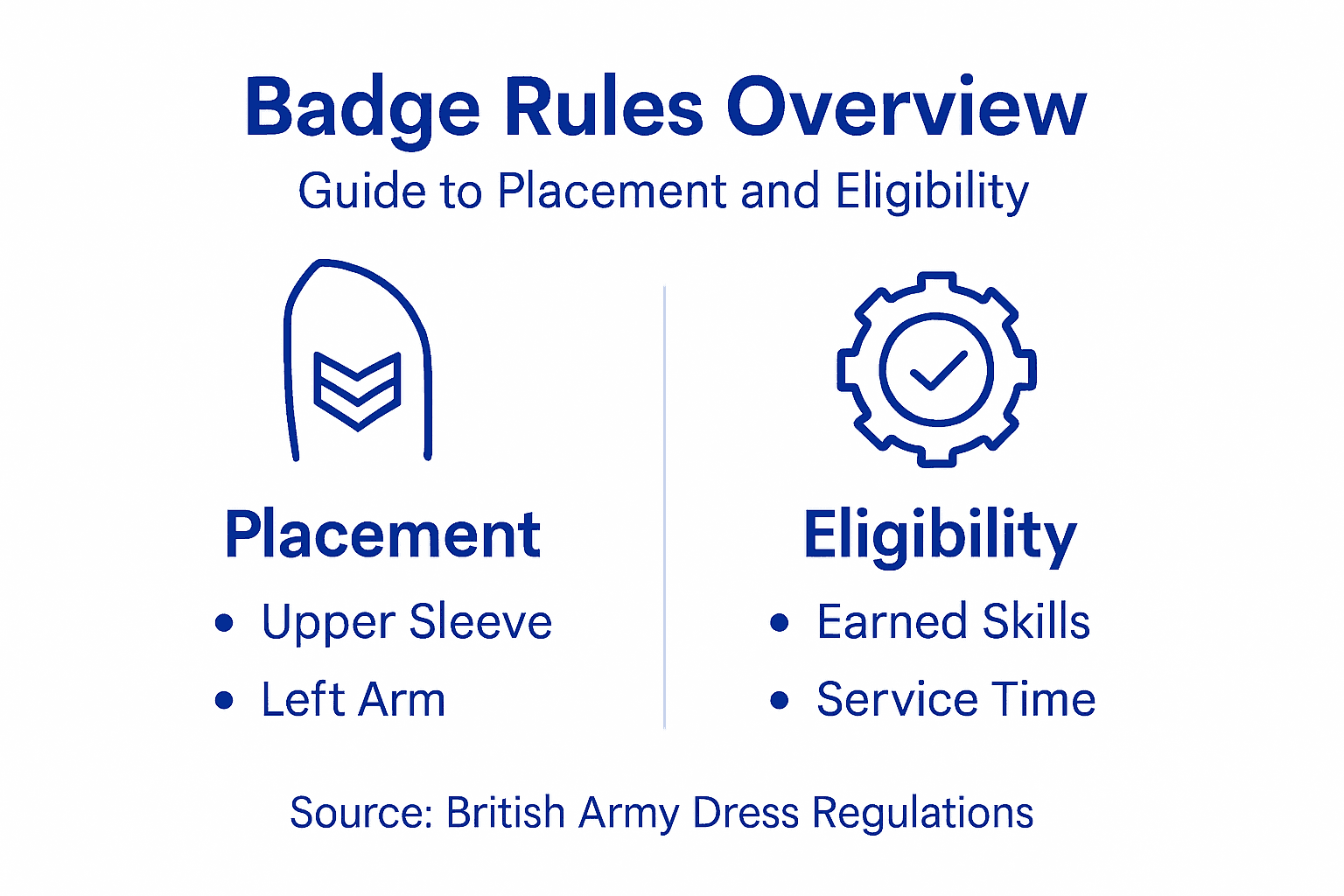
In the British Army, badge placement rules are meticulously structured, reflecting a precise system of military protocol and individual achievement. Each badge’s position on the uniform communicates specific information about a soldier’s qualifications, service history, and regimental identity, making them far more than simple decorative elements.
Badge eligibility is determined by several critical factors. Qualification Badges are earned through specific training achievements, while Service Badges recognise operational deployments and long-term commitment. Specialist badges might indicate advanced skills such as parachute training, medical qualifications, or technical expertise. Only soldiers who have completed the requisite training or met specific criteria are permitted to wear these badges, ensuring they represent genuine accomplishment and expertise.
The positioning of badges follows strict regulatory guidelines. Typically, badges are worn on specific areas of the uniform including the upper arm (brassard), sleeve, collar, and headdress. Each location carries its own significance, with placement determined by the type of badge and the soldier’s rank and unit. Importantly, badges can be temporary or permanent, and soldiers are expected to update their uniform to reflect current qualifications, removing outdated insignia when superseded by new achievements.
Pro tip: Always verify the current regulations before wearing any military badge, as placement and eligibility rules can change with updates to military protocols.
Common Misunderstandings and Collecting Risks
Military badge collecting is an intricate pursuit fraught with potential pitfalls, particularly for those unfamiliar with the nuanced world of military badge authentication. Collectors must navigate a complex landscape where historical accuracy, provenance, and expertise are paramount to understanding the true value and significance of these military artefacts.
Historical Variations pose significant challenges in badge collecting. Many badges have undergone multiple design iterations, with subtle changes that can dramatically affect their historical and monetary value. Replica badges flood the market, making it challenging for novice collectors to distinguish authentic pieces. Military badges often reflect specific historical periods, regimental changes, and service modifications, requiring deep knowledge of military heraldry and historical context to accurately identify and appreciate genuine items.
Risks in badge collecting extend beyond mere misidentification. Unscrupulous sellers may exploit collectors’ limited knowledge by selling counterfeit or artificially aged badges. Serious collectors must develop sophisticated verification skills, including understanding manufacturing techniques, material composition, and the specific historical context of each badge. Factors such as original stitching, metal composition, and precise design details become critical in determining a badge’s authenticity and historical significance.
For collectors, here are key factors affecting the value and authenticity of military arm badges:
| Factor | Impact on Value | Verification Tip |
|---|---|---|
| Period Authenticity | Higher for original era | Study historical references |
| Manufacturing Technique | Early methods valued | Examine stitching or metal details |
| Provenance | Traceable increases worth | Request document or photo evidence |
| Condition | Mint fetches premiums | Inspect for repairs or damage |
Pro tip: Always consult multiple expert sources and invest in detailed reference materials before purchasing any military badge to avoid costly misidentifications and potential fraudulent acquisitions.
Celebrate the Proud Significance of British Army Arm Badges with Personalized Gifts
Understanding the deep symbolism behind arm badges reveals just how important they are for honouring service, skills and regimental heritage within the British Army. If you or a loved one cherish these meaningful symbols of dedication and achievement, finding the perfect way to celebrate this military legacy is essential. Our range of Gifts and Personalised Presentation for Veteran and serving UK Army offers carefully selected items designed to reflect the pride and identity embodied by every badge.
Discover unique keepsakes that honour the stories these badges tell and create lasting memories. Don’t miss the chance to mark service with a tailored tribute that matches the spirit of the uniform. Explore our full collection at The Regimental Store and find inspiration to celebrate British Army heroism now. For specific regimental traditions, our dedicated Royal Artillery Shop for Gifts and personalised presentation awards. is also a valuable resource.
Frequently Asked Questions
What is the purpose of arm badges in the British Army?
Arm badges serve as visual representations of a soldier’s identity, achievements, and regimental heritage, communicating important details about their military journey.
How are military arm badges categorized in the British Army?
Military arm badges are categorized into types such as Qualification Badges, Operational Badges, and Regimental Badges, each signifying specific skills, campaign participation, and unit affiliation respectively.
What do the designs and symbols on regimental badges represent?
The designs on regimental badges often include royal arms, battle honours, and mottos that reflect a regiment’s heritage, commemorating significant battles and the unique character of the military unit.
What rules exist for the placement and eligibility of arm badges?
The placement of arm badges on uniforms follows strict regulations, with specific areas designated for different types. Eligibility is based on completed training or achievements, ensuring badges represent genuine military accomplishments.
Recommended
- Why Display Military Badges: Honouring Service in the UK – The Regimental Store Ltd
- Cap Badges Explained: Meaning for UK Forces – The Regimental Store Ltd
- Royal Air Force Badge: Meaning, Types and Heritage – The Regimental Store Ltd
- Blazer Badge Explained: Meaning, Types, and Traditions – The Regimental Store Ltd