
Royal Signals: Heritage and Impact in the British Army
Few units have shaped the modern British Army quite like the Royal Signals, the backbone of the nation’s military communications since 1920. Every mission relies on their expertise, with over 75 percent of battlefield decisions now dependent on secure real-time information flow. Understanding the Royal Signals means appreciating how British military strength, operational safety, and technological evolution are interwoven with their remarkable history and enduring legacy.
Table of Contents
- Core Purpose Of The Royal Signals Corps
- Major Milestones In Royal Signals History
- Distinctive Roles In Military Operations
- Key Skills And Technical Expertise Required
- Impact On Operational Success And Safety
- Royal Signals Legacy In Army Culture
Key Takeaways
| Point | Details |
|---|---|
| Role of Royal Signals | The Royal Corps of Signals serves as the technological backbone of the British Army, enabling effective communication and intelligence in modern military operations. |
| Historical Innovation | The Corps has a legacy of technological advancement, marking significant milestones from the electric telegraph in the 1850s to contemporary cyber defence capabilities. |
| Diverse Operational Expertise | Personnel are trained across multiple domains, including electronic warfare and secure telecommunications, vital for mission success in complex environments. |
| Cultural Significance | The Royal Signals embodies a strong sense of familial tradition, commitment to innovation, and pride in its historical achievements, fostering a unique Corps identity. |
Core purpose of the Royal Signals Corps
The Royal Corps of Signals plays a pivotal role in modern British military operations, serving as the Army’s critical technological backbone. Established in 1920, the Corps specialises in delivering advanced communication and information technology solutions that enable commanders to make strategic decisions quickly and effectively. Their expertise in telecommunications and cyber capabilities represents the cutting edge of military communications technology.
At the heart of their mission, Royal Signals personnel are trained to manage complex communication networks in diverse and challenging environments. They operate sophisticated electronic systems that ensure commanders receive real-time intelligence and maintain operational connectivity across global theatres. From satellite communications during the Falklands War to contemporary digital battlefield management, the Corps has consistently demonstrated its ability to adapt technological solutions to evolving military challenges.
The Corps focuses on several critical domains of military communication and technological warfare. These include:
- Information technology infrastructure
- Cyber defence and electronic warfare
- Secure telecommunications networks
- Strategic electromagnetic spectrum management
- Rapid deployment of communication platforms in conflict zones
Pro Tip: Technical proficiency in communication technologies is not just about equipment, but understanding how to maintain mission-critical networks under extreme pressure.
Major milestones in Royal Signals history
The Royal Corps of Signals has a rich history of technological innovation that spans nearly two centuries, with remarkable advancements in military communications. From the earliest deployment of the electric telegraph during the Crimean War in 1854 to contemporary digital networks, the Corps has consistently been at the forefront of technological transformation. Key milestones in telecommunications technology demonstrate their critical role in shaping military communication strategies.
During the First World War, the Corps introduced the revolutionary Fullerphone, a mechanical encryption device that dramatically improved secure communication in battlefield conditions. World War Two saw further significant developments, with the introduction of the No 10 set, which pioneered mobile wireless telephone technology using microwave communications. These innovations were not merely technical achievements but represented fundamental shifts in how military units could coordinate and respond during complex operations.
The later decades of the 20th century saw even more remarkable technological leaps. Notable milestones include:
- Satellite communications deployment during the Falklands War in 1982
- Development of high-capacity data networks in Afghanistan between 2003-2018
- Establishment of the Queen’s Gurkha Signals in 1948, recognising the critical contributions of Gurkha personnel
- Continuous adaptation to emerging cyber and electronic warfare challenges
Pro Tip: Understanding historical technological innovations provides crucial insights into the strategic thinking that drives military communication advancements.
Here is a summary of the Corps’ technological evolution over time:
| Era | Communication Technology | Strategic Significance |
|---|---|---|
| 1850s-1910s | Electric telegraph, Fullerphone | Secured battlefield messages, improved response time |
| 1940s-1970s | No 10 set, microwave communications | Enabled mobile units, enhanced coordination |
| 1980s-2000s | Satellite networks, digital communications | Global reach, rapid intelligence sharing |
| 2000s-present | Cyber defence platforms, data networks | Protected networks, advanced electronic warfare |
Distinctive roles in military operations
The Royal Signals Corps plays a multifaceted and critical role in modern military operations, serving as the technological linchpin of British Army capabilities. Battlefield communication support represents their core function, enabling commanders to maintain strategic control and operational effectiveness across diverse and challenging environments. Their expertise extends far beyond simple communication, encompassing complex technological and strategic interventions.
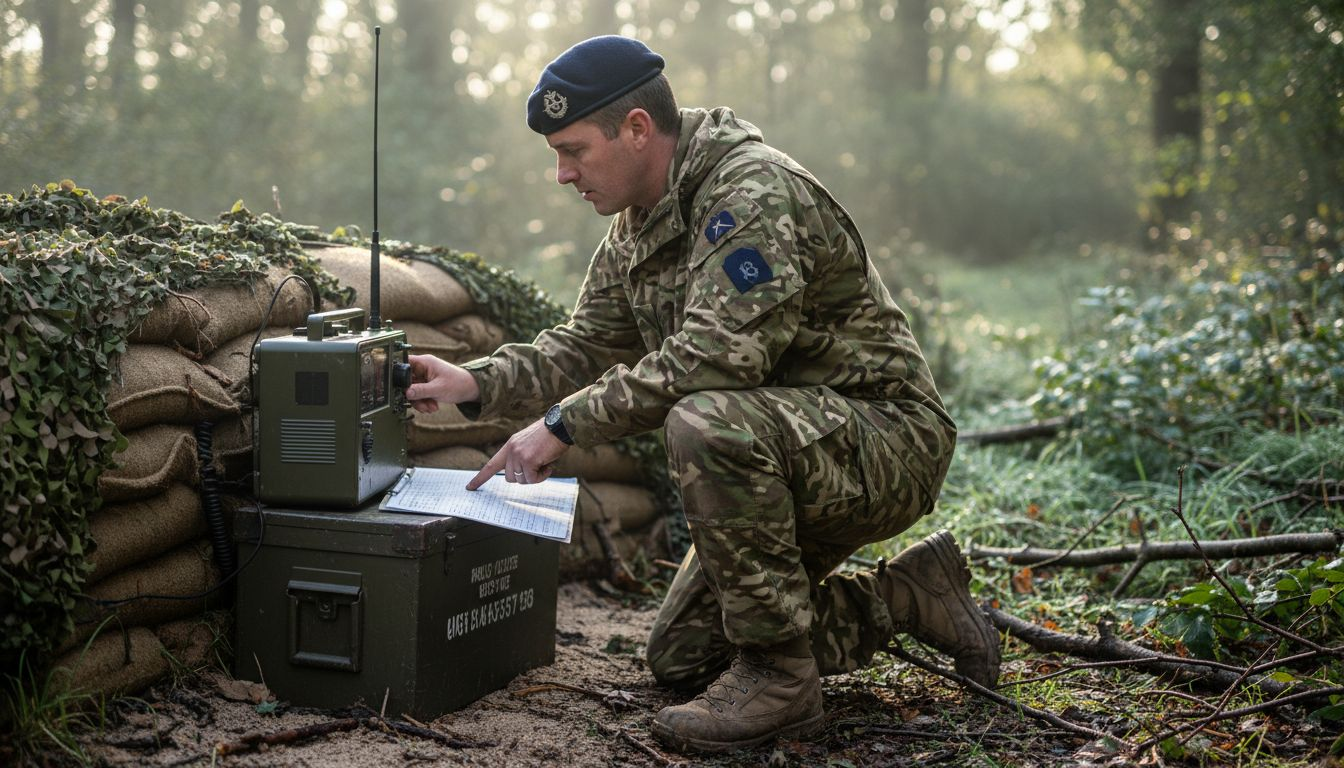
Specialised units within the Royal Signals demonstrate remarkable versatility in military operations. The 1 Signal Regiment provides dedicated communication support for Armoured Brigades, while 13 Signal Regiment focuses on cutting-edge cyber protection and defensive cyber operations. These units are responsible for disrupting enemy communications, protecting allied forces, and maintaining secure information networks that are crucial for mission success.
The Royal Signals personnel operate across multiple critical domains, including:
- Tactical communications infrastructure
- Electronic warfare and signals intelligence
- Cyber defence and network protection
- Surveillance and reconnaissance support
- Joint and multinational operational communication services
Their roles frequently involve high-stakes missions that require exceptional technical skills, adaptability, and strategic thinking. Electronic Warfare and Signals Intelligence Operators work in particularly challenging environments, often operating close to enemy lines to target communication systems, RADAR, and unmanned aerial vehicle control links.
Pro Tip: Effective military communication is about more than technology - it’s about understanding how information can be a strategic weapon in complex operational scenarios.
This table highlights the difference between key operational roles of Royal Signals:
| Role | Main Focus | Example Impact |
|---|---|---|
| Cyber Defence Specialist | Countering digital threats | Shields frontline units from hacking |
| Tactical Communications Engineer | Establishing networks | Maintains secure field connectivity |
| Electronic Warfare Operator | Disrupts enemy systems | Jams hostile RADAR and drones |
| Signals Intelligence Analyst | Intercepts enemy data | Provides crucial battlefield insights |
Key skills and technical expertise required
The Royal Signals Corps demands an exceptional blend of technical prowess and military expertise from its personnel. Sophisticated technical skills are crucial, encompassing advanced capabilities in information technology, cyber defence, telecommunications, and electronic warfare. Soldiers must demonstrate dynamic adaptability, innovative problem-solving, and the ability to operate complex communication systems in high-pressure environments.
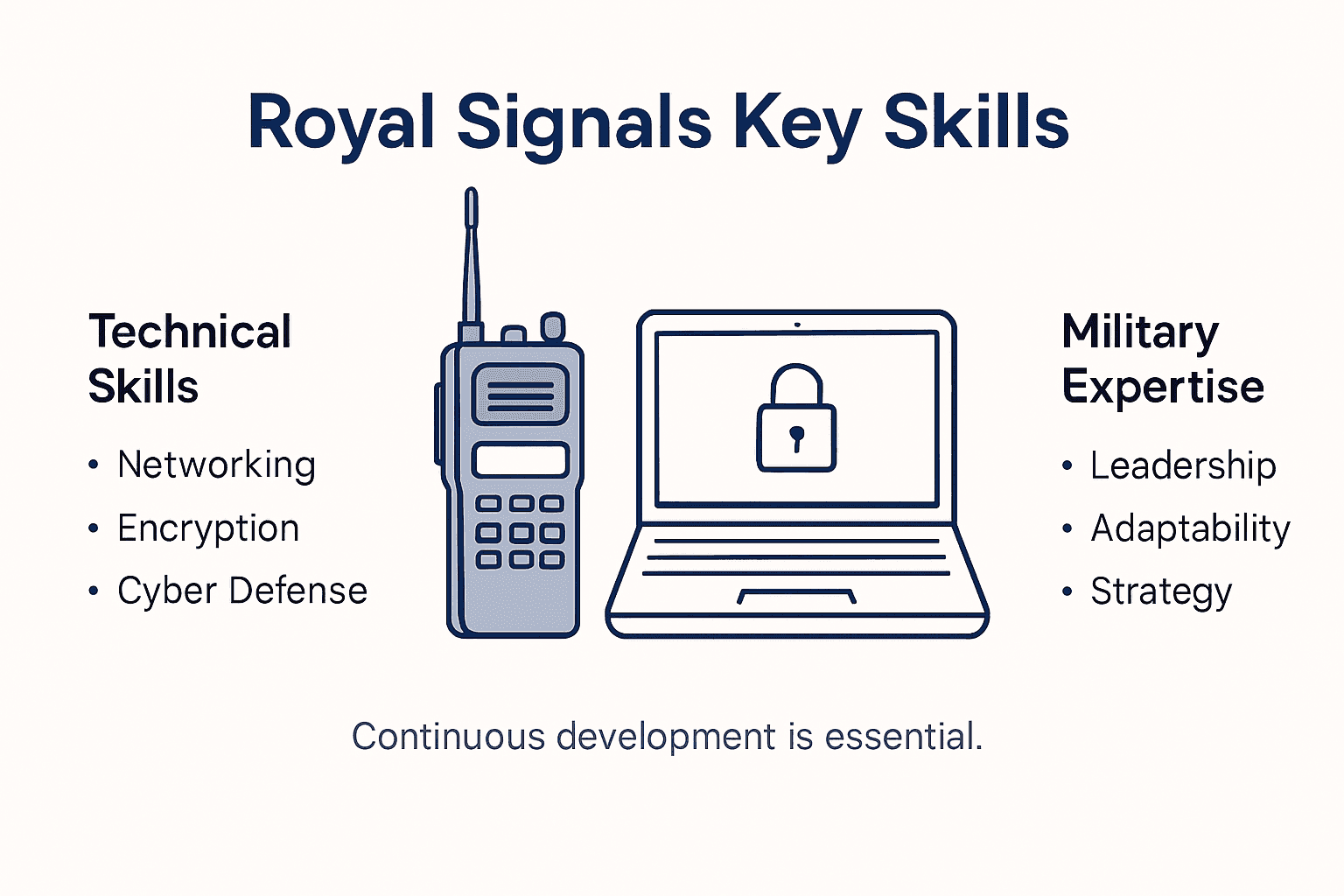
Specialised roles within the Corps require deep technical competence across multiple domains. Communication Engineers, for instance, must master intricate skills such as network infrastructure design, secure communication system management, and critical data network protection. These professionals are trained to build and maintain sophisticated communication architectures, ranging from fiber optic installations to advanced digital communication platforms that support military operations worldwide.
Key technical competencies for Royal Signals personnel include:
- Advanced software and hardware engineering
- Cyber threat detection and mitigation
- Network infrastructure design and implementation
- Secure communication system management
- Electronic warfare techniques
- Information services engineering
- Digital security protocol development
Continuous professional development is paramount in this technologically demanding field. Royal Signals soldiers receive world-class training, industry-recognised qualifications, and leadership development programmes that ensure they remain at the cutting edge of military communication technologies. Their role requires not just technical expertise, but also strategic thinking, adaptability, and the ability to innovate under challenging operational conditions.
Pro Tip: Technical skills in military communications are not static - perpetual learning and adaptability are your most valuable professional assets.
Impact on operational success and safety
The Royal Signals Corps plays a critical role in safeguarding operational effectiveness through cutting-edge technological interventions. Cyber defence capabilities represent a pivotal aspect of their contribution, with units like the 13th Signal Regiment providing essential ‘digital armour’ that protects frontline operations from sophisticated electronic threats. Their work ensures secure communications, preserves decision-making advantages, and maintains robust command and control systems in increasingly complex operational environments.
Technological innovations directly enhance military safety and operational success. Advanced communication technologies such as the PhoenixC4i DarkSky Clip-On Antenna demonstrate the Corps’ commitment to protecting personnel by reducing electronic signatures. These sophisticated systems make military units significantly harder to detect, minimising vulnerability to electronic warfare threats and providing critical stealth capabilities that can mean the difference between mission success and potential catastrophe.
Key contributions to operational safety include:
- Developing secure communication networks
- Implementing advanced cyber defence protocols
- Reducing electromagnetic detection risks
- Protecting critical digital infrastructure
- Enabling real-time strategic information exchange
- Mitigating electronic warfare threats
The Royal Signals’ impact extends beyond immediate technological solutions. They provide strategic resilience by continuously adapting communication technologies to emerging threats, ensuring that British military forces maintain a decisive technological edge in increasingly digital battlespaces. Their work represents a complex fusion of technical expertise, strategic thinking, and unwavering commitment to operational excellence.
Pro Tip: In modern warfare, information security is as crucial as physical defence - technological adaptability is your most potent operational shield.
Royal Signals legacy in army culture
The Royal Signals represents far more than a military unit; it is a living, breathing family bound by shared technological expertise and profound institutional pride. Generational service and strong familial traditions define its unique cultural identity, where technical mastery and innovation are passed down through generations of dedicated personnel. The Corps celebrates a legacy of continuous adaptation, embodying a spirit that values both historical achievements and future potential.
Ceremonial activities and personal narratives play a significant role in maintaining the Corps’ rich cultural heritage. The Royal Signals’ Pipes and Drums represent one powerful example of how tradition connects generations, with families like Captain Martin McPhie’s illustrating the deep-rooted commitment to service. Personal stories of fathers and sons serving together underscore the profound sense of belonging and shared purpose that distinguishes the Royal Signals from other military units.
Key cultural characteristics of the Royal Signals include:
- Commitment to technological innovation
- Strong interpersonal bonds and team spirit
- Emphasis on continuous professional development
- Pride in technical expertise
- Respect for historical achievements
- Adaptability in facing emerging challenges
Beyond technical competence, the Royal Signals cultivates a culture of excellence that encourages personal growth, leadership development, and a sense of collective identity. Their approach combines rigorous technical training with a deep appreciation for the Corps’ historical contributions, creating an environment where individual skills are celebrated and collective achievements are prioritised.
Pro Tip: Cultural heritage in military units is not just about remembering the past, but about using those lessons to inspire future innovation and excellence.
Honour the Legacy of the Royal Signals with Distinctive Gifts
The Royal Signals Corps stands as a powerful symbol of technological innovation and unwavering dedication within the British Army. Recognising the challenges of maintaining secure communications and advancing cyber defence, it is vital to celebrate their heritage and impact through meaningful keepsakes. Whether you are commemorating a loved one’s service or marking a special occasion, our exclusive collection offers bespoke presentation awards and gifts that reflect the Corps’ spirit of adaptability, technical excellence, and solidarity.

Explore the Royal Signals Shop for Gifts and Bespoke Personalised Presentation Awards to find unique items crafted to honour the commitment and courage of serving personnel and veterans. Act now to choose from a range of beautifully designed mementos that carry the legacy forward. Visit The Regimental Store Ltd today and celebrate this extraordinary heritage with gifts that resonate with pride and valour.
Frequently Asked Questions
What is the primary role of the Royal Signals Corps in the British Army?
The Royal Signals Corps serves as the technological backbone of the British Army, specialising in advanced communication and information technology solutions that enable commanders to make strategic decisions effectively.
What are some significant milestones in the history of the Royal Signals Corps?
Key milestones include the deployment of the electric telegraph during the Crimean War, the introduction of the Fullerphone in World War One, satellite communications during the Falklands War, and developments in cyber defence and data networks in contemporary operations.
What skills are required to serve in the Royal Signals Corps?
Personnel in the Royal Signals Corps need advanced technical skills in areas such as information technology, cyber defence, telecommunications, and electronic warfare, alongside adaptability and innovative problem-solving capabilities in high-pressure environments.
How does the Royal Signals Corps impact operational success and safety?
The Corps enhances operational safety and success by developing secure communication networks, implementing cyber defence protocols, and reducing electromagnetic detection risks, ensuring robust command and control systems in complex operational environments.
Recommended
- Regimental System Explained: Heritage and Daily Impact – The Regimental Store Ltd
- British Army Gift Traditions: Complete Guide UK – The Regimental Store Ltd
- Military Gifts Symbolism: Complete Guide for UK Audience – The Regimental Store Ltd
- Why Display Military Badges: Honouring Service in the UK – The Regimental Store Ltd