
Royal Navy Ship Crests – Their Meaning and Value
Most british veterans can instantly recognise the proud symbols worn by their Royal Navy vessels, yet few realize that more than 95 percent of modern ship crests carry features rooted in World War I tradition. For those who served or still serve, the ship crest is more than an emblem. It tells a story of heritage, camaraderie, and shared achievement. This guide explains how these striking crests became enduring icons for military memorabilia and personal memories.
Table of Contents
- Defining A Royal Navy Ship Crest
- Badge Shapes, Symbols And Meanings
- Heraldic Tradition And Crest Origins
- Design Process And Official Regulations
- Crests In Memorabilia And Personal History
Key Takeaways
| Point | Details |
|---|---|
| History of Ship Crests | Royal Navy ship crests emerged as a replacement for wooden figureheads, reflecting advancements in naval technology and practices. |
| Standardisation | The design and creation of these emblems are governed by the Ships’ Badges Committee, ensuring a uniform approach to naval heraldry since World War I. |
| Symbolism | Each ship crest encapsulates the vessel’s heritage and identity through carefully chosen heraldic elements, providing a visual narrative of its history and achievements. |
| Memorabilia Significance | Collecting Royal Navy memorabilia, such as ship crests, connects individuals to maritime history and preserves the legacy of naval service. |
Defining a Royal Navy ship crest
The ship crest serves as a distinctive graphic emblem representing individual Royal Navy vessels, embodying a rich maritime tradition that evolved from historic naval practices. These graphical representations replaced traditional wooden figureheads after steel warships made such decorative elements impractical, creating a new method of visual ship identification.
Originally unregulated, ship crests underwent significant standardisation during World War I when Major C.J. ffoulkes was tasked with creating an official system of naval heraldry. The Naval Crown became a standard feature, topping each badge and framed by an intricate gold rope design. Modern ship crests are typically circular, though historically different ship classes featured varied shapes reflecting their unique characteristics.
Each Royal Navy ship crest combines symbolic imagery that represents the vessel’s heritage, achievements, and operational specialities. These designs are carefully crafted by heraldry experts who incorporate meaningful elements such as naval equipment, historical references, geographical connections, or regimental symbols. The goal is to create a unique visual narrative that captures the spirit and identity of each individual naval vessel.
Pro tip: When collecting Royal Navy memorabilia, always verify the authenticity and historical context of ship crests, as genuine badges can provide fascinating insights into a vessel’s operational history and maritime legacy.
The following table compares the traditional figurehead with the modern ship crest, highlighting their respective roles and significance in Royal Navy history:
| Aspect | Traditional Figurehead | Modern Ship Crest |
|---|---|---|
| Material | Carved wood | Painted metal or embroidery |
| Purpose | Identify and decorate vessel | Symbolise heritage and identity |
| Placement | Bow of the ship | Official records and memorabilia |
| Adaptability | Not suited to steel hulls | Universally applicable |
| Symbolic elements | Mythological or national icons | Heraldic imagery, Naval Crown |
Badge shapes, symbols and meanings
Royal Navy ship badges represent a sophisticated heraldic system with distinct shapes and configurations historically determined by vessel type. In the early 20th century, the Admiralty established specific geometric designs for different naval vessels: battleships and battle cruisers received circular badges, cruisers were assigned pentagonal shapes, destroyers were given shield-shaped emblems, and other vessels and shore establishments used diamond-shaped designs.
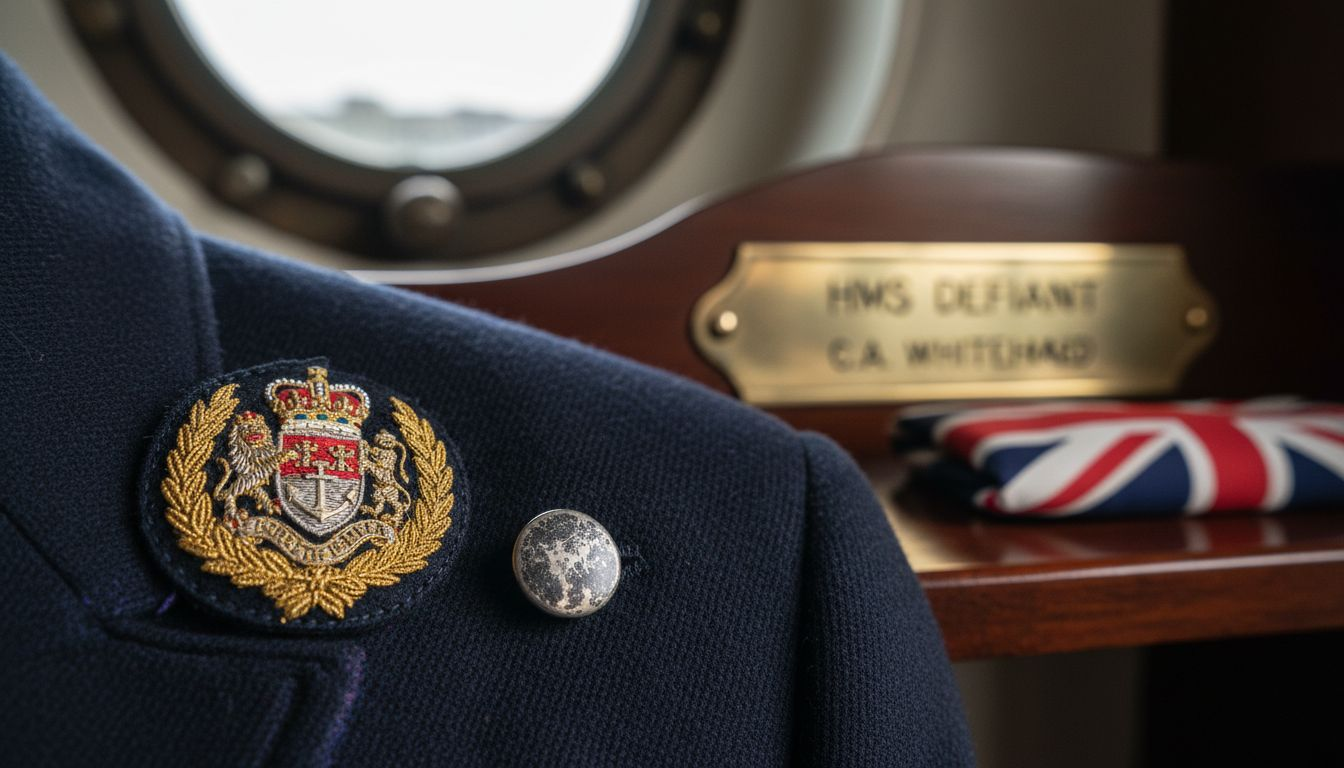
The symbolism within these badges extends far beyond mere geometric representation. Each badge incorporates carefully chosen visual elements that narrate the vessel’s unique story through heraldic imagery. These symbols might include naval equipment, historical references, geographical connections, or regimental emblems that capture the ship’s identity, mission, and heritage. The Naval Crown, a standard feature atop each badge, symbolises the Royal Navy’s prestigious traditions and serves as a unifying heraldic element.
Modern Royal Navy badges have largely standardised to a circular format, though the intricate symbolism remains a crucial aspect of naval identity. Designers meticulously craft these emblems to represent not just the physical vessel, but its spirit, achievements, and cultural significance. The badges serve multiple purposes: they are visual identifiers, historical records, and sources of pride for naval personnel, creating a tangible connection between the ship’s past and present.
Pro tip: When examining Royal Navy ship badges, look for subtle details in the symbolism that reveal the vessel’s unique narrative and historical significance.
Here is a concise summary of the shapes used for Royal Navy ship badges, as determined by vessel type during the early 20th century:
| Vessel Type | Badge Shape | Symbolic Meaning |
|---|---|---|
| Battleship | Circle | Unity and completeness |
| Cruiser | Pentagon | Strength and adaptability |
| Destroyer | Shield | Defence and protection |
| Shore Establishment | Diamond | Tradition beyond seafaring |
Heraldic tradition and crest origins
The origins of Royal Navy ship crests are deeply rooted in maritime heraldic traditions that evolved during a period of significant naval transformation. The heraldic tradition formally began during World War I, when the Admiralty recognized the need to replace wooden figureheads with more standardised symbolic representations. Major C.J. ffoulkes, then Curator of the Tower Armouries, was instrumental in this transition, commissioned to design ship badges that would capture the essence of each naval vessel.
Naval heraldry represents a unique adaptation of classical heraldic principles, specifically tailored to maritime identification and representation. The Ships’ Badges Committee, established in 1918, created a systematic approach to designing emblems that would not only serve decorative purposes but also communicate the historical lineage, identity, and honour of naval vessels and their crews. Since 1934, officers from the College of Arms have held the prestigious position of Adviser on Naval Heraldry, ensuring that each badge maintains rigorous heraldic standards and reflects the rich maritime heritage of the Royal Navy.
The evolution of these crests mirrors the technological and cultural changes within the naval service. From intricate wooden figureheads to carefully designed heraldic badges, each emblem tells a story of maritime tradition, technological innovation, and national pride. The naval crown, a consistent feature atop these badges, symbolises the continuity and prestige of Royal Navy traditions, connecting modern vessels with centuries of maritime history.
Pro tip: When studying Royal Navy ship crests, examine the subtle heraldic elements that reveal the unique story and historical context of each naval vessel.
Design process and official regulations
The creation of Royal Navy ship crests follows a meticulously structured and highly regulated process that ensures heraldic integrity and historical significance. The Ships’ Badges Committee, established after World War I, governs the entire design and approval mechanism, with stringent protocols that transform a ship’s identity into a symbolic representation. The process begins with detailed submissions from naval units, which are then carefully evaluated by heraldic experts who assess the proposed design’s historical accuracy, symbolic relevance, and adherence to maritime heraldic traditions.
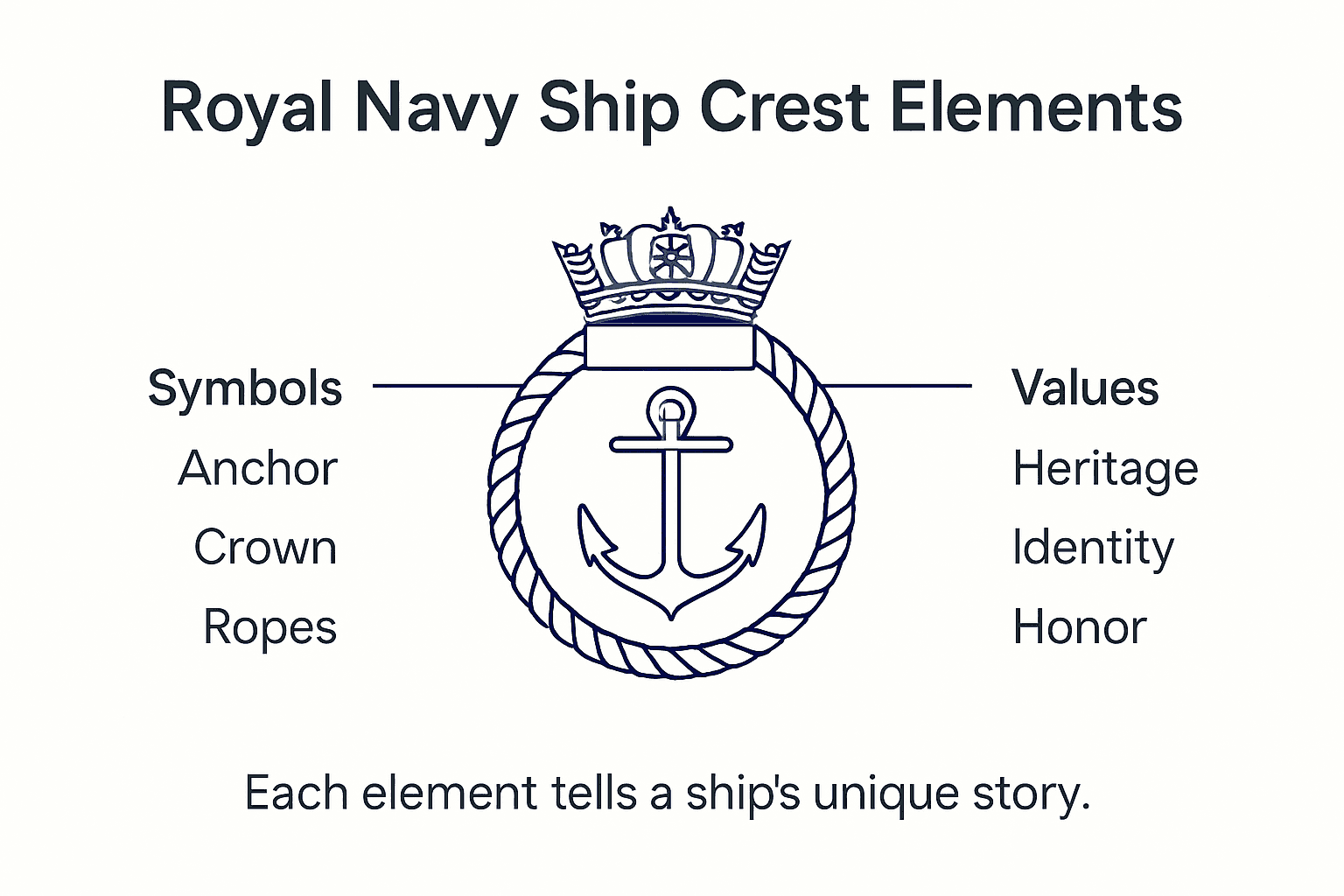
Official regulations mandate specific design elements that must be incorporated into each ship’s badge, including the mandatory naval crown and intricate gold rope framing. While historically different ship classes featured varied geometric shapes, modern regulations have standardised most badges to a circular format. Each design undergoes rigorous scrutiny by the Adviser on Naval Heraldry from the College of Arms, ensuring that the final artwork not only represents the vessel’s unique character but also maintains the prestigious standards of Royal Navy heraldic traditions.
The approval process is particularly noteworthy, involving multiple layers of review and ultimately requiring formal sanction from the monarch. Heraldic artists meticulously prepare original artworks, which are then signed off by the Inspector and subjected to comprehensive evaluation. This multi-stage approach guarantees that each ship’s badge is more than a mere decorative element – it becomes an official emblem of naval heritage, carrying the weight of historical significance and institutional pride.
Pro tip: When researching Royal Navy ship crests, examine the intricate details and symbolic elements that reveal the deeper narrative behind each vessel’s unique identity.
Crests in memorabilia and personal history
Royal Navy ship crests transcend their original identification purpose, becoming powerful symbols of maritime heritage and personal connection. These distinctive emblems have been extensively reproduced in various memorabilia formats, ranging from large bronze screen plaques to smaller brass boat badges. Crew members, veterans, and naval history enthusiasts collect these items as tangible links to specific ships, squadrons, and maritime experiences, preserving individual and collective memories of naval service.
Official ship crest badges are meticulously crafted as high-quality embroidered patches and commemorative items, representing more than mere decorative objects. They embody the spirit, achievements, and unique identity of naval vessels. For many service members, these crests are deeply personal artefacts that symbolise their professional journey, unit pride, and connection to a broader maritime tradition. Collectors and naval historians value these items not just for their aesthetic appeal, but as historical documents that narrate the stories of individual ships and the sailors who served aboard them.
The significance of these memorabilia extends beyond individual collections. Naval museums, regimental archives, and private collections carefully preserve these crests as important historical records. Each badge tells a story of maritime service, technological evolution, and national maritime heritage. They serve as physical connections between past and present, allowing younger generations to understand and appreciate the rich traditions of the Royal Navy through tangible, visual representations of naval history.
Pro tip: When collecting Royal Navy ship crest memorabilia, always seek authentication and documentation to ensure the historical accuracy and personal significance of each piece.
Discover the Rich Heritage Behind Royal Navy Ship Crests with Meaningful Gifts
Royal Navy ship crests carry deep symbolism and a powerful connection to naval tradition and personal service. Understanding their heraldic meaning and unique design process reveals just how special these emblems truly are. For those seeking to honour the legacy of British naval vessels or commemorate naval service, finding authentic and historically inspired memorabilia can be a challenge. You want gifts that reflect the vessel’s identity and pride, not just generic tokens.
Explore our Royal Navy Shop for gifts and presentation Royal Marines & Submariners to find carefully curated products that capture the spirit of Royal Navy ship crests.
Celebrate heritage and preserve personal history with our official crest badges, embroidered patches, and presentation items. Act now to secure meaningful keepsakes that connect you or your loved ones to a proud maritime legacy. Browse more unique ideas in our Featured Gift Ideas or visit The Regimental Store Ltd for the full range. Honor tradition today with gifts that carry the true spirit of the Royal Navy.
Frequently Asked Questions
What is the significance of a Royal Navy ship crest?
The Royal Navy ship crest serves as a unique emblem representing individual vessels, embodying their heritage, achievements, and operational specialities within a rich maritime tradition.
How are Royal Navy ship crests designed and approved?
The design process of ship crests involves detailed submissions reviewed by heraldic experts, ensuring adherence to historical accuracy and maritime traditions, culminating in formal approval from the monarch.
What do the different shapes of Royal Navy ship badges represent?
The geometric shapes of ship badges, such as circular for battleships and pentagonal for cruisers, are historically determined by vessel type and carry symbolic meanings reflecting the ship’s identity and mission.
How can Royal Navy ship crests enhance personal and collective histories?
Royal Navy ship crests act as powerful symbols of maritime heritage and personal connections for crew members and collectors, preserving memories and historical narratives related to specific vessels and their service.
Recommended
- Royal Navy Memorabilia Guide: Identify and Preserve Collectibles – The Regimental Store Ltd
- Royal Air Force Badge: Meaning, Types and Heritage – The Regimental Store Ltd
- Royal Navy Gifts Guide: Choose Perfect Navy Presents – The Regimental Store Ltd
- Types of Military Regalia in the UK Forces – The Regimental Store Ltd