
Regimental Bands: Their Role in British Military Life
Most British military bands trace their roots back over two hundred years, making them living monuments to regimental pride and national identity. For many former and current service members, these bands offer far more than ceremonial music; they symbolize camaraderie, shared history, and unwavering discipline. Unpacking the myths and realities behind regimental bands reveals how each ensemble carries unique traditions and emotional stories that make military memorabilia and gifts personally meaningful.
Table of Contents
- Regimental Bands Defined And Common Myths
- Distinctive Types Across Army, Navy, Raf
- Traditional Roles And Ceremonial Functions
- How Regimental Bands Support Morale And Identity
- Band Membership, Recruitment And Training
- Modern Challenges And Preservation Efforts
Key Takeaways
| Point | Details |
|---|---|
| Regimental Bands Are More Than Performers | They serve as symbols of military heritage and foster unit identity beyond mere entertainment. |
| Musical Training and Military Skills | Musicians undergo rigorous training that combines musical excellence with military discipline and operational readiness. |
| Adaptation and Modern Challenges | Regimental bands must innovate to remain relevant amidst budget constraints and societal changes while preserving tradition. |
| Psychological Role within Units | These bands play a crucial role in boosting troop morale and reinforcing historical narratives through their performances. |
Regimental bands defined and common myths
Regimental bands represent far more than musical ensembles within the British military infrastructure. These carefully curated musical units serve as powerful symbols of military heritage and institutional pride, embodying centuries of tradition and regimental identity. While many civilians perceive them simply as ceremonial performers, their role extends significantly beyond entertainment.
Contrary to popular misconceptions, regimental bands are not merely decorative units. Regimental system studies reveal these musical groups play crucial psychological and organisational functions. They represent living connections to a regiment’s historical narrative, performing critical morale-boosting responsibilities during military ceremonies, parades, and commemorative events. Each band maintains unique musical traditions specific to their regiment, reflecting individual unit histories and cultural identities.
Some persistent myths about regimental bands require careful deconstruction. Many assume these musical units are static, unchanging institutions. However, like the broader military structure, regimental bands have dynamically evolved. They adapt to changing military requirements while preserving core traditions. Their membership increasingly reflects Britain’s multicultural society, with musicians from diverse backgrounds contributing to these prestigious musical formations. Musicians are professionally trained soldiers who undergo rigorous military training alongside their musical specialisation, ensuring they remain operationally capable while maintaining exceptional musical standards.
Pro tip: When attending military ceremonies, pay close attention to the regimental band’s performance, as their musical selections often carry profound historical significance and emotional resonance for serving personnel.
Distinctive types across Army, Navy, RAF
Each branch of the British Armed Forces maintains distinctive musical units with unique characteristics and operational roles. British military bands represent complex musical institutions that extend far beyond ceremonial performances, reflecting the specific cultural identity of each service branch.
The Royal Corps of Army Music represents the British Army’s primary musical establishment, comprising multiple regimental and corps bands. These ensembles provide musical support across diverse military contexts, from formal parades to operational deployments. Army bands typically feature brass and woodwind instrumentalists who are also trained soldiers, ensuring they can contribute operationally while maintaining exceptional musical standards. Their repertoire ranges from traditional military marches to contemporary arrangements that reflect the regiment’s historical lineage.
The Royal Marines Band Service and Royal Air Force Music Services similarly maintain their own distinct musical traditions. Navy bands often perform aboard ships and during naval ceremonies, while RAF bands specialise in representing the aerial service’s unique heritage. Each ensemble develops a specialised musical identity that reflects its parent service’s ethos, with musicians undergoing rigorous training that combines military discipline with advanced musical education. These bands serve critical psychological functions, boosting morale and representing British military pride during national and international events.
Pro tip: When attending military ceremonies, listen carefully to the subtle musical variations between Army, Navy, and RAF bands, as each ensemble tells a unique story about its service branch’s cultural identity.
Here’s a summary of how military bands differ across British service branches:
| Service Branch | Distinctive Features | Typical Venues | Musical Focus |
|---|---|---|---|
| Army | Regimental identity, brass and woodwind | Parades, deployments | Traditional marches, contemporary pieces |
| Royal Navy | Maritime traditions, shipboard performances | Naval ceremonies, ships | Nautical themes, ceremonial music |
| Royal Air Force | Aerial heritage, advanced training | Air bases, commemorations | RAF-specific traditions, modern arrangements |
Traditional roles and ceremonial functions
Regimental bands have played pivotal roles in British military history, serving far beyond mere musical performance. Military bands in the UK have historically functioned as critical communication mechanisms, tracing back to battlefield signalling and morale-boosting responsibilities that remain integral to military tradition.
During state ceremonies and national events, these musical ensembles represent the pinnacle of British military pageantry. The Bands of the Household Division emerge as particularly distinguished performers, responsible for some of the most prestigious musical duties in the United Kingdom. Their performances during Changing of the Guard ceremonies, state visits, and national commemorations demonstrate extraordinary precision and cultural significance. These musicians do not simply play music; they embody centuries of military heritage, communicating national pride and institutional memory through carefully orchestrated musical performances.
Beyond ceremonial contexts, regimental bands maintain critical psychological and operational functions. They provide musical support during military parades, training exercises, and international diplomatic events. Each performance serves multiple purposes: maintaining troop morale, representing regimental identity, and showcasing the discipline and excellence of British military musicians. The bands’ repertoire ranges from traditional military marches to contemporary arrangements, reflecting the evolving nature of military musical traditions while preserving core cultural values.
Pro tip: When observing military band performances, pay attention to the intricate details of their uniforms and musical arrangements, as each element tells a story of regimental history and pride.
How regimental bands support morale and identity
Regimental bands play a profound psychological role within British military culture, serving as living embodiments of unit pride and historical continuity. Royal Corps of Army Music demonstrates how musical units transcend simple performance, functioning as critical mechanisms for maintaining troop cohesion and esprit de corps.
Through carefully selected musical repertoires, these bands communicate complex narratives of regimental heritage and collective identity. Each performance becomes a powerful ritual that reconnects serving personnel with their unit’s historical achievements, reinforcing shared values and institutional memory. The musicians themselves are not merely performers but active military personnel trained to represent their regiment’s traditions with precision and emotional depth. Their ability to transform musical performance into a form of institutional storytelling creates a unique psychological bridge between past and present military generations.
Moreover, regimental bands serve strategically important functions beyond ceremonial contexts. During operational deployments, live music performances can dramatically boost troop morale, providing moments of emotional respite and collective solidarity. The bands’ versatility allows them to adapt musical styles to different contexts, whether performing traditional military marches during formal ceremonies or contemporary arrangements that resonate with younger service members. This musical flexibility ensures that the bands remain relevant and meaningful across generational shifts, continuously reinforcing the emotional and cultural bonds within military units.
Pro tip: Listen carefully to a military band’s musical selection, as each piece represents more than sound – it embodies the regiment’s collective spirit and historical journey.
Band membership, recruitment and training
Recruitment into British military bands represents a unique and highly selective process that demands exceptional musical skill alongside traditional military capabilities. Military music recruiting involves a comprehensive assessment of both musical talent and military potential, ensuring that band members are not just accomplished musicians but fully integrated military professionals.
The training pathway for military musicians is remarkably rigorous and multifaceted. Prospective band members undergo intensive military training at Army Training Centres, followed by specialised musical education at the Royal Military School of Music. This dual-track approach ensures that each musician is first and foremost a trained soldier, capable of fulfilling operational requirements, while simultaneously developing advanced musical skills. The training encompasses not just instrumental proficiency, but also military discipline, ceremonial protocols, and the nuanced understanding of regimental traditions that make military bands unique.
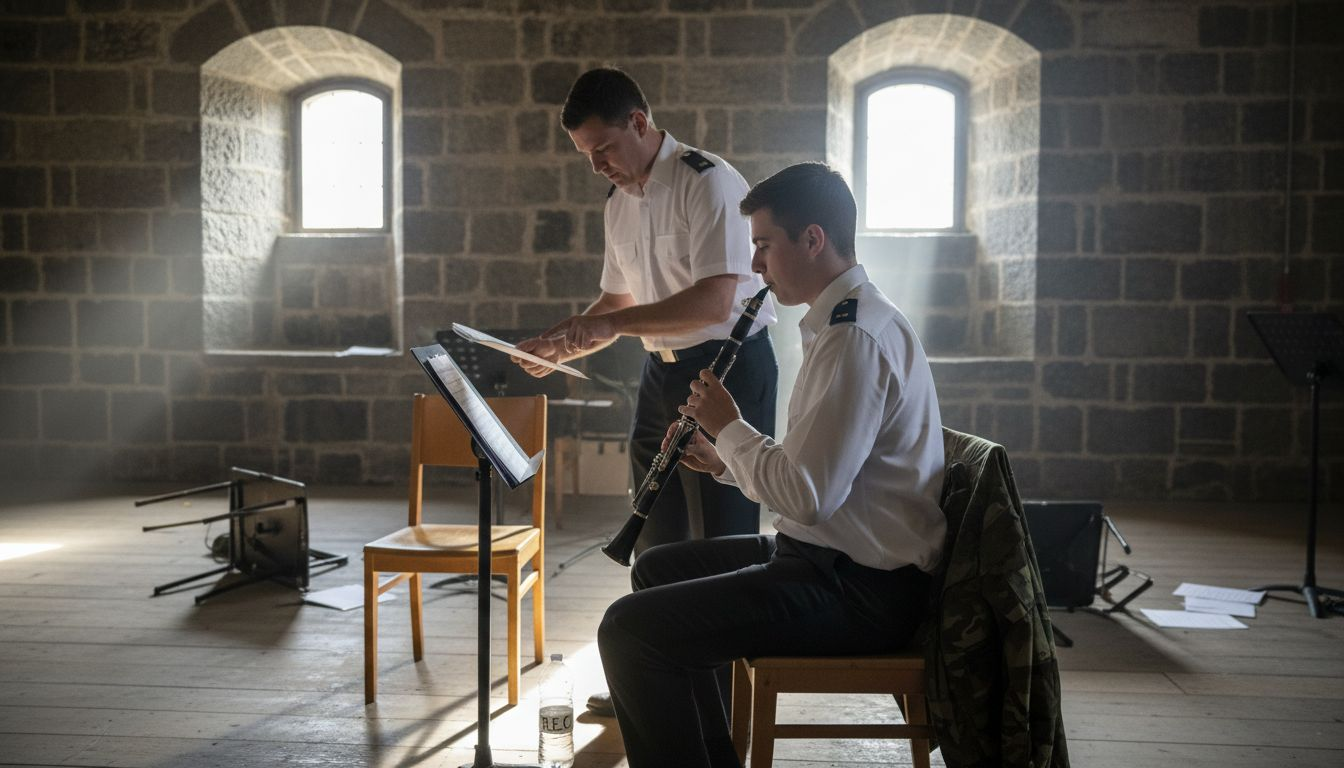
Career progression within the Royal Corps of Army Music offers musicians extraordinary opportunities for professional development. Beyond traditional performance roles, band members can specialise in various musical disciplines, from classical ensemble performance to contemporary arrangements. The Corps provides continuous professional development, enabling musicians to refine their craft while serving their country. Moreover, membership offers unique benefits including international travel, performance opportunities across diverse settings, and a structured career path that values both musical excellence and military service.
Pro tip: Aspiring military musicians should focus on developing both their musical skills and physical fitness, as the Royal Corps of Army Music demands excellence in both domains.
Modern challenges and preservation efforts
Regimental bands face unprecedented challenges in contemporary military environments, balancing traditional roles with evolving institutional demands. Military band funding challenges have created complex pressures that require innovative approaches to sustaining these critical cultural institutions within the British Armed Forces.
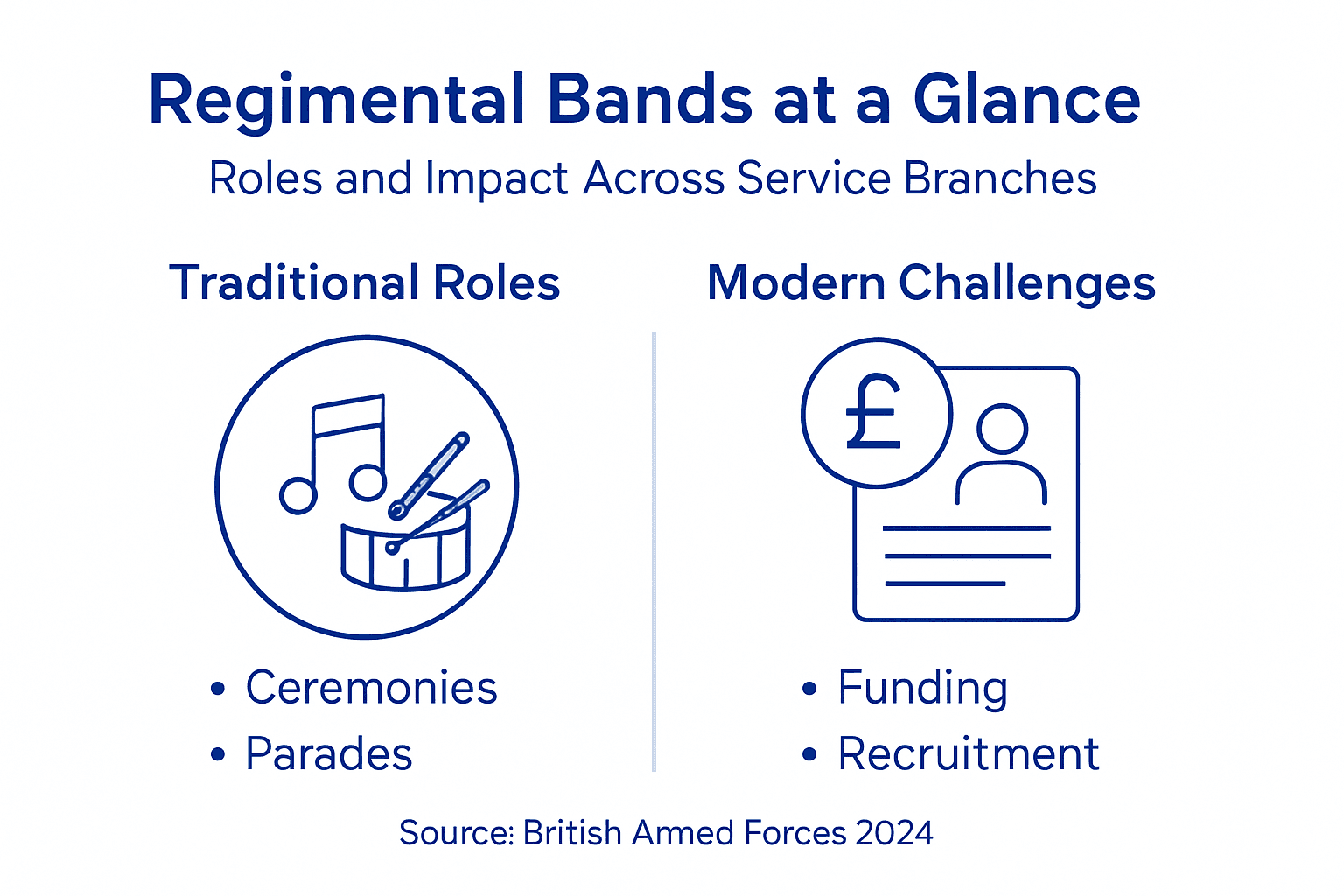
The Royal Corps of Army Music must continuously adapt to significant financial constraints while maintaining the highest standards of musical and military excellence. Budget reductions have necessitated strategic restructuring, with bands reducing personnel numbers while simultaneously expanding their functional versatility. This adaptation involves developing multi-skilled musicians who can perform ceremonial duties, provide morale support, and potentially contribute to operational requirements beyond traditional musical performance. The preservation of regimental musical heritage becomes increasingly dependent on creative strategies that demonstrate the ongoing relevance and value of military musical traditions.
Technological advancements and changing social dynamics further challenge traditional military band structures. Modern bands must now engage with diverse audiences through digital platforms, social media, and contemporary musical arrangements that resonate with younger generations of service personnel and civilians. This requires a delicate balance between maintaining historical authenticity and embracing innovation. Educational outreach programmes, collaborative performances with civilian musical institutions, and adaptive recruitment strategies have become crucial mechanisms for ensuring the continued vitality and relevance of military musical traditions.
Pro tip: Consider attending military band performances to appreciate the intricate balance between preserving historical tradition and adapting to contemporary musical landscapes.
For reference, here are common challenges and preservation strategies for regimental bands today:
| Challenge | Impact on Bands | Preservation Strategy |
|---|---|---|
| Budget cuts | Reduced personnel, less frequent performances | Versatile musicians, streamlined operations |
| Societal change | Need for broader appeal and relevance | Digital engagement, outreach programmes |
| Technological shifts | Pressure to innovate musically | Collaborations and contemporary arrangements |
Celebrate the Proud Tradition of Regimental Bands with Meaningful Gifts
Regimental bands embody the rich history and spirit of the British Armed Forces, but supporting their legacy can be challenging amid modern pressures. Whether you cherish the unique cultural identity of the Guards regiments or the broader British Infantry traditions, recognising their dedication through personalised presentation items creates powerful connections. Offering gifts that reflect the pride, discipline and heritage highlighted in regimental bands helps boost morale and honours those who serve and have served.
Discover a curated selection of gifts that celebrate your regiment’s musical heritage and traditions at Shop gifts and presentation products for all the UK Guards Regiments and explore even more British Infantry tributes at British Infantry Regiments Gifts and Personalised Presentations. Show your pride today by visiting https://regimentalstore.co.uk and choosing presents that resonate with the regimental band’s enduring legacy.
Frequently Asked Questions
What are the main functions of regimental bands in the British military?
Regimental bands serve various functions, including boosting troop morale, providing musical support during ceremonies and parades, and representing their regiment’s historical narrative and identity.
How is the membership of regimental bands structured?
Membership in regimental bands typically includes professionally trained soldiers who undergo rigorous military training alongside their musical education, ensuring they can perform operationally while maintaining high musical standards.
What are the unique characteristics of military bands in different service branches?
Each military service branch has distinctive musical units. Army bands focus on traditional marches, Navy bands perform nautical-themed music during maritime events, and RAF bands represent aerial heritage, each reflecting their respective service’s ethos.
How do regimental bands adapt to modern challenges?
Regimental bands face challenges such as budget cuts and the need for broader appeal. They adapt by developing versatile musicians, engaging with audiences through digital platforms, and implementing outreach programmes.
Recommended
- Regimental System Explained: Heritage and Daily Impact – The Regimental Store Ltd
- Types of Military Regalia in the UK Forces – The Regimental Store Ltd
- What Is a Regimental Tie? Complete UK Overview – The Regimental Store Ltd
- Royal Regiment of Scotland: Legacy and Modern Impact – The Regimental Store Ltd