
Parachute Regiment History: Britain’s Airborne Legacy
Over 80 years of history make the Parachute Regiment one of the most respected and formidable british fighting forces. Their unique airborne tactics and relentless preparation have shaped everything from World War II battles to modern global missions. With a legacy built on discipline and adaptability, this elite unit continues to set the standard for military excellence and rapid response around the world.
Table of Contents
- What Defines The Parachute Regiment
- Origins And Formation In WWII
- Key Second World War Operations
- Post‑War Structure And Deployments
- Modern Roles And Operational Evolution
Key Takeaways
| Point | Details |
|---|---|
| Operational Readiness | The Parachute Regiment maintains a high state of operational readiness, enabling rapid deployment in diverse and challenging environments. |
| Historical Significance | Founded during World War II, the regiment’s innovative airborne strategies shaped modern military operations and demonstrated the value of strategic adaptability. |
| Versatile Roles | Post-war, the regiment transitioned to include peacekeeping and humanitarian missions, highlighting their adaptability beyond traditional combat roles. |
| Technological Integration | Recent advancements, such as the ability to conduct battlegroup jumps using modern aircraft, have enhanced the regiment’s operational capabilities in contemporary military strategies. |
What Defines The Parachute Regiment
The Parachute Regiment represents the pinnacle of British military excellence, embodying extraordinary operational capabilities and strategic versatility. As Britain’s elite airborne infantry, the Paras have cultivated a reputation for unparalleled courage, resilience, and professional skill since their formation during World War II.
At its core, the Parachute Regiment is defined by its unique ability to deploy rapidly into challenging environments through parachute or air assault techniques. Forming the critical nucleus of the 16 Air Assault Brigade Combat Team’s Global Response Force, these soldiers maintain an extraordinary state of operational readiness. Their training encompasses a comprehensive spectrum of military skills, allowing them to execute missions ranging from high-intensity combat scenarios to complex humanitarian interventions.
The regiment’s distinctive characteristics extend beyond technical proficiency. Operational Adaptability and Mental Fortitude are fundamental attributes that distinguish Parachute Regiment soldiers. Their training emphasises not just physical prowess but psychological resilience, enabling them to operate effectively in unpredictable and demanding operational contexts. Each Para undergoes rigorous selection and training processes that test physical limits, tactical understanding, and psychological strength.
Pro Tip: Elite Preparation: To truly understand the Parachute Regiment, recognise that their effectiveness stems from relentless training, unwavering discipline, and a profound commitment to operational excellence that extends far beyond conventional military expectations.
Origins And Formation In WWII
The birth of the Parachute Regiment emerged from a critical moment in military strategy during World War II. Impressed by the effectiveness of German airborne troops, British Prime Minister Winston Churchill recognised the transformative potential of paratrooper units and demanded the creation of a comparable British force. This strategic vision led to the systematic development of an entirely new approach to military deployment and combat engagement.
Formal establishment occurred swiftly, with the Parachute Regiment being officially formed on 22 June 1940). By the end of 1941, No 2 Commando had been comprehensively retrained as parachutists, marking the first significant milestone in creating Britain’s elite airborne infantry. The regiment would ultimately raise an impressive 17 battalions during the war, each trained to execute complex and dangerous missions behind enemy lines.
These pioneering soldiers participated in numerous critical operations across multiple theatres of war. Their operational areas spanned North Africa, Italy, Greece, France, the Netherlands, and Germany, with paratroopers often landing ahead of conventional ground forces. This advanced deployment strategy allowed them to disrupt enemy positions, seize strategic locations, and provide crucial tactical advantages that traditional infantry units could not achieve.
Pro Tip: Historical Insight: Understanding the Parachute Regiment’s World War II origins reveals how military innovation can fundamentally transform warfare, demonstrating that strategic thinking and bold leadership can create entirely new combat capabilities.
Key Second World War Operations
During World War II, the Parachute Regiment distinguished itself through a series of audacious and strategically critical operations that would define their reputation as an elite fighting force. One of the most remarkable early missions was Operation Biting), a daring raid on a German radar site at Bruneval that demonstrated the regiment’s capacity for precision and tactical innovation. This operation not only showcased their technical skill but also provided crucial intelligence about German technological capabilities.
The brigade’s involvement expanded significantly across multiple theatres of war. The 1st Parachute Brigade participated in Operation Torch, the pivotal Allied invasion of North Africa), which marked a turning point in the North African campaign. Perhaps their most famous engagement was the Battle of Arnhem during Operation Market Garden, where their extraordinary courage and resilience were tested to the absolute limit. Despite facing overwhelming German opposition, the Paras fought with unparalleled determination, embodying the regiment’s core values of bravery and commitment.
Additionally, units like the 5th Parachute Brigade played crucial roles in some of the war’s most significant campaigns. They were instrumental in the Normandy landings, capturing the strategically vital Caen canal and Orne river bridges. Their involvement continued through critical operations such as Operation Paddle and the Battle of the Bulge, demonstrating the regiment’s versatility and strategic importance across different combat environments.
The following table highlights major operations involving the Parachute Regiment and their strategic impact:
| Operation/Event | Year(s) | Theatre/Location | Strategic Outcome |
|---|---|---|---|
| Operation Biting | 1942 | Bruneval, France | Captured key radar technology |
| Operation Torch | 1942 | North Africa | Supported Allied invasion |
| Battle of Arnhem | 1944 | Netherlands | Displayed exceptional resilience |
| Normandy Landings | 1944 | France | Secured vital bridges |
| Afghanistan Deployments | 2001–2021 | Afghanistan | Led both initial and final UK operations |
Pro Tip: Operational Legacy: Understanding these World War II operations reveals that the Parachute Regiment’s success was never about individual heroics, but about disciplined teamwork, meticulous preparation, and an unwavering commitment to mission objectives.
Post‑War Structure And Deployments
Following the conclusion of World War II, the Parachute Regiment underwent a significant restructuring, reducing its operational strength to three regular army battalions. Despite this downsizing, the regiment maintained its reputation for operational excellence and strategic adaptability. The reduced structure did not diminish their combat readiness or global impact, with these battalions preparing to engage in increasingly complex international missions.
The Parachute Regiment demonstrated remarkable operational continuity, being involved in military operations nearly every year since World War II. Their deployments spanned diverse and challenging geographical locations, including Palestine, Cyprus, Suez, Borneo, Aden, Northern Ireland, the Falklands, Kosovo, Sierra Leone, Iraq, and Afghanistan. Each deployment tested the regiment’s adaptability, showcasing their ability to operate effectively in dramatically different combat environments and political contexts.
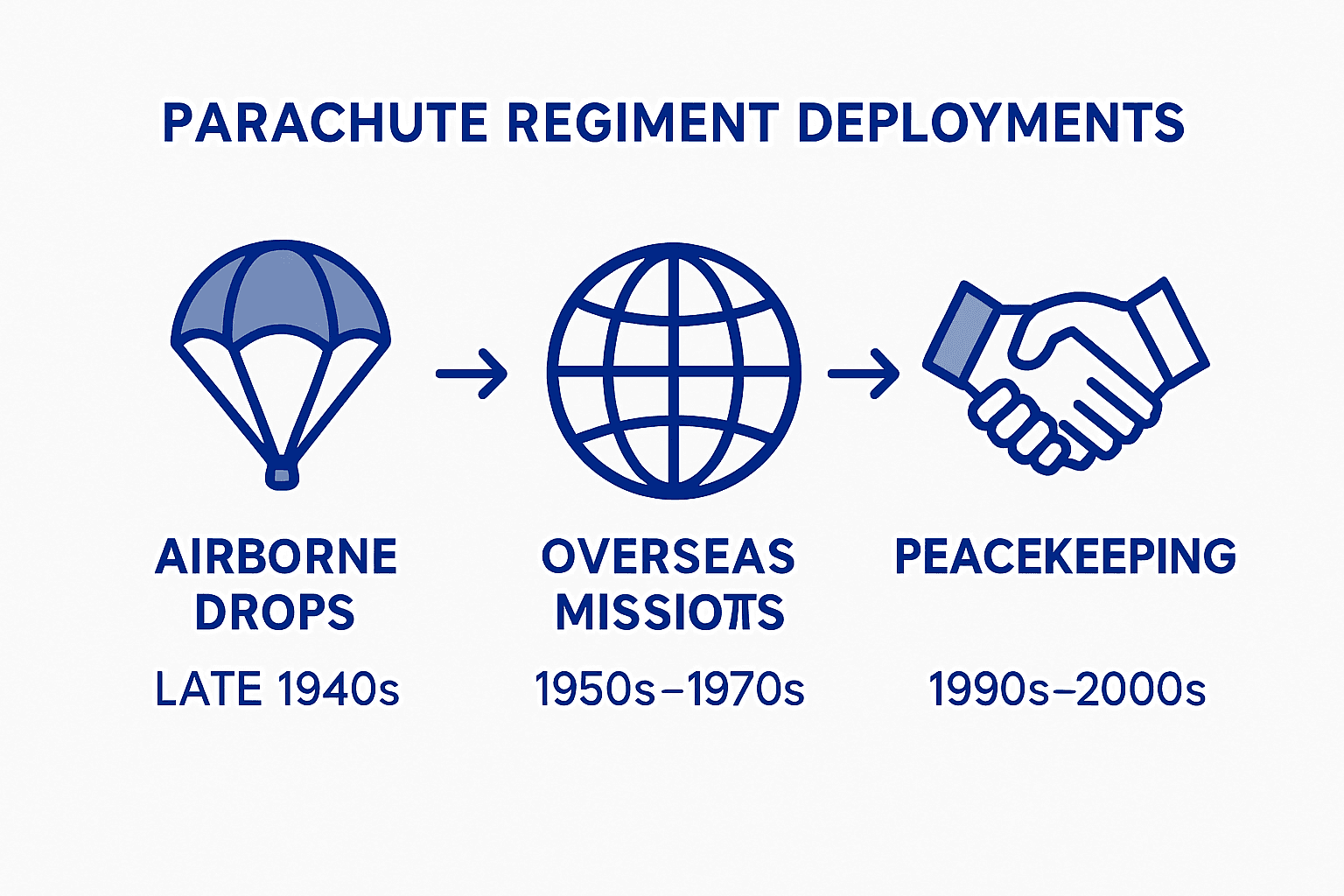
These post-war deployments were not merely military operations but represented complex diplomatic and humanitarian missions. The Parachute Regiment increasingly found itself operating in scenarios that demanded nuanced understanding of geopolitical dynamics, requiring soldiers to be not just warriors, but also diplomats, peacekeepers, and humanitarian support personnel. Their interventions often balanced direct military objectives with broader strategic goals of regional stabilisation and conflict mitigation.
Pro Tip: Operational Wisdom: Understanding a regiment’s post-war history reveals more than just its combat record; it illuminates the evolving nature of military engagement in an increasingly complex global landscape.
Modern Roles And Operational Evolution
In contemporary military strategy, the Parachute Regiment continues to provide critical rapid deployment capabilities for the United Kingdom’s defence forces. Their core mandate remains delivering an infantry force capable of immediate response in the most demanding and unpredictable operational environments. The regiment represents the spearhead of the Army’s Global Response Force, maintaining an extraordinary state of operational readiness that allows them to be mobilised at extremely short notice.
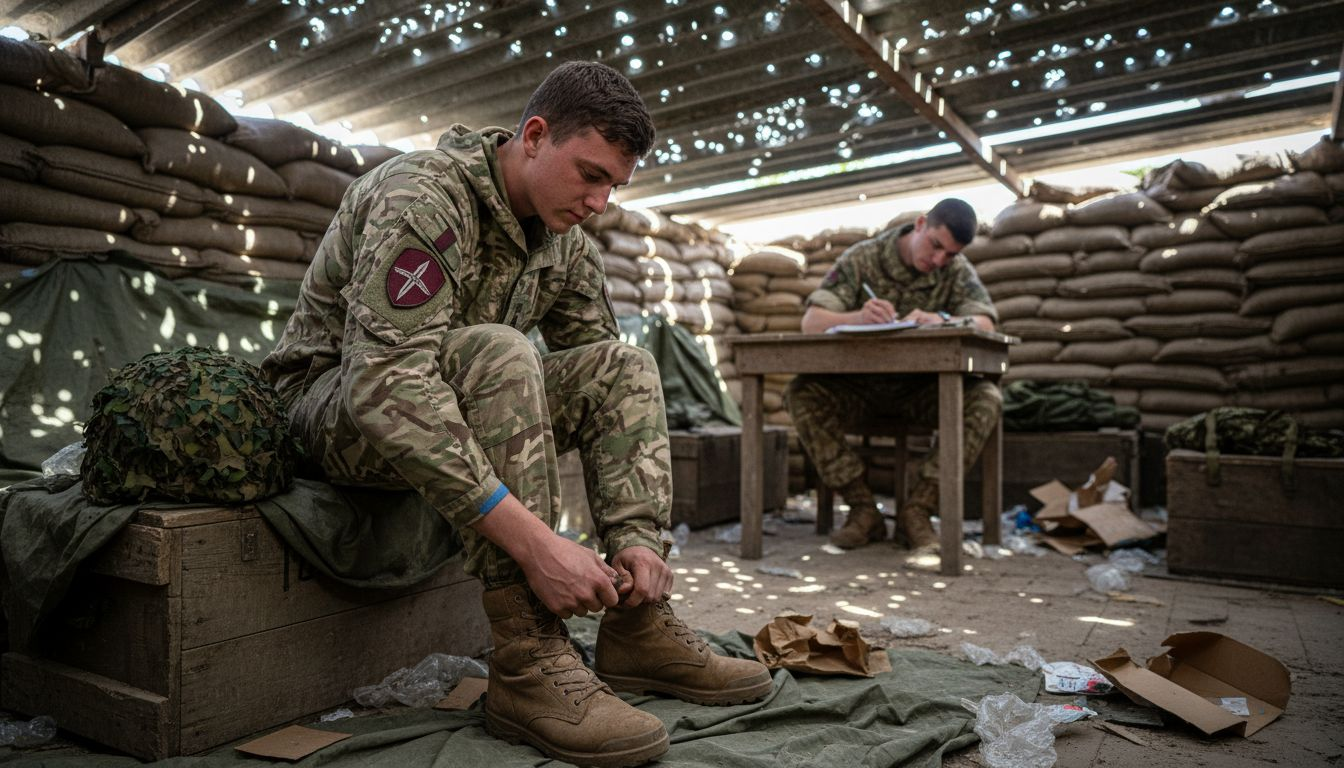
Their strategic significance was dramatically illustrated through their comprehensive involvement in Afghanistan, where they were the first British troops to arrive in 2001 and the final unit to oversee the evacuation in 2021. During this two-decade period, they played a pivotal role in complex multinational operations, demonstrating remarkable adaptability across counterinsurgency, peacekeeping, and humanitarian missions. The regiment’s involvement extended far beyond traditional combat roles, encompassing critical diplomatic and humanitarian support functions.
Technological advancements have further transformed the regiment’s operational capabilities. Recent developments, such as successful parachute trials on the RAF’s new Atlas A400 aircraft, have expanded their strategic mobility. These trials have cleared the Parachute Regiment to conduct full-scale battlegroup jumps, representing a significant enhancement in their ability to rapidly deploy substantial military formations across global theatres. This technological integration ensures the regiment remains at the cutting edge of modern military strategy, capable of responding to emerging international security challenges.
Pro Tip: Operational Flexibility: True military excellence is not just about technological capability, but about maintaining human adaptability, psychological resilience, and the ability to respond effectively to rapidly changing geopolitical landscapes.
Here is a summary of the Parachute Regiment’s evolution and roles across different eras:
| Era | Main Focus | Key Activities | Notable Characteristics |
|---|---|---|---|
| World War II | Airborne Assaults | Behind-enemy-lines raids | Formation of 17 battalions |
| Post-war | Global Deployments | Peacekeeping, conflict mitigation | Engagement in diplomatic roles |
| Contemporary Today | Rapid Response & Adaptation | Humanitarian, combat, technology integration | Advanced airborne capability |
Honour The Courage And Tradition Of The Parachute Regiment Today
The Parachute Regiment’s legacy of rapid deployment, immense resilience and unwavering commitment deserves more than just admiration. Whether you or someone you know has served in this elite airborne infantry, connecting with that heritage matters deeply. This article unveils the extraordinary demands and psychological strength required from the Paras throughout history and today. Show your respect and pride with carefully crafted gifts that celebrate these qualities and the regiment’s historic missions.
Explore our collection of British Infantry Regiments Gifts and Personalised Presentations to find authentic memorabilia and exclusive keepsakes that reflect the spirit of the Parachute Regiment. Act now to honour bravery and operational excellence with meaningful tokens symbolising decades of service. Discover more inspiring military gifts at The Regimental Store Ltd and celebrate the sacrifices of Britain’s airborne heroes.
Frequently Asked Questions
What is the Parachute Regiment?
The Parachute Regiment is Britain’s elite airborne infantry, renowned for its rapid deployment capabilities and operational versatility since its formation during World War II.
How was the Parachute Regiment formed during World War II?
The Parachute Regiment was officially established on 22 June 1940, in response to the effectiveness of German airborne troops, marking a significant shift in British military strategy.
What were some key operations involving the Parachute Regiment in World War II?
Notable operations include Operation Biting, Operation Torch, the Battle of Arnhem, and securing vital positions during the Normandy landings, showcasing their bravery and tactical skills.
How has the role of the Parachute Regiment evolved in modern times?
Today, the Parachute Regiment serves as a rapid response force, involved in a variety of operations that include counterinsurgency, peacekeeping, and humanitarian missions, while adapting to new technologies for enhanced strategic mobility.
Recommended
- The Royal Highland Fusiliers: A Scottish Tradition T-shirt – The Regimental Store Ltd
- Royal Artillery: Why It Matters for UK Defence – The Regimental Store Ltd
- Regimental Blazer: Complete Guide for UK Military Audience – The Regimental Store Ltd
- What Is a Regimental Museum? UK Heritage Explained – The Regimental Store Ltd