
What Is a Military Warrant Officer in the UK Forces
Standing shoulder to shoulder with senior commissioned officers, Warrant Officers are the backbone of the British Army. Your role combines expert knowledge with day-to-day leadership that keeps units running smoothly and upholds the highest standards of discipline. For those who have served in these respected positions, finding a recognition gift or product is about more than a simple gesture—it is about celebrating a career defined by exceptional leadership and unique professional standing that leaves a lasting mark within the United Kingdom Armed Forces.
Table of Contents
- Defining The Military Warrant Officer Role
- Distinguishing Ranks And Types Of Warrant Officer
- Key Duties And Responsibilities In Service
- How Promotion And Appointment Work
- Traditions, Recognition, And Honours For WOs
Key Takeaways
| Point | Details |
|---|---|
| Warrant Officers’ Role | They serve as vital leaders in the British Army, bridging enlisted personnel and commissioned officers, and are seen as custodians of institutional knowledge. |
| Distinct Class Structure | Warrant Officers are divided into two main classes, WO2 and WO1, each with specific ranks and responsibilities essential for operational and strategic functions. |
| Promotion Criteria | Advancement to Warrant Officer ranks requires exceptional performance, leadership capabilities, and specific professional development, reflecting commitment to military standards. |
| Recognition and Honours | Warrant Officers receive various awards and commendations that acknowledge their contributions, reinforcing their critical role within military operations and enhancing morale. |
Defining the Military Warrant Officer Role
In the British Army, Warrant Officers represent a critical leadership cadre that bridges the gap between enlisted personnel and commissioned officers. These seasoned professionals occupy a unique and highly respected position within military hierarchy, embodying decades of practical experience and institutional knowledge.
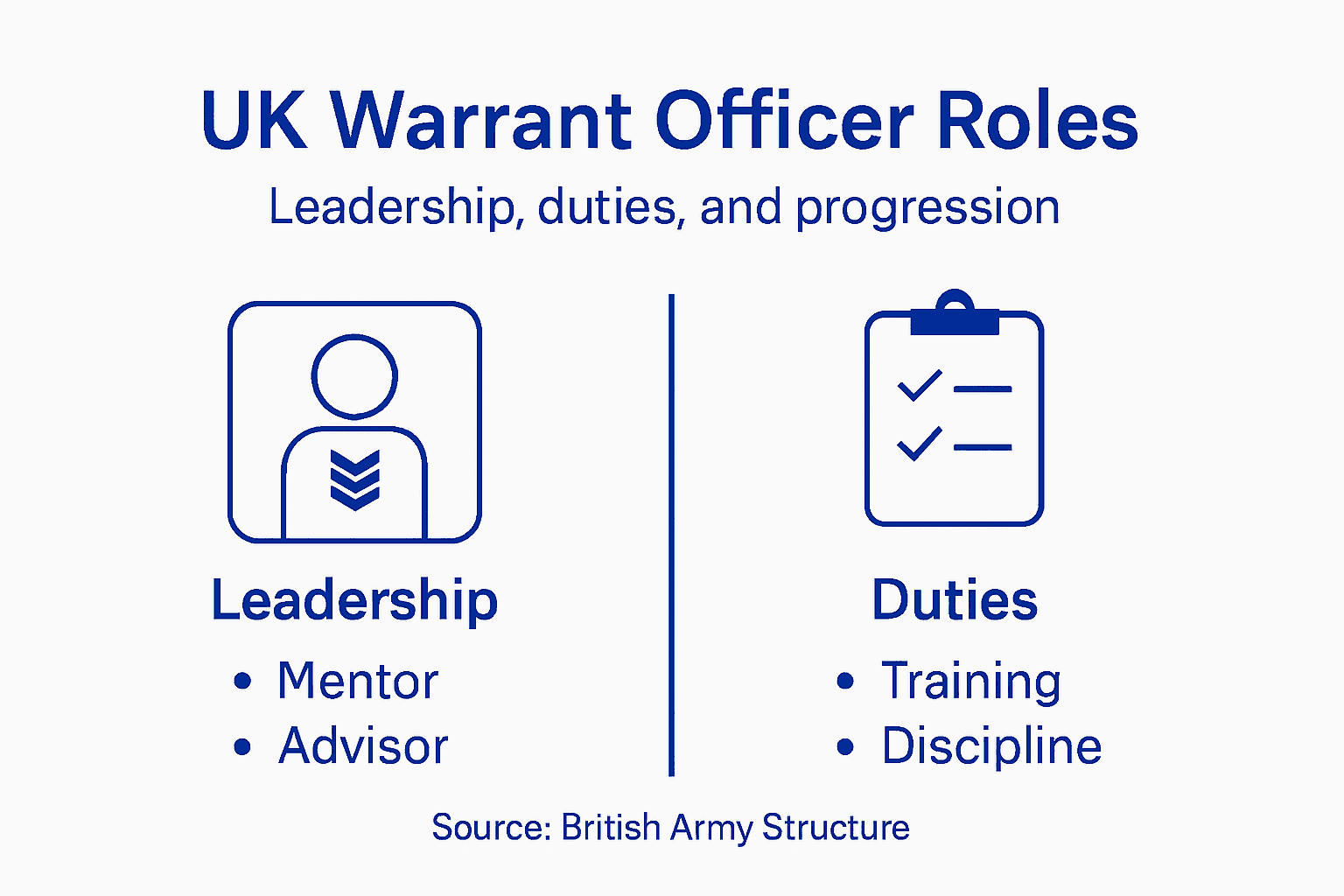
Warrant Officers are distinguished by their extensive service and specialised expertise. Senior non-commissioned members who have demonstrated exceptional skills and leadership capabilities, they are strategically positioned within units to maintain discipline, provide mentorship, and ensure operational effectiveness.
Key characteristics of Warrant Officers include:
- Possess extensive technical and operational expertise
- Hold significant responsibility for unit cohesion and standards
- Serve as critical advisors to commissioned officers
- Represent the institutional memory and professional standards of their respective military branches
- Maintain high levels of professional conduct and discipline
Unlike junior enlisted personnel or junior commissioned officers, Warrant Officers are granted a distinctive social standing. Within their Mess, they are considered equal in social status, reflecting their profound contribution to military effectiveness and organisational culture.
Pro tip: Aspiring military personnel should recognise that becoming a Warrant Officer requires not just technical proficiency, but also exceptional leadership and interpersonal skills.
Distinguishing Ranks and Types of Warrant Officer
The British Army’s Warrant Officer structure represents a nuanced and sophisticated hierarchy of expertise and leadership. Warrant Officers are classified into two distinct ranks, each with specific responsibilities and levels of seniority that reflect their accumulated professional experience and strategic importance.
The two primary Warrant Officer classes are:
- Warrant Officer Class 2 (WO2): A senior non-commissioned rank representing significant operational expertise
- Warrant Officer Class 1 (WO1): The pinnacle of non-commissioned leadership, representing the most senior technical and advisory roles
Warrant Officers occupy a unique position in military organisational structure, ranking above all junior non-commissioned personnel but distinct from commissioned officers. Their role is characterised by deep technical knowledge, leadership capability, and a critical advisory function within military units.
Each Warrant Officer class carries distinct responsibilities and expectations. WO2 ranks typically represent mid-level technical specialists with substantial practical experience, while WO1 ranks are recognised as senior advisors who contribute strategic insight and maintain the highest professional standards across military formations.
To better understand the progression and structure of Warrant Officer roles, see the comparison below:
| Rank Title | Relative Seniority | Primary Focus | Key Influence Area |
|---|---|---|---|
| Warrant Officer Class 2 (WO2) | Senior NCO, below WO1 | Operational expertise and application | Unit-level leadership and discipline |
| Warrant Officer Class 1 (WO1) | Most senior NCO, above WO2 | Strategic advice and standards | Army-wide policy and culture |
Warrant Officers embody the institutional knowledge and professional expertise that form the backbone of military operational effectiveness.
Pro tip: Understand that progression between Warrant Officer classes requires not just technical proficiency, but demonstrated leadership and strategic understanding of military operations.
Key Duties and Responsibilities in Service
Warrant Officers in the British Army are entrusted with multifaceted and critically important responsibilities that extend far beyond traditional military roles. Leadership roles encompass complex organisational responsibilities, requiring exceptional interpersonal skills, strategic understanding, and deep institutional knowledge.
Their key duties and responsibilities include:
- Maintaining unit discipline and professional standards
- Providing strategic advice to commissioned officers
- Managing training and operational readiness
- Supporting junior personnel’s welfare and professional development
- Acting as critical intermediaries between different military ranks
- Ensuring operational effectiveness through technical expertise
Warrant Officers serve as pivotal cultural guardians within military units, translating organisational objectives into practical operational strategies. Their unique position allows them to bridge communication gaps, interpret complex operational requirements, and provide nuanced guidance that draws from extensive practical experience.
Warrant Officers are the organisational backbone, transforming institutional knowledge into actionable military capability.
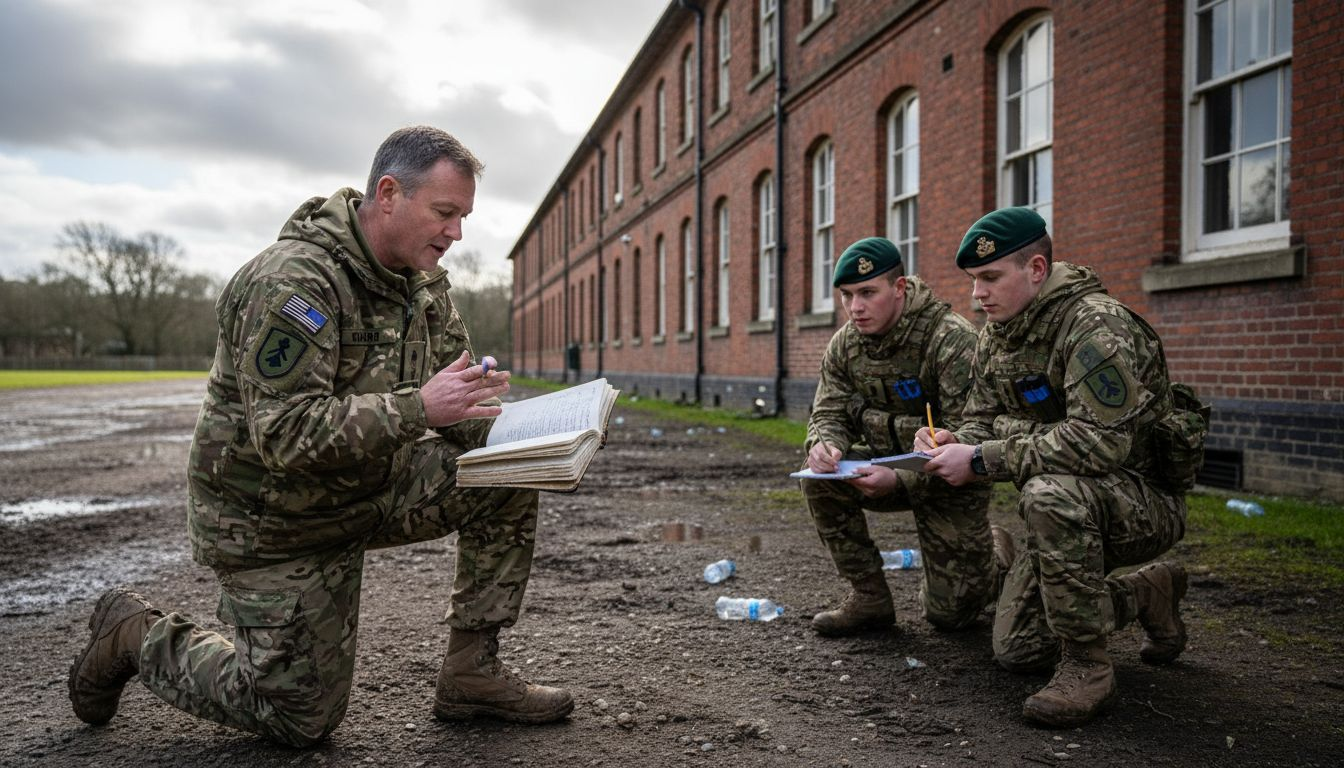
Beyond immediate operational tasks, these professionals play a crucial role in mentoring and developing future military personnel. They represent a repository of technical knowledge, operational wisdom, and leadership principles that sustain the British Army’s renowned professional standards.
Pro tip: Aspiring Warrant Officers should focus on developing comprehensive leadership skills that blend technical proficiency with exceptional interpersonal communication.
How Promotion and Appointment Work
The progression to Warrant Officer ranks represents a complex and meritorious journey within the British Army’s career structure. Promotion processes evaluate leadership potential through rigorous assessments that consider operational experience, technical expertise, and demonstrated leadership capabilities.
Key elements of the promotion pathway include:
- Consistent performance excellence in non-commissioned roles
- Demonstrating exceptional leadership and technical skills
- Recommendations from senior commanding officers
- Completion of specific professional development programmes
- Meeting strict physical and professional standards
- Passing comprehensive leadership and skills assessments
Career development pathways in the British Army are strategically designed to recognise and reward exceptional military professionals. Warrant Officer appointments are typically fixed-term, allowing for dynamic progression and ensuring that only the most qualified individuals occupy these critical leadership positions.
Promotion to Warrant Officer ranks is not merely a progression, but a recognition of exceptional service and potential.
The appointment process is deliberately selective, focusing on individuals who demonstrate not just technical proficiency, but also the intangible qualities of leadership, integrity, and institutional commitment. Senior officers carefully evaluate candidates, considering their potential to serve as key advisors and maintaining the British Army’s renowned professional standards.
Pro tip: Aspiring Warrant Officers should focus on building a comprehensive portfolio of operational experience, leadership skills, and professional development.
Traditions, Recognition, and Honours for WOs
Warrant Officers within the British Armed Forces represent a distinguished echelon of military service, with a rich tradition of formal recognition and ceremonial honours. These prestigious acknowledgements reflect not just individual achievement, but the profound institutional respect for exceptional military leadership.
The key forms of recognition for Warrant Officers include:
- Operational honours and awards
- Long service medals
- Gallantry decorations
- Specific service campaign medals
- Regimental commendations
- Symbolic ceremonial recognitions
Operational Honours and Awards lists regularly highlight the extraordinary contributions of Warrant Officers, celebrating their pivotal role in maintaining military effectiveness and upholding national defence standards. These formal commendations serve multiple purposes: acknowledging individual excellence, boosting unit morale, and reinforcing the core values of service and commitment.
Military honours are not merely decorations, but tangible representations of institutional trust and professional achievement.
Traditionally, Warrant Officer recognition extends beyond formal awards. Their unique social standing within military messes, their respected advisory roles, and the deep institutional respect they command represent profound forms of acknowledgement that transcend physical medals or certificates.
The following table summarises the main pathways and recognition forms for outstanding Warrant Officers:
| Promotion Element | Typical Requirement | Purpose of Recognition |
|---|---|---|
| Operational Experience | Broad experience in varied roles | Validates readiness for promotion |
| Leadership Assessment | Completion of leadership courses | Measures strategic potential |
| Ceremonial/Operational Honour | Awards or medals for service | Enhances professional reputation |
| Regimental Commendation | Recognition by unit leaders | Fosters esprit de corps |
Pro tip: Understand that true recognition for a Warrant Officer comes from peer respect, operational excellence, and maintaining the highest standards of military professionalism.
Honour the Legacy of Military Warrant Officers with Authentic UK Gifts
Understanding the vital role of Warrant Officers in the British Army means recognising their dedication to leadership, discipline, and operational excellence. These experienced leaders carry a wealth of institutional knowledge that shapes the entire military structure. To truly celebrate their unique contribution, presenting gifts that reflect their esteemed status and rich traditions can create powerful moments of recognition and pride.
Explore a distinctive range of military gifts and presentation products designed specifically for serving personnel and veterans from the British Army, Royal Navy, and RAF. Whether you are acknowledging a Warrant Officer’s promotion, commemorating years of service, or simply showing respect for their leadership, discover meaningful items at Regimental Store that convey honour and appreciation with authenticity. Act now to find distinguished gifts that uphold the very standards Warrant Officers have spent their careers embodying.
Frequently Asked Questions
What is the role of a Warrant Officer in the British Army?
Warrant Officers in the British Army serve as a critical leadership component, bridging the gap between enlisted personnel and commissioned officers, with extensive technical expertise and operational experience.
How are Warrant Officers distinguished from other military ranks?
Warrant Officers are senior non-commissioned members who rank above junior non-commissioned personnel but below commissioned officers, with significant responsibilities in maintaining unit standards and providing strategic advice.
What are the primary duties of a Warrant Officer?
Warrant Officers are responsible for maintaining unit discipline, providing strategic advice, managing training, supporting junior personnel, and ensuring operational effectiveness through their technical expertise.
How does one become a Warrant Officer in the British Army?
Progression to Warrant Officer ranks involves consistent performance, demonstrating leadership, obtaining recommendations from senior officers, and completing required professional development and assessments.
Recommended
- Long Service Awards – Honouring UK Military Dedication – The Regimental Store Ltd
- Why Display Military Badges: Honouring Service in the UK – The Regimental Store Ltd
- Types of Military Regalia in the UK Forces – The Regimental Store Ltd
- Military Gifts Eligibility: Complete Guide for the UK – The Regimental Store Ltd