
Remembrance Day: Why it Matters for UK Forces
For many British service families, Remembrance Day is more than a symbol on a calendar—it is a deeply personal moment of reflection and gratitude. The meaning behind this annual ritual has grown from simple mourning after World War I into a national tradition of honouring sacrifice and resilience. Understanding its evolving history and uncovering common myths can help you find commemorative gifts that truly represent the unique stories and legacy of your own military community.
Table of Contents
- Remembrance Day’s Meaning and Common Myths
- Traditions and Variations in Remembrance Practices
- Poppy Symbolism and Emotional Significance
- Impact on Armed Forces and Their Families
- Obligations, Voluntary Acts, and Public Misconceptions
- Commemorative Gifts and Their Role in Remembrance
Key Takeaways
| Point | Details |
|---|---|
| Remembrance Day Significance | It commemorates all military personnel lost in conflicts, evolving from its World War I origins to a broader recognition of sacrifice across generations. |
| Symbolism of the Poppy | The red poppy represents honour, resilience, and the cost of war, serving as a poignant reminder of the sacrifices made by servicemen and women. |
| Participation is Voluntary | Engaging in Remembrance Day activities is a personal choice, with no legal obligation to attend ceremonies or wear poppies. |
| Community Support and Healing | Remembrance Day fosters community connections, providing spaces for collective grief and emotional validation for military families. |
Remembrance Day’s Meaning and Common Myths
Remembrance Day represents far more than a simple annual commemoration. It is a profound national ritual of honouring those who have sacrificed their lives in military service, with roots deeply embedded in the traumatic experiences of World War I. Evolving commemorative practices have transformed this day from a localised mourning into a sophisticated national expression of gratitude and remembrance.
The origins of Remembrance Day are complex and multifaceted. What began as a way to recognise imperial military losses has gradually expanded into a more inclusive commemoration of all war casualties across the Commonwealth. Key symbolic elements have emerged over time:
- The two-minute silence, first introduced in 1919
- Wearing of the red poppy as a symbol of remembrance
- Cenotaph ceremonies in London and across the United Kingdom
- Recognition of veterans from multiple conflicts
Myths and Misconceptions about Remembrance Day frequently arise from misunderstanding its historical evolution. Many people incorrectly assume the day’s meaning and practices have remained static, when in reality, public attitudes have continuously shifted to reflect changing societal contexts.
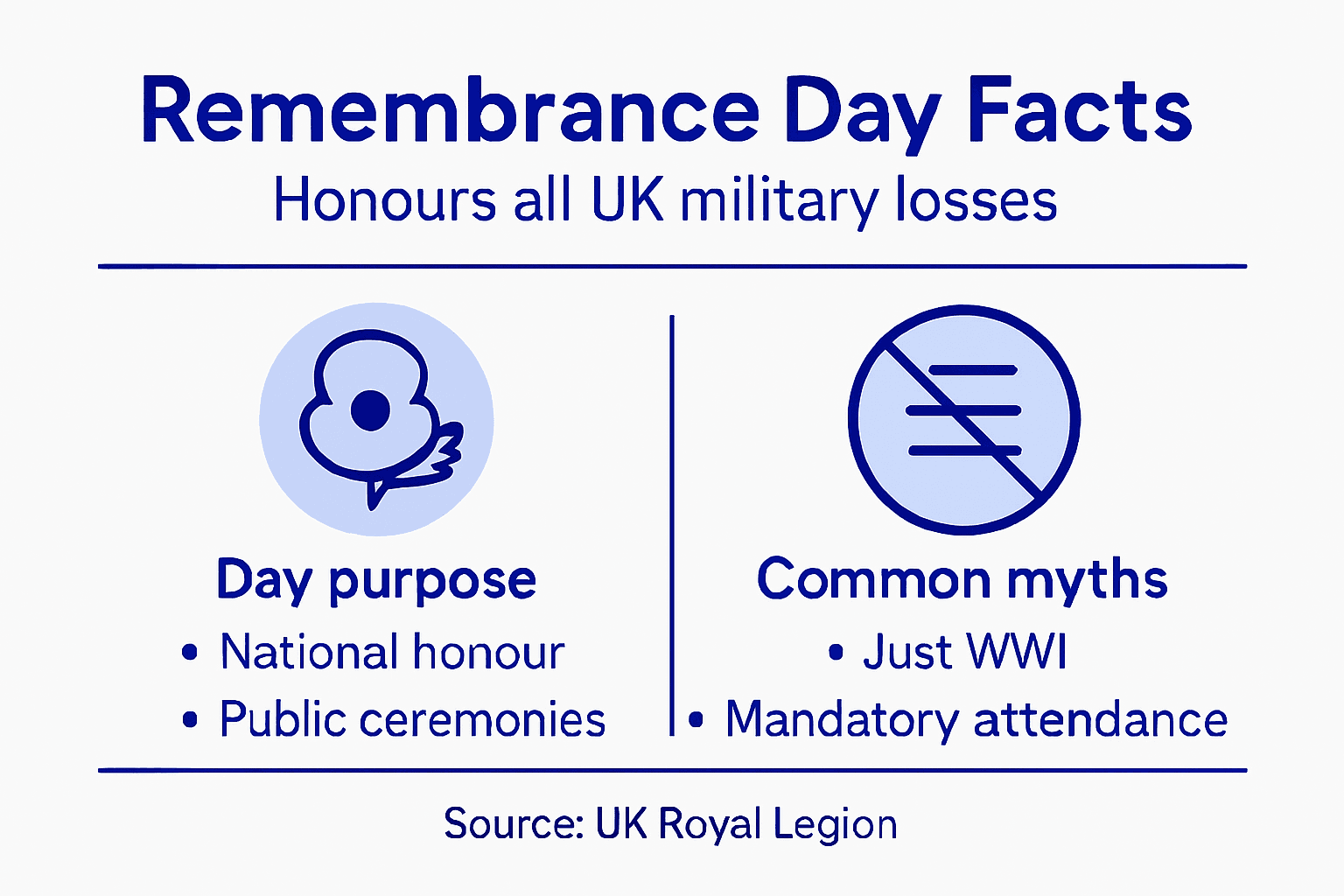
One prevalent myth suggests Remembrance Day exclusively commemorates World War I veterans. In truth, the day now honours servicemen and women who have fallen in conflicts spanning multiple generations - from the World Wars to more recent peacekeeping missions and international deployments.
Pro tip: When participating in Remembrance Day ceremonies, take a moment to truly understand the personal stories behind the collective remembrance, not just the historical overview.
Traditions and Variations in Remembrance Practices
Remembrance practices across the United Kingdom represent a deeply nuanced and emotionally charged national tradition. Remembrance Sunday ceremonies have evolved significantly, incorporating diverse commemorative elements that reflect the complex historical experiences of British military service.
The primary observances on this day include several key components that create a rich tapestry of remembrance:
- The two-minute silence at 11:00 am
- Wreath-laying ceremonies at local war memorials
- Church services honouring fallen servicemen and women
- Military parades featuring veterans and current service personnel
- Wearing of red poppy badges
National Commemoration takes multiple forms, ranging from intimate local gatherings to large-scale events in major cities. The national televised service at the Cenotaph in London represents the pinnacle of these commemorations, where senior royal family members, political leaders, and military representatives pay formal tribute to those who have made the ultimate sacrifice.
Regional variations play a crucial role in how different communities express their remembrance. While the core elements remain consistent, each locality brings its own unique character to the ceremonies - from rural village memorials to urban metropolitan commemorations. Some communities organise additional events like historical exhibitions, veteran talks, and community gatherings that extend beyond the traditional November remembrance period.
Pro tip: Consider attending a local Remembrance Sunday event to gain a deeper, more personal understanding of the day’s significance beyond national ceremonies.
Poppy Symbolism and Emotional Significance
The red poppy stands as a powerful and profound symbol of remembrance, deeply rooted in the collective memory of British military service. Poppy symbolism emerged from World War I battlefields, representing both the devastating human cost of war and an enduring spirit of resilience.
The emotional significance of the poppy encompasses multiple layers of meaning:
- Representing the blood shed by fallen soldiers
- Symbolising hope and renewal after conflict
- Honouring individual and collective sacrifice
- Connecting past and present generations
- Serving as a visual reminder of military service
Historical Origins of the poppy are particularly poignant. The flower’s ability to bloom prolifically in devastated battlefields - particularly in the fields of Flanders - became a metaphor for life’s persistence even in the most challenging circumstances. Its vibrant red colour mirrors the blood of soldiers, while its delicate nature represents the fragility of human life.
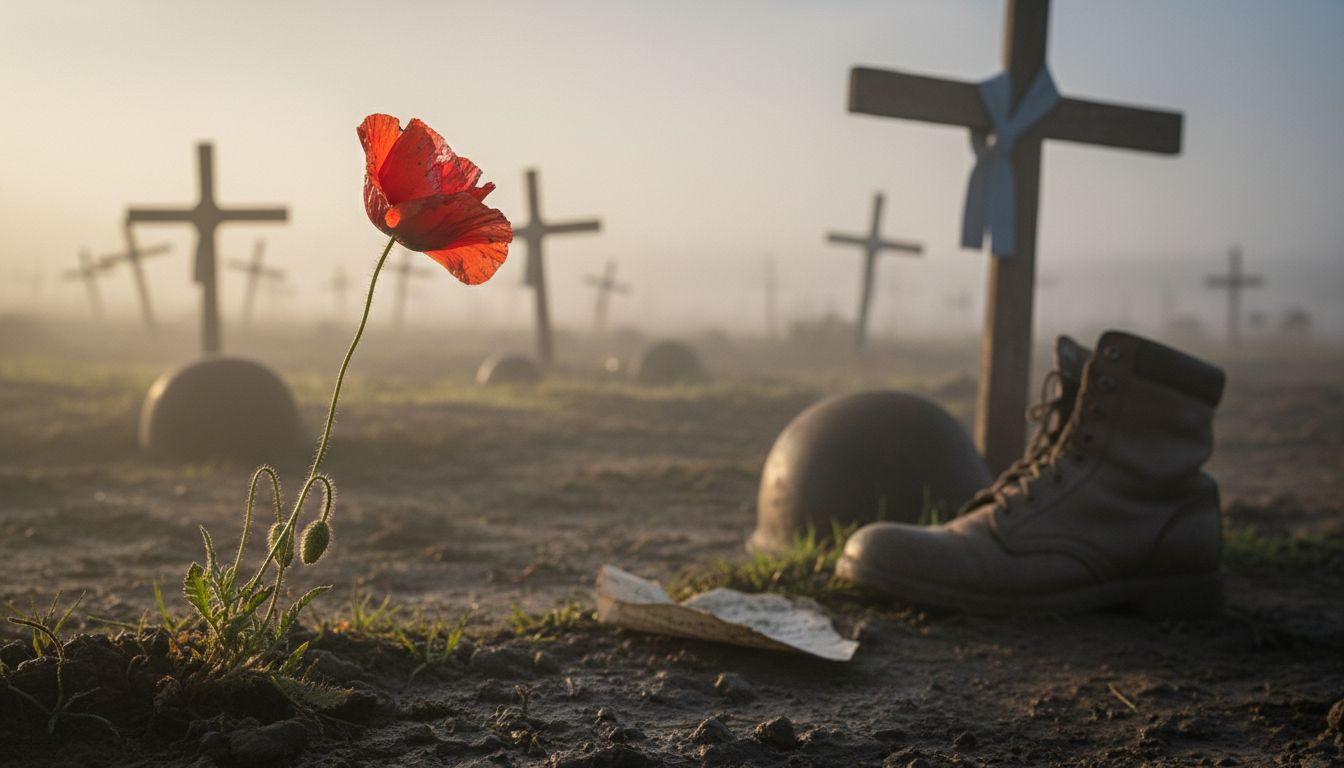
Different communities and individuals wear the poppy in subtly different ways, reflecting personal connections to military service. Some choose traditional red poppies, while others opt for white poppies symbolising peace or purple poppies commemorating animal victims of war. This variation demonstrates the deeply personal nature of remembrance and the multiple ways individuals process collective trauma.
Here is a summary comparing key Remembrance Day symbols and their meanings:
| Symbol or Practice | Historical Origin | Core Meaning |
|---|---|---|
| Red poppy badge | WWI Flanders fields | Honouring sacrifice and resilience |
| Two-minute silence | First held in 1919 | Collective quiet reflection and remembrance |
| Cenotaph ceremonies | Post-WWI memorialisation | National act of respect and public recognition |
| White poppy | 1930s British peace movement | Advocating peace and non-violence |
| Purple poppy | Introduced in 2006 | Remembering animals lost in conflict |
Pro tip: Consider the personal story behind your poppy, understanding it represents more than a symbol - it represents individual lives and collective memory.
Impact on Armed Forces and Their Families
Remembrance holds profound significance for military personnel and their families, transcending a simple annual commemoration. It represents a deeply emotional process of acknowledgement, healing, and collective support that connects generations of service members.
The impact on military families encompasses multiple critical dimensions:
- Providing emotional validation of personal sacrifices
- Creating spaces for collective grief and remembrance
- Reinforcing community bonds among veterans and families
- Highlighting the ongoing contributions of military service
- Supporting mental health and psychological healing
Community Support plays a crucial role in these commemorations. The Royal British Legion and other military support organisations recognise that Remembrance Day is not just about historical reflection, but about sustaining and nurturing the well-being of current and former service personnel and their loved ones.
For families who have lost loved ones, Remembrance Day offers a powerful platform for public recognition. The two-minute silence, national ceremonies, and local community events provide structured opportunities to honour individual stories of courage, sacrifice, and resilience. These moments help transform personal grief into a collective expression of national gratitude.
Pro tip: Reach out to military family support networks during Remembrance events, understanding that shared remembrance can be a powerful form of healing.
Obligations, Voluntary Acts, and Public Misconceptions
Public understanding of Remembrance Day obligations is frequently misunderstood, with many assuming participation is mandatory or governed by strict national protocols. In reality, Remembrance commemorations are fundamentally voluntary acts of personal and collective reflection, rooted in individual choice and community connection.
Common misconceptions about Remembrance Day include:
- Believing participation is legally required
- Assuming all events are formal military ceremonies
- Thinking only veterans can meaningfully participate
- Perceiving the day as exclusively about past conflicts
- Misunderstanding the voluntary nature of remembrance practices
Public Engagement is carefully balanced between respectful commemoration and personal freedom. While national institutions like the Royal British Legion encourage participation, there are no legal mandates compelling individuals to attend ceremonies or wear poppies. The emphasis remains on voluntary, meaningful remembrance that reflects individual and community experiences.
The nuanced nature of Remembrance Day means that participation can take many forms. Some people attend formal ceremonies, others observe the two-minute silence privately, and some choose alternative ways of showing respect. This flexibility acknowledges that grief, memory, and respect are deeply personal experiences that cannot be uniformly prescribed.
This table clarifies common misconceptions versus the realities of Remembrance Day participation:
| Misconception | Actual Practice or Policy |
|---|---|
| Participation is legally required | Attending is voluntary and optional |
| Only veteran families can attend ceremonies | All individuals may participate |
| Only formal military events count | Informal, private acts of remembrance matter |
| Day only honours First World War casualties | Commemorates all conflicts and generations |
| Wearing a poppy is compulsory | Wearing a poppy is a personal choice |
Pro tip: Respect the personal nature of remembrance by understanding that meaningful commemoration looks different for everyone.
Commemorative Gifts and Their Role in Remembrance
Remembrance-themed commemorative gifts represent far more than simple material objects. They are powerful symbols of collective memory, respect, and ongoing support for those who have served in the British Armed Forces, bridging generations through tangible expressions of gratitude and remembrance.
These commemorative items serve multiple meaningful purposes:
- Honouring individual and collective military sacrifices
- Supporting veterans’ charitable organisations
- Creating lasting memorials to service personnel
- Facilitating intergenerational conversations about military history
- Providing financial support through fundraising
Symbolic Significance extends beyond the physical item itself. A poppy pin, commemorative medal, or remembrance artwork becomes a conversation starter, enabling younger generations to understand and appreciate the profound experiences of military service members. These gifts transform abstract historical events into personal, touchable narratives.
The diversity of commemorative gifts reflects the complexity of military remembrance. From traditional poppy badges to intricate regimental memorabilia, each item tells a unique story. Some families treasure personalised medals, while others prefer more general symbolic items that represent broader collective experiences of service and sacrifice.
Pro tip: Choose commemorative gifts that spark meaningful dialogue about military service and remembrance.
Honour Their Sacrifice with Meaningful Remembrance Gifts
Remembrance Day reminds us of the deep emotional impact military service has on UK Armed Forces and their families. The personal stories of sacrifice and resilience deserve more than just a moment of silence. To truly support those who have served and continue to serve, giving a commemorative gift can be a powerful expression of gratitude and respect. Whether you want to celebrate the symbolic red poppy or find a keepsake that honours the ongoing contributions of veterans, choosing a thoughtful presentation product helps keep their memory alive.
Explore our carefully selected range of UK military gifts and presentation products at Regimental Store. Designed to connect generations through symbols of remembrance and support, our collection allows you to give more than a gift you can hold — it gives a lasting tribute. Act now to find a meaningful way to express your appreciation and ensure that remembrance is both personal and heartfelt. Visit UK Military gifts and presentation products today and honour those who matter most.
Frequently Asked Questions
What is the significance of Remembrance Day for UK Armed Forces?
Remembrance Day holds profound significance for UK Armed Forces as it serves as a national ritual to honour those who have sacrificed their lives in military service, providing emotional validation and collective support for military personnel and their families.
How do the traditions of Remembrance Day contribute to its meaning?
Traditions such as the two-minute silence, wreath-laying ceremonies, and the wearing of red poppies create a rich tapestry of remembrance, allowing individuals and communities to pay tribute to fallen servicemen and women across generations.
What role do commemorative gifts play in Remembrance Day observances?
Commemorative gifts serve as powerful symbols of collective memory and respect, facilitating conversations about military history and providing support for veterans’ charitable organisations while honouring individual and collective sacrifices.
Are there any misconceptions about what participation in Remembrance Day entails?
Yes, common misconceptions include the belief that participation is legally required or only for veterans. In reality, participation is voluntary and can take many forms, reflecting personal and communal experiences of remembrance.
Recommended
- Servicemen Gift Ideas Guide for Thoughtful Selection – The Regimental Store Ltd
- Remembrance Poppy: Meaning for British Veterans – The Regimental Store Ltd
- How to Choose Military Gifts for UK Veterans and Serving Members – The Regimental Store Ltd
- How to Choose Military Keepsakes for Veterans – The Regimental Store Ltd
- Great Ideas to Incorporate Seasonal Holidays into Your Classroom | TEFL Institute