
Household Cavalry Explained: History and Role in UK
Choosing the perfect presentation item for a Household Cavalry veteran can feel daunting when tradition and personal significance matter so much. The Household Cavalry stands as a proud symbol of British military heritage, blending operational excellence with centuries-old ceremonial splendour from The Life Guards and The Blues & Royals. Understanding their unique dual role and rich history will help you find gifts that celebrate both military professionalism and the cherished traditions linking generations of soldiers.
Table of Contents
- Core Definition And Common Misconceptions
- Regiments And Key Distinctions
- Operational And Ceremonial Functions Explained
- Traditions, Uniforms, And Presentation Items
- Joining, Service Pathways, And Responsibilities
- Significance For Veterans And Gift Buyers
Key Takeaways
| Point | Details |
|---|---|
| Household Cavalry’s Dual Role | The Household Cavalry serves both operational and ceremonial functions, showcasing modern military capabilities alongside traditional rituals. |
| Misconceptions Addressed | It is a common misconception that the Household Cavalry is merely ceremonial; in reality, soldiers are highly trained professionals equipped for combat roles. |
| Historical Significance | The regiments, The Life Guards and The Blues & Royals, have rich histories and maintain unique identities within a unified structure. |
| Recruitment and Training | Aspiring soldiers must meet accessible recruitment criteria and undergo extensive training to develop skills for both military and ceremonial duties. |
Core Definition and Common Misconceptions
The Household Cavalry represents a unique and prestigious military institution within the British Army, combining operational excellence with centuries of tradition. Consisting of two senior regiments, The Life Guards and The Blues & Royals, this organisation embodies both modern military capability and historic ceremonial responsibilities.
The Household Cavalry operates through two distinct yet interconnected components, each serving critical national functions:
- Household Cavalry Regiment (HCR): An operational armoured reconnaissance unit specialising in modern combat capabilities
- Household Cavalry Mounted Regiment (HCMR): A ceremonial unit representing the Monarch during prestigious state events
Maintaining military professionalism since 1660, these regiments have continuously adapted while preserving their distinctive identities. Their soldiers are trained to seamlessly transition between combat readiness and ceremonial precision, a testament to their exceptional versatility.
Many people mistakenly believe the Household Cavalry is merely a decorative unit, but this couldn’t be further from the truth. While they are renowned for their immaculate ceremonial appearances, these soldiers are highly trained professionals equipped with advanced armoured fighting vehicles and extensive combat training.
The Household Cavalry represents the pinnacle of British military tradition: simultaneously a modern fighting force and a living historical institution.
Key Misconceptions About the Household Cavalry:
- They are just a ceremonial unit
- Their role is purely symbolic
- Modern military technology has made their function obsolete
- Only aristocrats can join these regiments
Pro tip: When visiting London, witnessing the Household Cavalry’s ceremonial duties provides a profound insight into Britain’s military heritage and contemporary defence capabilities.
Regiments and Key Distinctions
The Household Cavalry represents a complex military structure with two distinct yet interconnected regiments that have rich historical roots. Formed through a historic union in 1992, The Life Guards and The Blues & Royals continue to maintain their unique identities while serving together under one organisational umbrella.
Each regiment possesses distinctive characteristics that set them apart:
-
The Life Guards:
- Origin: Bodyguard unit of King Charles II during the Restoration
- Uniform: Red tunics with white plumes
- Historical significance: Oldest of the two regiments
-
The Blues & Royals:
- Origin: Formed from Royal Horse Guards and Royal Dragoons
- Uniform: Blue tunics with red plumes
- Distinctive feature: Eagle insignia on left sleeve
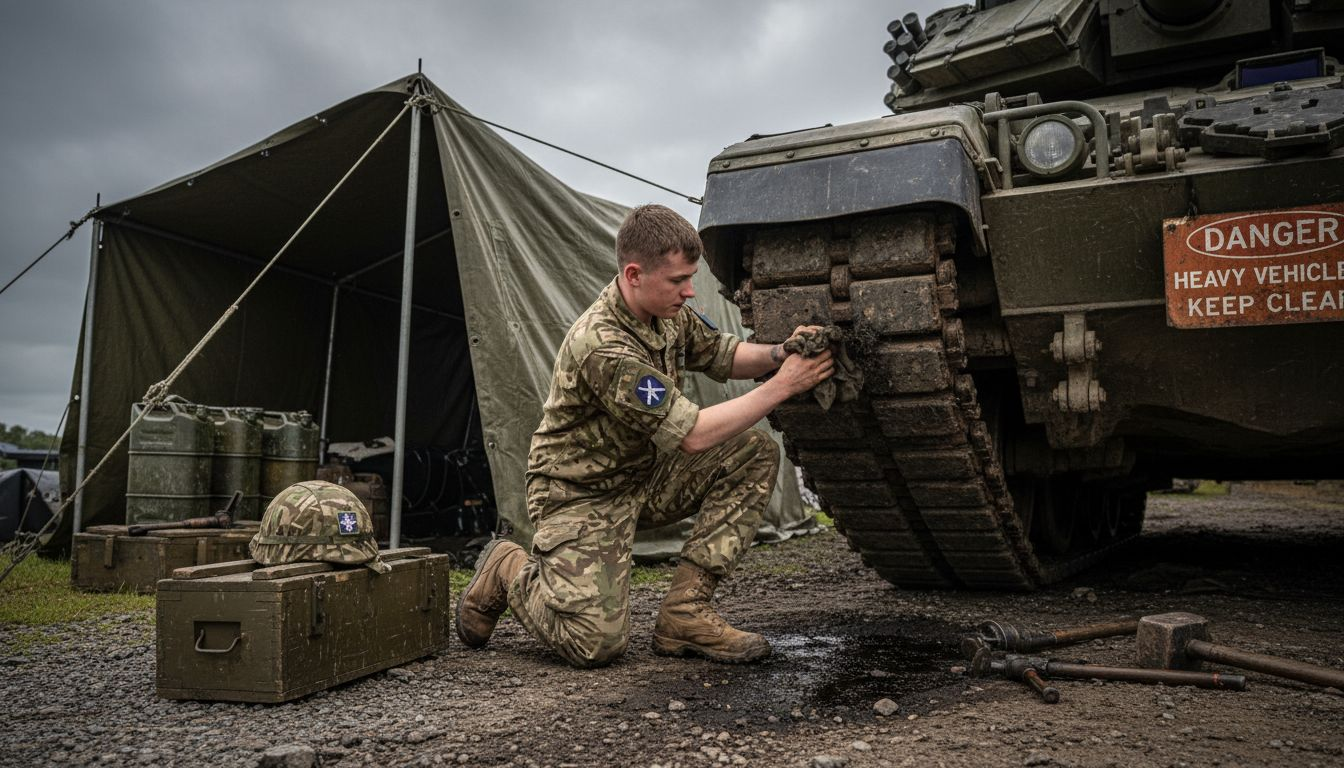
Operational capabilities remain diverse with two primary functional units. The Household Cavalry Regiment focuses on armoured reconnaissance using advanced Ajax vehicles, while the Household Cavalry Mounted Regiment maintains the ceremonial traditions by conducting prestigious mounted duties in London.
The regimental structure ensures that while these units collaborate, they preserve their individual heritage and specialised roles. This unique approach allows for both operational effectiveness and the maintenance of centuries-old military traditions.
Here is an at-a-glance overview of how the two Household Cavalry regiments compare:
| Aspect | The Life Guards | The Blues & Royals |
|---|---|---|
| Founding Origin | Bodyguard for King Charles II | Merger of Royal Horse Guards and Royal Dragoons |
| Ceremonial Colour | Scarlet red tunics | Deep blue tunics |
| Unique Insignia | None distinct | Eagle on left sleeve |
| Plume Colour | White | Red |
| Notable Historical Role | Oldest cavalry regiment | Modern ceremonial innovation |
The Household Cavalry embodies the perfect balance between modern military capability and historical military pageantry.
Key Distinctions Between Regiments:
- Unique historical origins
- Distinctive regimental uniforms
- Specialised operational roles
- Individual ceremonial traditions
Pro tip: When observing the Household Cavalry, pay close attention to their distinctive uniforms and insignia, which tell a rich story of military heritage and individual regimental pride.
Operational and Ceremonial Functions Explained
The Household Cavalry operates with remarkable versatility, seamlessly transitioning between highly sophisticated operational military roles and prestigious ceremonial responsibilities. Rigorous training prepares soldiers for both advanced armoured reconnaissance and intricate mounted state duties, representing a unique fusion of modern military capability and historical tradition.
Operational functions encompass several critical military capabilities:
-
Armoured Reconnaissance:
- Deployment of advanced Ajax fighting vehicles
- Reconnaissance ahead of main military forces
- Locating and engaging enemy reconnaissance units
- Utilising advanced technological surveillance systems
-
Ceremonial Responsibilities:
- Conducting mounted state duties in London
- Participating in Trooping the Colour
- Guarding royal residences
- Representing military traditions internationally
Intensive soldier training ensures exceptional proficiency in both domains. Troops must master complex skills including precision mounted drill, advanced weaponry handling, horsemanship, and technological combat techniques, making them uniquely adaptable military professionals.
The dual-role nature of the Household Cavalry represents a remarkable military model where operational effectiveness coexists with ceremonial excellence. Soldiers are not merely performers or combat troops, but versatile professionals who embody the finest traditions of British military service.
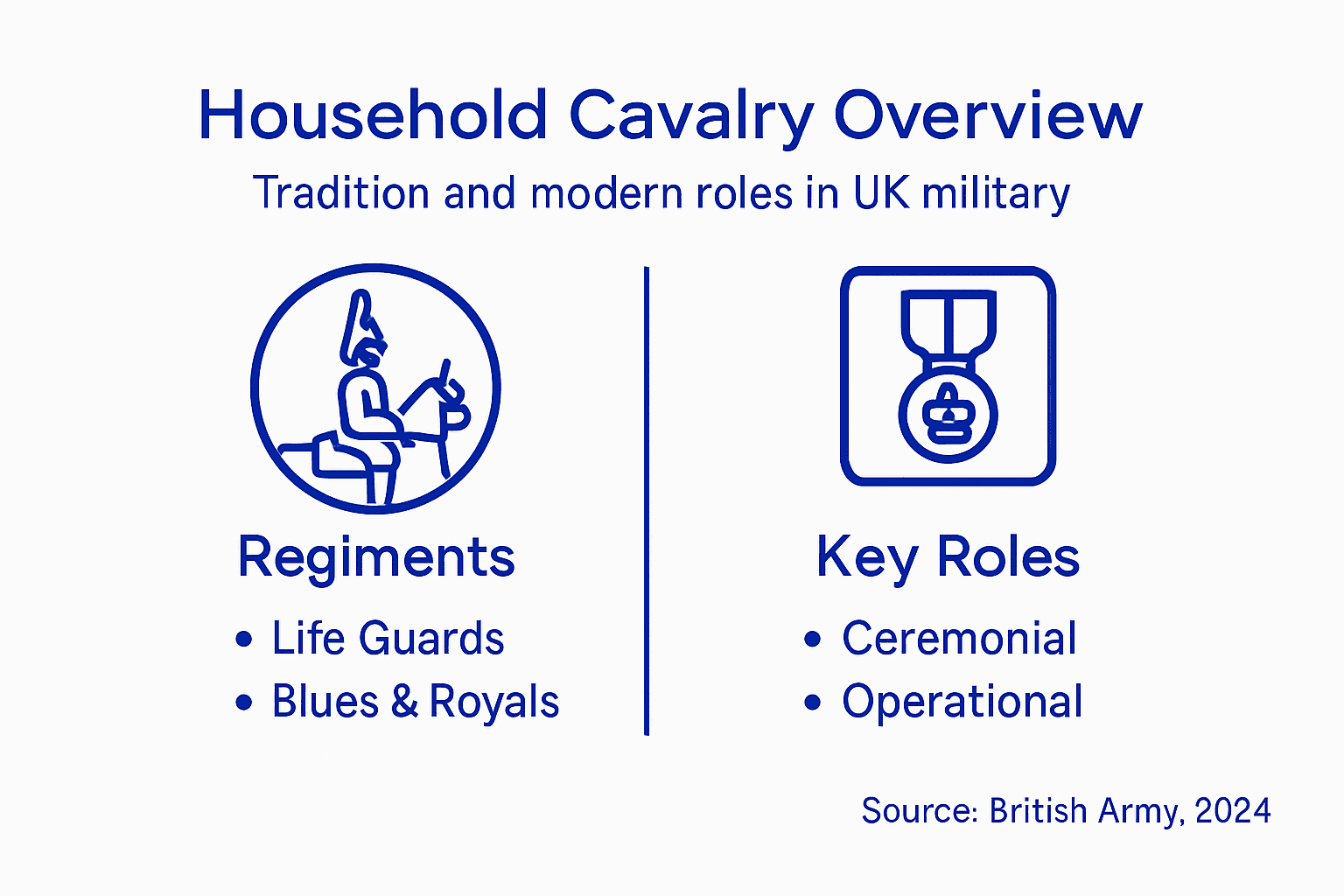
The following table summarises the dual nature of Household Cavalry responsibilities:
| Function | Setting | Key Skills Required |
|---|---|---|
| Armoured Reconnaissance | Operational deployments | Vehicle command, threat assessment |
| State Ceremonial | Royal and national occasions | Precision drill, horsemanship |
| Public Duties | Royal residence guarding | Discipline, ceremonial protocol |
| International Representation | Overseas postings and events | Diplomacy, military etiquette |
The Household Cavalry epitomises the perfect synthesis of modern military prowess and timeless martial tradition.
Key Operational Skills:
- Advanced vehicle reconnaissance
- Precision mounted drill
- Technological combat techniques
- International ceremonial representation
Pro tip: When observing Household Cavalry soldiers, appreciate the extraordinary discipline required to transition seamlessly between combat-ready professionals and ceremonial representatives.
Traditions, Uniforms, and Presentation Items
The Household Cavalry uniforms represent a profound visual narrative of military heritage, blending centuries-old traditions with precise sartorial elegance. Distinctive ceremonial dress defines each regiment’s unique identity, with intricate details communicating historical significance and military pride.
Uniform characteristics vary between the two regiments:
-
The Life Guards:
- Vibrant red tunics
- White plumes on helmets
- Polished brass accoutrements
- Ceremonial white leather gauntlets
-
The Blues & Royals:
- Deep blue tunics
- Red plumes on helmets
- Black sheepskin saddle covers
- Eagle insignia on left sleeve
Collectors prize original ceremonial items as tangible connections to British military history. Helmets, cuirasses, badges, and medals represent more than mere accessories; they are meticulously crafted artifacts embodying generations of martial tradition.
Presentation items such as regimental silverware, commemorative medals, and officially sanctioned memorabilia serve as powerful symbols of institutional memory. These objects transcend simple decoration, representing the profound bonds of military fellowship and national pride.
Every uniform, every badge tells a story of courage, discipline, and unwavering commitment to the highest military traditions.
Notable Presentation Elements:
- Regimental silverware
- Commemorative medals
- Historic uniform components
- Officially sanctioned memorabilia
Pro tip: When acquiring Household Cavalry presentation items, always verify authenticity and seek pieces with documented provenance to ensure historical and collectible value.
Joining, Service Pathways, and Responsibilities
Joining the Household Cavalry represents a unique career opportunity for individuals seeking a distinctive military pathway combining operational excellence and ceremonial tradition. Recruitment criteria are surprisingly accessible, welcoming candidates aged 16 to 35 years and 6 months with no formal educational prerequisites required.
The service pathway encompasses multiple specialised training components:
-
Initial Military Training:
- Basic soldiering skills development
- Physical fitness conditioning
- Discipline and operational protocols
- Foundational military knowledge
-
Specialist Training:
- Ajax armoured vehicle operation
- 20-week mounted dutyman course
- Advanced horsemanship skills
- Ceremonial and operational drill techniques
Extensive training prepares soldiers for a remarkable dual-role career alternating between ceremonial mounted duties and operational military responsibilities. Recruits learn sophisticated skills including reconnaissance tactics, advanced vehicle handling, and precise ceremonial protocols.
Key responsibilities span a diverse range of military and ceremonial functions, requiring exceptional versatility and commitment. Soldiers might transition from guarding royal residences in immaculate ceremonial uniform to conducting armoured reconnaissance missions in challenging operational environments, embodying the regiment’s unique professional ethos.
The Household Cavalry demands not just soldiers, but adaptable professionals who can seamlessly navigate between tradition and modern military requirements.
Core Service Responsibilities:
- Operational armoured vehicle reconnaissance
- Ceremonial public duties in London
- International military deployments
- Representing national military traditions
Pro tip: Aspiring Household Cavalry soldiers should focus on developing physical fitness, mental resilience, and a genuine passion for both military service and traditional British martial heritage.
Significance for Veterans and Gift Buyers
The Household Cavalry holds profound significance for veterans, their families, and military enthusiasts, representing far more than a mere military unit. Collectors prize regimental memorabilia as tangible connections to a rich military heritage that spans centuries of distinguished service.
Key collectible and meaningful items include:
-
Historically Significant Memorabilia:
- Original ceremonial helmets
- Regimental uniforms
- Service medals
- Musical instruments
- Vintage photographic archives
-
Veterans’ Support Resources:
- Regimental foundation assistance
- Psychological support programs
- Family welfare services
- Veteran networking opportunities
The Household Cavalry Foundation plays a critical role in supporting veterans, providing comprehensive pastoral care that extends beyond traditional military support. This commitment ensures that service members receive holistic assistance during and after their military careers.
Gift buyers seeking meaningful presents for veterans can choose items that honour both individual service and collective regimental history. These gifts serve as powerful symbols of recognition, connecting personal memories with broader military traditions.
A thoughtfully selected Household Cavalry memento transcends a simple gift, becoming a cherished narrative of courage and dedication.
Ideal Gift Categories:
- Authenticated regimental memorabilia
- Commemorative presentation items
- Foundation-supported veteran support gifts
- Historical regimental publications
Pro tip: When selecting gifts for Household Cavalry veterans, prioritise items with verifiable provenance that genuinely reflect the regiment’s rich heritage and personal significance.
Celebrate the Household Cavalry’s Proud Heritage with Authentic Gifts and Presentation Items
The Household Cavalry embodies the finest blend of tradition and modern military excellence in the United Kingdom. For veterans, serving personnel, or enthusiasts seeking to honour this unique dual role of armoured reconnaissance and ceremonial splendour, finding the perfect memento can be a challenge. You want items that reflect the regiment’s rich uniforms, historic insignia, and unwavering commitment to service. Now you can explore carefully curated products that capture the essence of these regiments, from The Life Guards’ red tunics to The Blues & Royals’ iconic eagle insignia.
Discover a distinctive range of Household Cavalry presentation gifts and memorabilia at MOD Guards. Whether you are looking for commemorative medals, regimental badges or authentic uniform accessories, each piece carries the spirit of British military pride. Act now to secure meaningful keepsakes that celebrate decades of courage and tradition. Visit The Regimental Store Ltd today and find a lasting tribute that honours the remarkable Household Cavalry.
For more exclusive offers on military collectibles, do not forget to check our CLEARANCE section where you might find exceptional pieces at great value.
Frequently Asked Questions
What is the Household Cavalry?
The Household Cavalry is a prestigious military institution within the British Army, consisting of two regiments: The Life Guards and The Blues & Royals. It combines operational military capabilities with ceremonial duties representing the Monarch at state events.
What are the main functions of the Household Cavalry?
The Household Cavalry has two primary functions: the Household Cavalry Regiment (HCR) focuses on armoured reconnaissance and combat operations, while the Household Cavalry Mounted Regiment (HCMR) undertakes ceremonial duties, such as guarding royal residences and participating in parades.
How is the Household Cavalry trained for both operational and ceremonial duties?
Members of the Household Cavalry undergo extensive training that includes basic soldiering skills, advanced weaponry handling, horsemanship for ceremonial tasks, and operating modern armoured vehicles for reconnaissance missions, preparing them to perform effectively in both roles.
What are the key historical origins of the Life Guards and the Blues & Royals?
The Life Guards originated as the bodyguard unit for King Charles II during the Restoration, making them the oldest of the two regiments. The Blues & Royals were formed from the merger of the Royal Horse Guards and the Royal Dragoons, maintaining their own distinct traditions and uniforms.
Recommended
- Honour Guard: Significance in British Military Ceremonies – The Regimental Store Ltd
- Coldstream Guards History: Legacy, Traditions, and Role – The Regimental Store Ltd
- 7 Key Types of British Army Uniforms for Collectors – The Regimental Store Ltd
- Territorial Army: Key Role and Lasting Benefits – The Regimental Store Ltd