
Honour Guard: Significance in British Military Ceremonies
Standing beneath the gaze of London’s crowds or lining the halls of royal palaces, Honour Guards are more than a display of scarlet tunics and bearskin hats. For members of the British Army, both serving and retired, this tradition is a living link between everyday service and centuries of military excellence. Discover how honour guards exemplify discipline, loyalty, and national pride while upholding rituals that honour both the Crown and fallen comrades.
Table of Contents
- Honour Guard Tradition And Core Meaning
- Types Of Honour Guard In The British Army
- Ceremonial Roles And Formation Protocols
- Requirements And Selection For Honour Guard
- Responsibilities, Risks And Common Misconceptions
Key Takeaways
| Point | Details |
|---|---|
| Honour Guard Significance | Honour Guards embody military discipline, national pride, and a commitment to tradition, representing the Crown in ceremonial duties. |
| Rigorous Selection Process | Potential guardsmen undergo intense physical, mental, and medical evaluations to ensure they meet the exceptional standards required. |
| Dual Responsibilities | Honour Guards are not merely ceremonial; they are operational soldiers trained to perform critical military functions alongside ceremonial duties. |
| Cultural Representation | In Commonwealth nations, particularly the United Kingdom, Honour Guards symbolise the connection between armed forces and civilian society, fostering national heritage. |
Honour guard tradition and core meaning
The Honour Guard represents a profound military tradition deeply rooted in discipline, respect, and national pride. These meticulously selected military units serve as living symbols of military excellence, performing ceremonial duties that transcend mere physical protection. Changing guard ceremonies showcase the precise choreography and unwavering commitment inherent in this time-honoured practice.
Historically, honour guards have emerged as critical representations of military protocol and national dignity. Their origins can be traced back centuries, with each movement and posture carefully designed to communicate profound respect. Key characteristics of honour guards include:
- Impeccable uniformity in dress and stance
- Precise, synchronized movements
- Rigorous selection process for participants
- Representation of military discipline and national pride
- Performance during significant state and military ceremonies
The significance of honour guards extends far beyond aesthetic display. These units embody the core values of military service: loyalty, discipline, and dedication. Whether receiving international dignitaries, guarding royal residences, or participating in memorial services, they serve as living memorials to military tradition.
Commonwealth nations, particularly the United Kingdom, have maintained particularly robust honour guard traditions. Guards of honour symbolize not just military prowess, but a deep cultural connection between armed forces and civilian society, representing continuity, respect, and national heritage.
Pro tip: When observing an honour guard, pay attention to the precision of their movements – each step represents generations of military tradition and national pride.
Types of honour guard in the British Army
The Honour Guards in the British Army represent a sophisticated and historic military tradition, primarily drawn from the Household Division’s distinguished regiments. These elite units are comprised of two primary categories: the Foot Guards and the Household Cavalry, each playing a crucial role in both ceremonial and operational military duties.
The Foot Guards, a cornerstone of British military ceremonial tradition, include five prestigious regiments:
- Grenadier Guards
- Coldstream Guards
- Scots Guards
- Irish Guards
- Welsh Guards
Each of these regiments possesses unique historical significance and maintains rigorous standards of discipline and precision. While they are renowned for their iconic red tunics and bearskin hats during ceremonial duties, these are professional soldiers fully trained for active military service.
Household Cavalry represents another critical component of honour guard formations. Comprising the Life Guards and the Blues and Royals, these mounted regiments perform both ceremonial mounted duties and critical armoured reconnaissance roles. British Army guard regiments exemplify a remarkable blend of historical tradition and modern military capability.
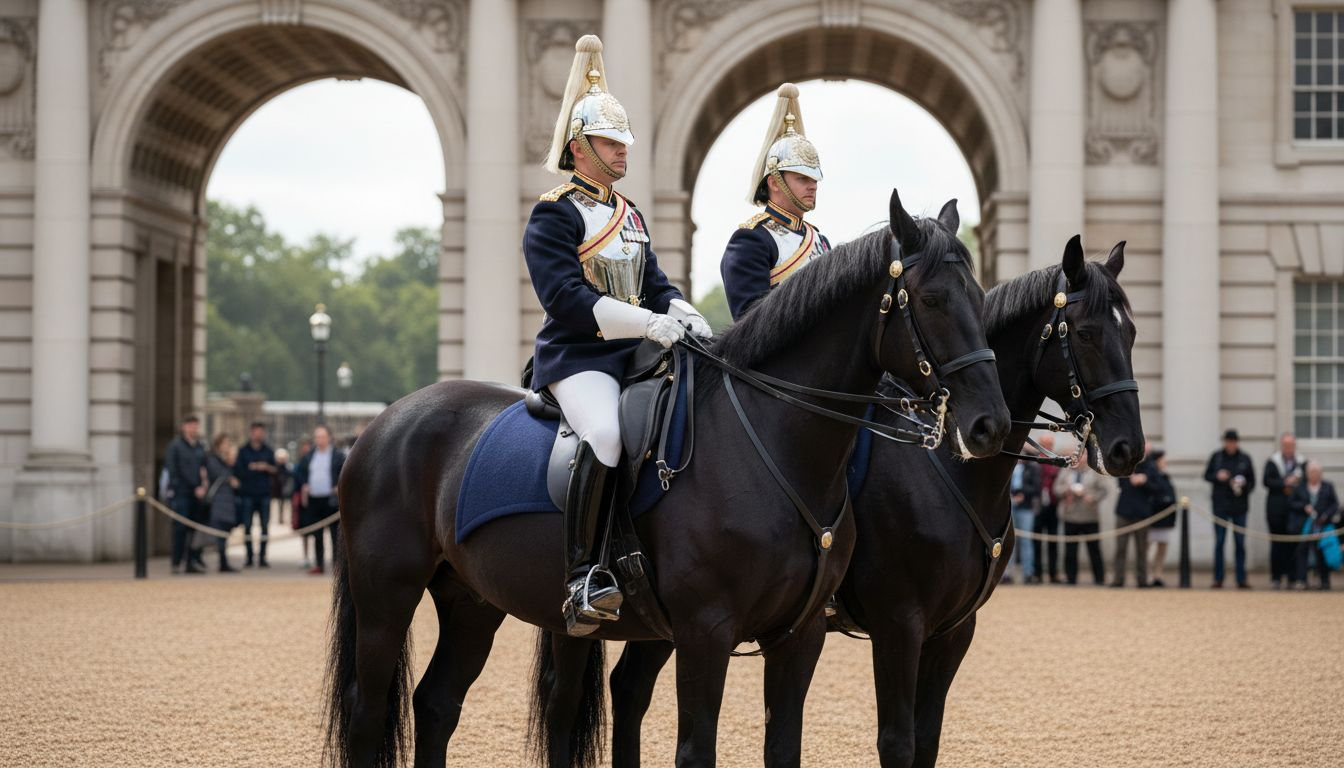
These honour guard units are not merely decorative elements but represent the pinnacle of military discipline, national pride, and operational readiness. Their responsibilities extend far beyond ceremonial appearances, embodying the highest standards of British military excellence.
To better understand the unique characteristics of the British Army’s ceremonial units, here is a comparison of the main Honour Guard regiments:
| Regiment | Distinctive Feature | Ceremonial Role |
|---|---|---|
| Grenadier Guards | Oldest Foot Guards unit | Frequently guard royal palaces |
| Coldstream Guards | Blue plumes in bearskin | Key role at the Cenotaph |
| Scots Guards | Three buttons on tunics | Notable at state events |
| Irish Guards | St. Patrick’s blue plume | Attendant at royal weddings |
| Welsh Guards | White-green plume | Prominent at investitures |
| Life Guards | Red tunic, white helmet | Lead mounted ceremonial |
| Blues and Royals | Blue tunic, red plume | Escort royal processions |
Pro tip: When observing Household Division honour guards, notice the subtle differences in uniform details – each regiment’s unique traditions are reflected in these intricate variations.
Ceremonial roles and formation protocols
The Honour Guard performs a range of meticulously orchestrated ceremonial roles and state events, embodying the pinnacle of British military precision and tradition. These ceremonial duties extend far beyond mere pageantry, representing a profound expression of national pride, military discipline, and unwavering loyalty to the Crown.
Key ceremonial responsibilities include:
- Guarding royal residences
- Participating in state funerals
- Conducting the State Opening of Parliament
- Performing at Trooping the Colour
- Providing Guards of Honour for distinguished dignitaries
The Changing the Guard ceremony represents the most iconic demonstration of these intricate protocols. This choreographed ritual involves precise movements, formal inspections, and the symbolic exchange of palace keys, showcasing the exceptional discipline and training of the Household Division.
Formation protocols demand absolute precision, with every movement carefully planned and executed. Guards maintain immaculate uniformity, with specific requirements for stance, marching, and presentation. The accompanying military bands play a crucial role, providing musical accompaniment that adds solemnity and rhythm to these historical ceremonies.
Pro tip: When watching ceremonial guard changes, observe the minute details of synchronisation – each step and gesture represents years of dedicated training and military tradition.
Requirements and selection for honour guard
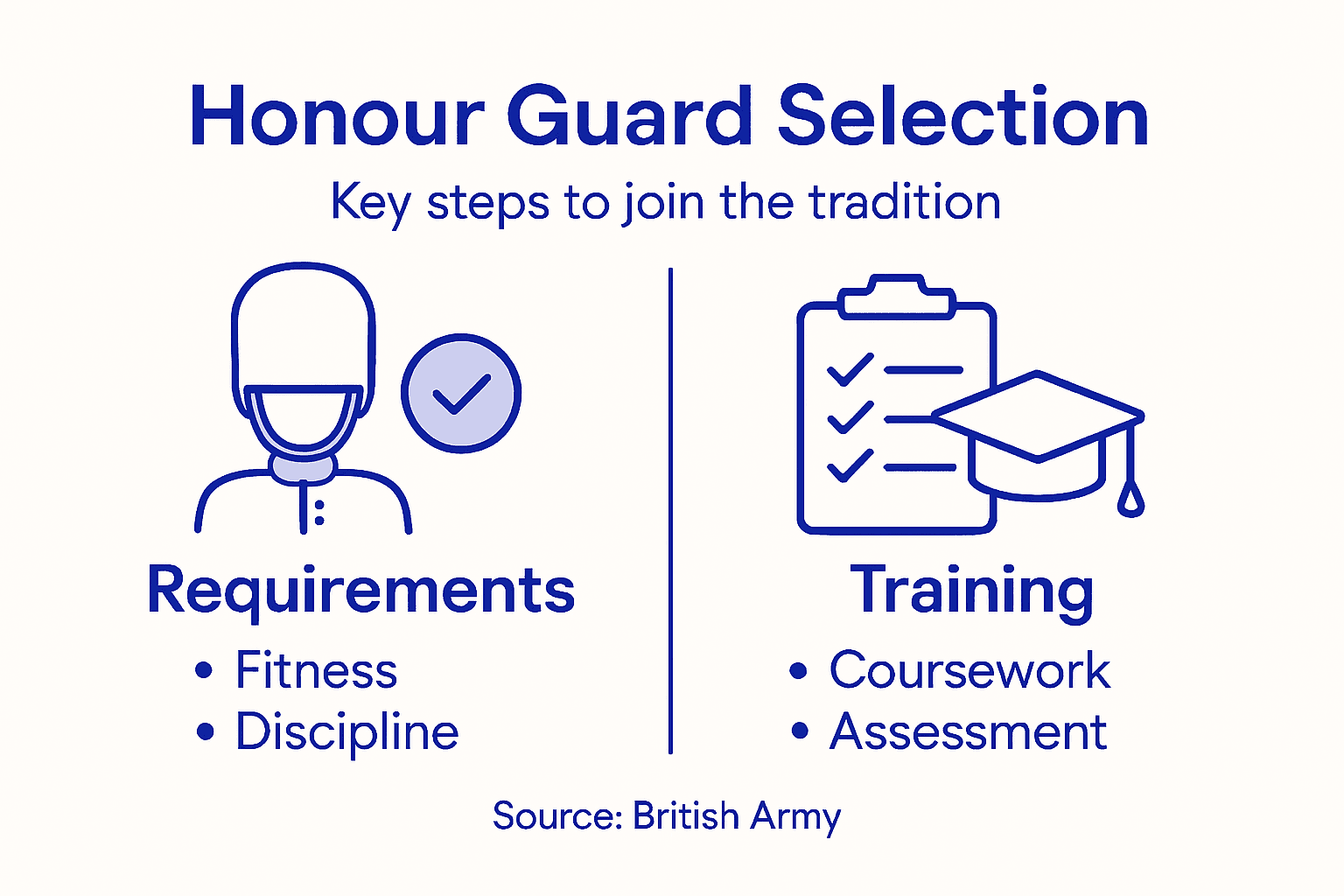
Selecting personnel for the Honour Guard is an extraordinarily competitive process that demands exceptional physical and mental attributes. Guardsmen recruitment involves rigorous standards that go far beyond conventional military selection criteria, ensuring only the most exceptional soldiers represent the Crown’s most prestigious military units.
Key selection requirements include:
- Age range between 16 and 35 years 6 months
- Exceptional physical fitness
- Demonstrated discipline and mental resilience
- Ability to pass intensive medical assessments
- Commitment to both operational and ceremonial duties
The 30-week Combat Infantry Course at Catterick represents a pivotal training phase, where potential guardsmen undergo intense preparation. Household Division selection emphasises motivation and precision, with candidates evaluated not just on physical capability but on their capacity to maintain impeccable standards during both combat and ceremonial roles.
Beyond physical requirements, honour guard selection demands an almost intangible quality of bearing and dignity. Candidates must demonstrate an unwavering commitment to representing British military traditions, with every movement, stance, and gesture reflecting centuries of military excellence. The ability to maintain absolute composure under public scrutiny is paramount, making psychological strength as crucial as physical prowess.
Pro tip: Aspiring honour guard members should focus on developing not just physical fitness, but also mental discipline and a profound understanding of military heritage.
Responsibilities, risks and common misconceptions
The Honour Guard embodies a profound dual-role military commitment, challenging widespread misconceptions about their function and significance. Far from being mere ceremonial performers, these soldiers are fully operational military personnel with complex responsibilities that extend well beyond public appearances.
Common misconceptions about Honour Guards include:
- They are only decorative troops
- Their roles are purely ceremonial
- They do not undergo combat training
- Ceremonial duties are less demanding than operational roles
- Physical appearance matters more than skill
Honour guard members perform critical duties that require exceptional mental and physical discipline. These responsibilities encompass flag folding, pallbearing, rifle salutes, escorting dignitaries, and representing military traditions with absolute precision. Each task demands rigorous training and an unwavering commitment to maintaining the highest standards of military excellence.
The risks associated with Honour Guard duties are often underestimated. Beyond the physical strain of prolonged, immobile standing during ceremonies, these soldiers must maintain perfect composure under intense public scrutiny. They represent not just their regiment, but the entire British military tradition, bearing the psychological weight of national representation while simultaneously maintaining operational readiness for potential deployment.
Below is a summary of duties and required qualities for Honour Guard members:
| Responsibility | Required Attribute | Example Context |
|---|---|---|
| Prolonged ceremonial standing | Physical endurance | Guarding royal residences |
| Interacting with dignitaries | Diplomatic bearing | Welcoming heads of state |
| Synchronised drill movements | Precision and discipline | State Opening of Parliament |
| Switching between roles | Operational versatility | Ceremonial and combat duties |
| Representing British heritage | Understanding of tradition | Participation in Trooping the Colour |
Pro tip: Never mistake the stillness of an Honour Guard for weakness – behind that immobile stance lies years of intense military training and unbreakable discipline.
Honour the Tradition with Authentic British Military Gifts
The article highlights the discipline and pride embodied by the Honour Guard in British military ceremonies. If you admire the precision, dedication, and rich heritage of the UK Guards Regiments, you may wish to celebrate these values through thoughtful and meaningful gifts. Whether you are recognising the service of a proud member or commemorating a special occasion, choosing authentic presentation products that reflect the spirit of these elite regiments makes a powerful statement.
Discover a wide range of distinctive items designed for all the UK Guards Regiments at Shop gifts and presentation products for all the UK Guards Regiments. For those inspired by the operational and ceremonial excellence described in the article, our MOD Guards collection offers quality memorabilia that honours this dedicated service. Explore our full range today at The Regimental Store Ltd and find the perfect way to express respect and admiration for the UK military tradition.
Take the next step now to celebrate military heritage with lasting keepsakes that truly resonate.
Frequently Asked Questions
What is the purpose of the Honour Guard in British Military ceremonies?
The Honour Guard serves as a symbol of military excellence, performing ceremonial duties that reflect national pride and military discipline. They participate in significant events, such as guarding royal residences and state funerals.
How is the Honour Guard selected and what are the requirements?
Candidates for the Honour Guard must meet rigorous eligibility criteria, including exceptional physical fitness, discipline, and the ability to endure intensive medical assessments. The selection process emphasizes mental resilience and the ability to maintain high standards in both ceremonial and combat roles.
What types of regiments make up the British Army’s Honour Guard?
The Honour Guard is primarily composed of two categories: the Foot Guards, which include regiments like the Grenadier Guards and Coldstream Guards, and the Household Cavalry, which comprises the Life Guards and Blues and Royals. Each regiment has its unique ceremonial roles and historical significance.
What are some common misconceptions about the Honour Guard?
Many people believe that Honour Guards are purely decorative and do not undergo combat training. In reality, they are fully operational soldiers who perform critical duties beyond ceremonial roles, including flag folding, pallbearing, and engaging with dignitaries.
Recommended
- What Is a Military Parade and Why It Matters – The Regimental Store Ltd
- Coldstream Guards History: Legacy, Traditions, and Role – The Regimental Store Ltd
- Types of Military Regalia in the UK Forces – The Regimental Store Ltd
- Why Display Military Badges: Honouring Service in the UK – The Regimental Store Ltd
- Manned Guarding Explained: Key Roles In UK Security|BM