
History of the Royal Navy: Legacy and Lasting Impact
Standing on the deck of a storied warship or recalling the camaraderie forged at sea, every Royal Navy veteran and service member knows the weight of tradition. The Royal Navy stands as the naval warfare force of the United Kingdom, charged with defending the UK, the Crown Dependencies, and the Overseas Territories from threat or invasion. For those who have served, understanding the rich history and evolving mission of this Senior Service brings deeper pride and meaning to every deployment, ceremony, and shared memory.
Table of Contents
- Defining The Royal Navy And Its Mission
- Evolution From Origins To Global Dominance
- Notable Ships, Leaders, And Major Battles
- Technological Advancements And Tactical Shifts
- Traditions, Commemoration, And Veteran Pride
- Modern Role And Ongoing Significance
Key Takeaways
| Point | Details |
|---|---|
| Royal Navy’s Mission | The Royal Navy defends the UK and its territories, maintaining readiness and presence to project maritime power. |
| Historical Evolution | The Royal Navy transformed into a global force through innovation and adaptation, crucial for maintaining naval superiority. |
| Technological Advancements | Continuous investment in modern technologies and tactics is essential to address contemporary threats and ensure operational effectiveness. |
| Traditions and Community | Naval traditions foster pride and continuity, connecting current sailors with a rich history and enhancing camaraderie among veterans. |
Defining the Royal Navy and Its Mission
The Royal Navy is more than just a collection of ships and personnel. It is the naval warfare force of the United Kingdom, tasked with a mission that extends far beyond British shores. At its core, the Royal Navy exists to defend the UK, the Crown Dependencies, and the Overseas Territories from naval attack or invasion. As a veteran or active service member, you understand that this responsibility shapes every decision made at the highest levels of naval command, from resource allocation to operational planning.
What makes the Royal Navy distinct among the UK’s armed services is its pedigree. As the oldest of the UK’s armed forces, it earned the title “the Senior Service” through centuries of maritime dominance. Although English and Scottish kings used warships from the early medieval period, the modern Royal Navy traces its origins to the English Navy of the early 16th century. This lineage matters because it anchors the service in traditions and institutional knowledge that have proven effective across rapidly changing strategic environments. Every officer holds their commission from the King, reinforcing the formal constitutional relationship between the Crown and the Naval Service.
Today’s Royal Navy operates within a clear strategic framework. The service’s missions include maintaining readiness, persistent presence across geographic areas, and projecting maritime power to deter and defend UK interests globally. The primary focus is NATO, with an expanding role in the UK’s strategic tilt towards the Indo-Pacific region. This dual emphasis reflects the geopolitical reality that Britain’s security interests span multiple oceans and require constant vigilance. For those serving, this translates into rotational deployments, exercise commitments, and the ongoing responsibility to maintain vessels and capabilities at a level that commands respect among allies and potential adversaries alike.
Pro tip: Understanding the Royal Navy’s formal mission and strategic obligations helps you contextualise your own service within the broader national defence strategy, particularly when discussing your career progression with fellow veterans or explaining your naval background to civilians.
Evolution From Origins to Global Dominance
The Royal Navy’s transformation from a regional maritime force into the world’s dominant naval power took centuries of warfare, innovation, and sacrifice. The pivotal moment came in 1707 when the union of England and Scotland merged their navies, creating an institution with vastly greater resources and strategic reach. This wasn’t simply a bureaucratic reorganisation. It represented a fundamental shift in British naval capability, combining Scottish shipbuilding expertise with English naval traditions to create something more formidable than either kingdom could achieve alone. From that point forward, the Royal Navy began its systematic expansion across the world’s oceans.
The French Revolutionary and Napoleonic Wars marked the Royal Navy’s transformation into an undisputed global force. Key battles such as the Battle of the Nile and Trafalgar demonstrated not merely tactical superiority, but technological advancement and organisational excellence that left rivals struggling to keep pace. Beyond the headlines of famous victories, the Royal Navy made quieter but equally important innovations. The systematic eradication of scurvy through better nutrition and lime juice storage saved countless sailors’ lives and allowed longer deployments that cemented British naval dominance. Amphibious operations conducted during this era established templates that naval forces still follow today, projecting power ashore and supporting empire building that would shape global politics for generations.
Technological transformation accelerated through the 19th and 20th centuries. The Navy transitioned from sail to steam and from cannon to large shell-firing guns), adapting to each technological revolution to maintain its advantage. This wasn’t about blind adherence to tradition. The Royal Navy’s leadership recognised that supremacy required constant evolution. Even after World War II, when new naval powers emerged and Britain’s relative economic position declined, the Royal Navy remained a leading maritime force. That resilience through change is perhaps the most important lesson from this period. For veterans and serving members, understanding this history of adaptation demonstrates why the Royal Navy continues to invest in new capabilities and demands flexibility from its personnel.
To better understand the evolution of the Royal Navy, this table summarises key technological transformations and their strategic impacts:
| Era | Key Innovation | Strategic Impact |
|---|---|---|
| Age of Sail | Broadside cannons | Enabled dominance in fleet actions |
| Victorian Era | Steam propulsion | Extended range and speed |
| Early 20th Century | Dreadnought ships | Initiated new arms race |
| WWII | Aircraft carriers | Shifted focus to air power |
| Modern Era | Nuclear submarines | Ensured strategic deterrence |
| Present Day | Autonomous systems | Enhanced intelligence and defence |
Pro tip: Learning about specific battles like Trafalgar or technological innovations like steam propulsion provides excellent talking points when explaining Naval history to younger generations, and helps contextualise how modern naval doctrine evolved from these foundational principles.
Notable Ships, Leaders, and Major Battles
The Royal Navy’s legacy rests on the shoulders of extraordinary ships and the men who commanded them. HMS Victory stands as the most celebrated vessel in Naval history, serving as Admiral Horatio Nelson’s flagship during the Napoleonic Wars. Walk the decks where Nelson fought his final battle, and you can still see the scars of cannon fire and the wooden pegs that held her hull together through centuries of service. But Victory wasn’t alone in shaping the Royal Navy’s story. The ironclad Warrior and the nuclear-powered submarine Dreadnought represented different technological eras, each marking a revolutionary moment when the Royal Navy adapted to maintain superiority over potential rivals. These vessels weren’t just warships. They were statements of national power, engineering marvels that intimidated adversaries and inspired confidence at home.
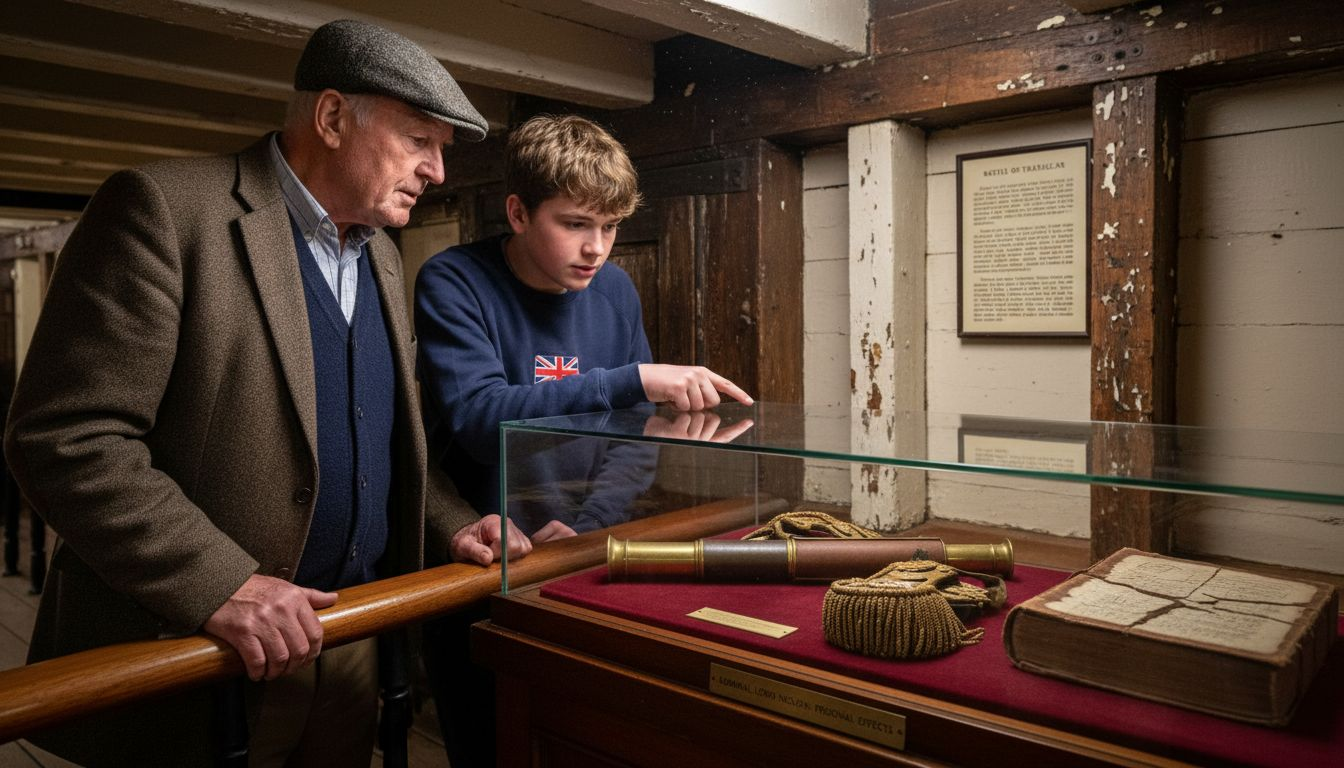
Admiral Horatio Nelson emerges from history as the Royal Navy’s most iconic leader, not because he was invincible, but because he understood naval warfare at a deeper level than his contemporaries. His tactics at the Battle of Trafalgar broke the conventional rules of engagement, sacrificing predictability for devastating effectiveness. Nelson knew that winning battles meant more than manoeuvring ships in formation. It required understanding your enemy’s psychology, anticipating their moves, and committing absolutely to victory even when the odds seemed uncertain. His death during Trafalgar’s triumph only cemented his status as the Royal Navy’s greatest symbol of dedication and tactical brilliance. For serving members and veterans, Nelson’s career demonstrates how mastering your profession and understanding the human element of warfare separates adequate leadership from exceptional command.
The Royal Navy participated in numerous key naval battles across history including the Anglo-Dutch Wars, the Napoleonic Wars, and both World Wars. Each engagement taught lessons about naval strategy, technology integration, and resource management. The Battle of Cape Matapan showcased superior gunnery and training. The battles of World War II demonstrated how aircraft changed naval warfare forever, forcing the Royal Navy to evolve its tactics and ship designs. These weren’t isolated victories. They formed a continuous thread of learning and adaptation that shaped how the Royal Navy operates today.
Pro tip: If you’re displaying memorabilia from a specific ship or battle era, research the vessel’s actual combat record and share those stories with visitors. Personal details about HMS Victory’s damage from Trafalgar or the Dreadnought’s Cold War patrols create far more compelling narratives than general historical facts.
Technological Advancements and Tactical Shifts
The Royal Navy’s dominance throughout history wasn’t achieved through tradition alone. Every generation faced the choice between maintaining established practices or embracing radical technological change. When steam engines emerged, wooden sailing ships suddenly looked obsolete. When aircraft proved they could sink battleships, naval strategy fundamentally shifted. Today’s Royal Navy confronts a similar inflection point, but the pace of change is far more rapid. The service must simultaneously manage nuclear deterrence, cyber operations, and autonomous systems whilst maintaining the institutional knowledge that made it great. This tension between innovation and stability defines modern naval strategy.
Currently, the Royal Navy is investing heavily in new capabilities designed for 21st century threats. New ship classes like the Type 32 frigate and expansion of submarine fleets reflect strategic priorities that differ markedly from Cold War era planning. These aren’t simply incremental improvements to existing designs. The Type 32 represents a fundamental rethink of frigate design, incorporating lessons from recent operations and anticipating future conflicts. Similarly, submarine development focuses on capabilities that extend far beyond traditional anti-ship warfare. For veterans who served on earlier platforms, the sophistication of modern vessels might seem like science fiction. Yet the core principle remains unchanged: naval superiority requires matching or exceeding potential adversaries’ capabilities.
The Royal Navy’s modernisation priorities include nuclear deterrence, innovation, leadership, and agility as it adapts to rapid technological change and increasing global threats. This means investing in cyber operations capabilities, autonomous systems, and advanced sensors that can detect threats far beyond visual range. Tactical doctrine has shifted accordingly. Modern naval engagements occur at distances where opposing forces never see each other. Information dominance matters as much as firepower. Command decisions now rely on artificial intelligence assisting with threat assessment and resource allocation. Yet despite these changes, the Royal Navy still values the experience and intuition that veteran sailors bring to problem-solving. Technology provides the tools, but human judgment remains irreplaceable.
The transition from traditional tactics to these modern approaches creates unique challenges for personnel. Sailors must understand complex systems whilst maintaining the seamanship fundamentals that have defined Naval training for centuries. Ships operate with smaller crews than their predecessors, requiring greater individual responsibility and cross-training. The blend of cutting-edge technology and enduring naval traditions defines contemporary service in ways that previous generations would find both familiar and startling.
Pro tip: When discussing your naval service with civilians or younger generations, explaining how specific technologies changed tactical approaches makes abstract military concepts tangible. For instance, describing how radar changed fleet engagements from visual range to beyond-horizon combat illustrates both technological progress and tactical adaptation.
Traditions, Commemoration, and Veteran Pride
The Royal Navy’s customs and traditions aren’t museum pieces gathering dust. They’re living practices that connect sailors serving today with shipmates from centuries past. When you pipe someone aboard, you’re performing a ritual that stretches back to the age of sail. When you wear a ship’s badge or crest, you’re carrying forward the identity of an institution that predates most modern nation states. These aren’t merely ceremonial flourishes. Royal Navy customs and traditions including crests, ensigns, ship badges, and naval slang serve a deeper purpose: they instil pride, foster continuity, and connect individuals to something larger than themselves. For veterans, these traditions become touchstones to your service, anchoring memories and relationships formed during deployment or shore postings.
Ceremonial practices within the Royal Navy carry profound significance that extends beyond their immediate context. The 21-gun salute isn’t simply noise and smoke. It’s a formal acknowledgement of rank, achievement, or loss that harks back to when navies would discharge their weapons as a gesture of trust and respect. Burial at Sea represents the ultimate connection between sailor and ocean, honouring those who spent their careers on the water by returning them to it. Piping Aboard ceremonies mark important arrivals with a ritualistic precision that commands attention and respect. These practices instil dedication among serving personnel and connect them viscerally to Naval history and values. For those who’ve experienced them firsthand, they represent pivotal moments when the weight of institutional tradition becomes personally tangible.
The following table contrasts selected Royal Navy traditions and their underlying purposes:
| Tradition | Historical Origin | Modern Purpose |
|---|---|---|
| Piping Aboard | Age of sail crew communication | Shows respect, marks significant arrivals |
| Ship’s Crest Badge | Individual ship identification | Fosters crew pride and unity |
| 21-Gun Salute | Naval show of trust and respect | Marks notable people or events |
| Burial at Sea | Maritime necessity from old days | Honours sailor’s connection to the ocean |
Commemoraton takes many forms within the Naval community. Annual ceremonies at war memorials, regimental reunions, and ship associations keep memories of fallen shipmates and proud service alive. Understanding the meaning behind commemorative items like ship crests or medals transforms them from objects into narratives of sacrifice and achievement. When you display meaningful veteran memorabilia from your service, you’re not simply decorating. You’re telling your story and honouring the collective experience of your vessel’s company or unit. This matters because it keeps historical consciousness alive within families and communities that might otherwise lose connection to naval heritage.
Veteran pride flows directly from these traditions and commemorative practices. You wear your service with dignity because the institution you served maintains standards and values worth preserving. Reunions bring together sailors who’ve spent years scattered across the world, and suddenly the shared language, inside jokes, and mutual understanding that defined your service relationships resurface instantly. That esprit de corps, forged through rigorous training and operational demands, endures precisely because the Royal Navy deliberately maintains practices designed to sustain it. For many veterans, reconnecting with shipmates through reunion events or veteran organisations feels like stepping back into a community where your experiences are understood without lengthy explanation.
Pro tip: Preserve your service memorabilia properly and share the stories behind specific items with younger family members. A framed ship’s crest or medal becomes far more valuable when accompanied by context about what you accomplished, where you served, and what those symbols meant to your crew.
Modern Role and Ongoing Significance
The Royal Navy’s relevance today extends far beyond protecting British shores. The service operates as a multifaceted instrument of national policy, balancing military readiness with diplomatic presence and humanitarian assistance. Understanding this modern role requires recognising that naval power projects influence across multiple domains simultaneously. A frigate conducting freedom of navigation operations isn’t simply defending territorial waters. It’s asserting British commitment to international law, reassuring allied nations, and deterring potential adversaries. For veterans, this broader context helps explain why the service continues demanding excellence and investment despite profound changes in geopolitical circumstances.
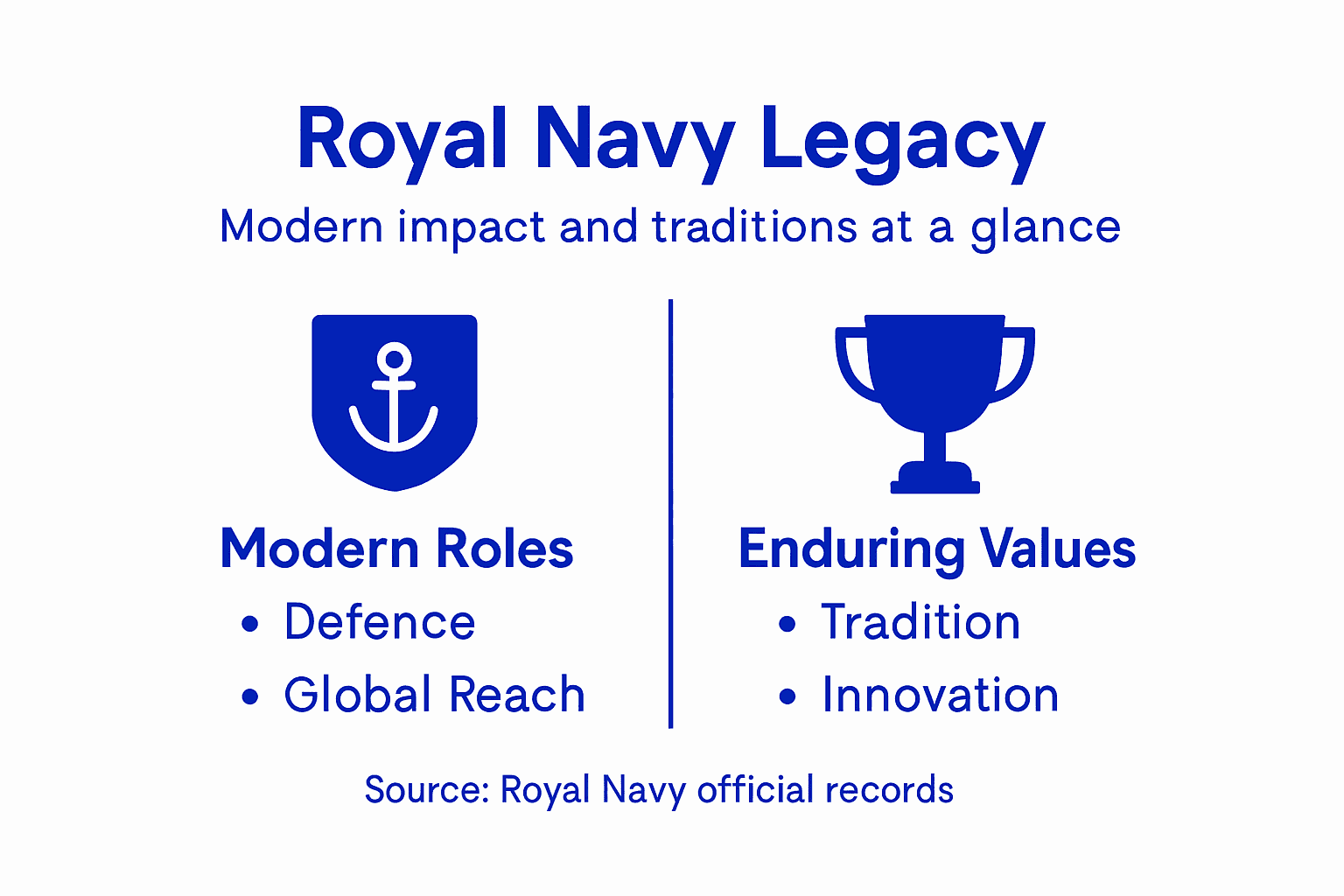
Economic considerations anchor the Royal Navy’s strategic importance in ways that peacetime observers sometimes overlook. The Royal Navy remains critical to UK prosperity and security by securing maritime trade routes and protecting economic interests worldwide. Approximately 90 per cent of global trade travels by sea, and British merchant vessels depend upon naval protection to operate safely in contested waters. Piracy, terrorism, and regional conflicts create genuine threats to commercial shipping. The Royal Navy acts simultaneously as guardian, diplomat, humanitarian force, and peacekeeper, maintaining a global presence that deters conflict before it escalates. This means the ships and submarines you served on weren’t simply military platforms. They were instruments protecting British economic prosperity and supporting the prosperity of allied nations.
The Royal Navy plays a pivotal role in national security through NATO commitments and global maritime operations, ensuring persistent presence in key regions and addressing emerging security challenges. Submarine threats have resurfaced as a primary concern. Hybrid warfare tactics employed by peer competitors demand constant vigilance. The Arctic region has opened as a new strategic theatre requiring sustained Naval attention. Each of these challenges demands personnel with the training and experience that only the Royal Navy can provide. The service’s ongoing modernisation reflects recognition that yesterday’s solutions won’t address tomorrow’s problems. For active service members and veterans, this continuous evolution means your skills remain relevant precisely because the challenges themselves keep changing.
The Royal Navy’s lasting significance rests ultimately on its ability to adapt without abandoning its core identity. The institution maintains the traditions and values that define it whilst simultaneously embracing technological advancement and doctrinal innovation. This balance isn’t easily achieved. Many military institutions fail by clinging too tightly to past successes or abandoning institutional identity in pursuit of novelty. The Royal Navy’s success stems from understanding that tradition and modernity aren’t opposing forces. They’re complementary aspects of an institution designed to endure and remain effective across generations.
Pro tip: When explaining your Naval service to younger people, connect it to current events involving naval operations or maritime security challenges. Describing how a piracy patrol or NATO exercise relates to protecting trade or deterring aggression makes abstract strategic concepts concrete and personally meaningful.
Honour the Legacy of the Royal Navy with Timeless Gifts
The history of the Royal Navy reveals a profound legacy of dedication, courage and ongoing innovation. For veterans and serving personnel, preserving this proud heritage is more than remembrance it is a source of identity and pride. If you seek a meaningful way to celebrate that legacy or to share your Naval story with family and friends, explore our Royal Navy Shop for gifts and presentation Royal Marines & Submariners where every item honours tradition while capturing modern pride.
Choose from a range of high-quality memorabilia that connects you with the values and history discussed in the article. Whether it is a commemorative ship’s crest, a medal display or a unique keepsake, our collection helps you express the spirit of the Senior Service in your home or workplace. Visit The Regimental Store Ltd today and discover how you can preserve your naval heritage with gifts crafted to inspire enduring pride. For even more special finds, browse our Featured Gift Ideas and bring a piece of Royal Navy history into your life now.
Frequently Asked Questions
What are the primary responsibilities of the Royal Navy?
The Royal Navy is tasked with defending the UK, the Crown Dependencies, and the Overseas Territories from naval attack or invasion, while also maintaining a persistent presence globally and projecting maritime power to deter and defend UK interests.
How has the Royal Navy evolved technically over the years?
The Royal Navy has transformed significantly from sail to steam and from cannons to advanced technologies like nuclear submarines and autonomous systems, adapting to technological and strategic changes over centuries to maintain naval superiority.
Why do traditions and commemorative practices matter in the Royal Navy?
Traditions and commemorative practices foster pride and continuity among serving members and veterans, connecting them to a rich naval history and strengthening unit cohesion through shared experiences and rituals.
How does the Royal Navy contribute to national security in contemporary contexts?
Today, the Royal Navy plays a vital role in securing maritime trade routes, engaging in NATO commitments, and addressing emerging security challenges such as piracy and hybrid warfare tactics, ultimately supporting economic prosperity and international law.
Recommended
- History of the Royal Marines – Why It Matters for Veterans – The Regimental Store Ltd
- Royal Navy Ship Crests – Their Meaning and Value – The Regimental Store Ltd
- History of the Royal Engineers: Lasting Impact on Service – The Regimental Store Ltd
- Royal Navy Memorabilia Guide: Identify and Preserve Collectibles – The Regimental Store Ltd