
History of the SAS – Impact on British Forces
For those who value military heritage, the story of the Special Air Service stands as a testament to bold innovation and resilience in British military history. Born in the fierce heat of the Second World War, the SAS broke new ground with covert raids and daring tactics that redefined what special forces could achieve. Exploring its origins, evolution, and enduring legacy reveals the inspiration behind cherished British military memorabilia and the deep pride felt by veterans and collectors alike.
Table of Contents
- Origins And Purpose Of The SAS Regiment
- Early Missions And World War II Operations
- Evolution Through Post-war And Modern Eras
- Traditions, Symbols, And SAS Memorabilia
- Influence On British Forces And Legacy
Key Takeaways
| Point | Details |
|---|---|
| Origins of the SAS | The Special Air Service was established in July 1941 to conduct unconventional warfare during World War II, focusing on covert operations behind enemy lines. |
| Evolution of Operations | The SAS evolved from a secretive unit in WWII to a key player in modern counter-terrorism, adapting its strategies to contemporary global conflicts. |
| Cultural Impact | The SAS’s legacy reaches beyond military achievements, influencing British cultural perceptions of courage and resilience. |
| Strategic Innovation | The regiment has redefined military doctrine, introducing advanced tactics that have become standard for special operations worldwide. |
Origins and Purpose of the SAS Regiment
The Special Air Service (SAS) emerged during one of Britain’s most critical military periods - the Second World War. Founded in July 1941, this elite unit was conceived by David Stirling as a specialised commando force designed to conduct extraordinary operations behind enemy lines.
The SAS was strategically established with several groundbreaking objectives:
- Conduct covert surveillance missions
- Undertake sabotage operations
- Disrupt enemy communications and supply lines
- Execute small-scale but high-impact raids
- Operate with exceptional mobility and innovation
Initially organised as L Detachment, Special Air Service Brigade, the unit’s very name was intentionally misleading - designed to deceive Axis forces about its true size and capabilities. Drawing personnel from various Commando units, the SAS worked closely with the Long Range Desert Group, developing pioneering tactics for desert warfare.
Wartime Evolution saw the regiment quickly transform from an experimental unit to a critical strategic asset. Renamed the 1st SAS Regiment in 1942, it incorporated international squadrons including Free French and Belgian soldiers, demonstrating its multinational character and adaptability.
Pro tip: Understanding the SAS’s origins reveals how innovative thinking and unconventional tactics can fundamentally reshape military strategy.
Early Missions and World War II Operations
Special Air Service (SAS) troops distinguished themselves during World War II through unprecedented strategic operations. Pioneering unconventional warfare tactics, they conducted high-risk missions that dramatically challenged traditional military approaches.
Their early missions in North Africa involved several extraordinary strategies:
- Conducting long-range desert patrols
- Destroying enemy aircraft on airfields
- Disrupting critical Axis supply lines
- Gathering crucial intelligence behind enemy lines
- Minimising Allied casualties through precision strikes
The SAS proved particularly effective in North Africa, where their sabotage missions systematically weakened Axis capabilities. Operating in small, highly mobile groups, they would infiltrate enemy territories, destroy critical infrastructure, and vanish before substantial counterattacks could be mounted.
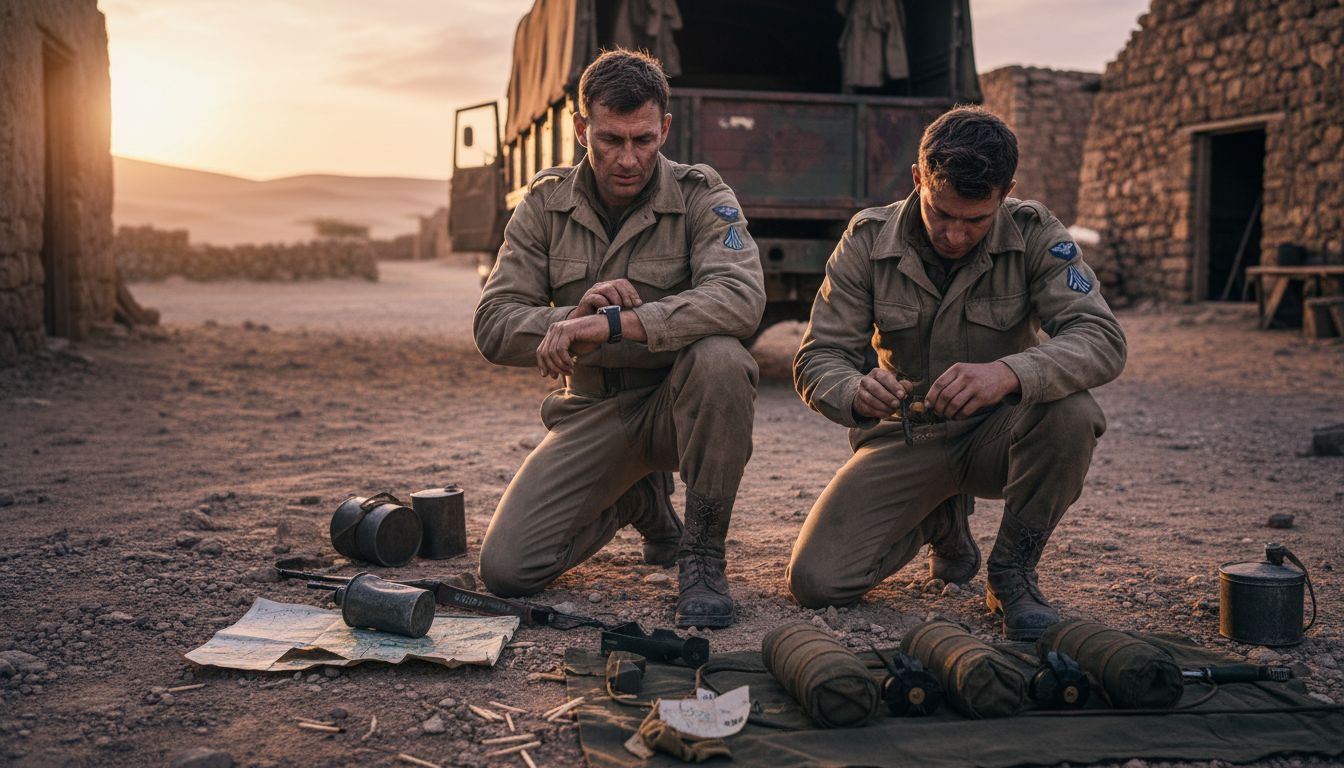
As the war progressed, the SAS expanded its operational scope, participating in key campaigns across Sicily, Italy, and Western Europe. They worked closely with resistance movements, providing strategic support and executing complex sabotage operations that significantly undermined German military effectiveness.
Pro tip: Understanding the SAS’s wartime strategy reveals how small, adaptable units can create disproportionate strategic impact through intelligent, targeted operations.
Evolution Through Post-war and Modern Eras
The Special Air Service (SAS) underwent significant transformations in the decades following the Second World War, reimagining its strategic role in an increasingly complex global landscape. After being temporarily disbanded, the regiment was re-established in 1947 as a Territorial Army unit, with the 22nd SAS Regiment formally constituting part of the regular British Army by 1952.
The regiment’s post-war evolution involved several critical developments:
- Expanding counter-terrorism capabilities
- Developing advanced selection and training processes
- Engaging in high-profile international missions
- Adapting to asymmetric warfare challenges
- Maintaining a culture of absolute operational secrecy
Adapting to modern global conflicts, the SAS became renowned for its extraordinary interventions. The Iranian Embassy Siege in 1980 marked a pivotal moment, demonstrating the regiment’s exceptional counter-terrorism capabilities and bringing them international recognition. Their operations expanded across multiple continents, from counter-insurgency missions in Africa to strategic interventions in the Middle East.
The modern SAS represents a sophisticated, highly adaptable special forces unit. They collaborate extensively with international allies, leverage cutting-edge technology, and maintain their reputation for conducting complex, high-risk operations that traditional military units cannot undertake.
Pro tip: Understanding the SAS’s continuous evolution reveals how elite military units must constantly reinvent themselves to remain effective in changing global security landscapes.
The following table highlights the main differences between the wartime SAS and its modern counterpart:
| Aspect | World War II SAS | Modern SAS |
|---|---|---|
| Primary Focus | Behind-enemy-lines sabotage | Counter-terrorism, global missions |
| Main Theatre | North Africa, Europe | Worldwide, including urban settings |
| International Involvement | Allied squadrons integrated | Works with international partners |
| Technology Level | Minimal equipment, improvisation | Advanced technology and tactics |
| Public Awareness | Highly secretive, little known | Global recognition after 1980s |
Traditions, Symbols, and SAS Memorabilia
The Special Air Service has cultivated a rich tapestry of traditions that extend far beyond mere military protocol. Defining the regiment’s unique identity, these traditions represent a profound connection between past and present members, embodying the spirit of extraordinary service and unwavering commitment.
Key symbols and traditions of the SAS include:
- The iconic beige beret, symbolising elite status
- The famous ‘Who Dares Wins’ motto
- The distinctive SAS dagger badge
- Rigorous selection and training processes
- A culture of absolute discretion and professional excellence
The regiment’s memorabilia chronicles its remarkable history, serving as tangible reminders of extraordinary achievements. Museums and private collections preserve medals, insignia, and personal equipment that represent the SAS’s unparalleled legacy. These artefacts are not merely historical objects, but powerful symbols of courage, representing the unbreakable spirit of those who have served.
Lieutenant ‘Jock’ Lewes, a co-founder of the SAS, was instrumental in establishing the regiment’s core ethos - an approach to military service that prioritises discipline, innovation, and exceptional standards. The traditions he helped forge continue to inspire current and future generations of special forces personnel.
Pro tip: Understanding military memorabilia requires appreciating the stories and sacrifices behind each artefact, not just their physical appearance.
Here is a summary of influential SAS traditions and their significance:
| Tradition or Symbol | Meaning | Impact on Regimental Identity |
|---|---|---|
| Beige Beret | Sign of elite status | Instils pride in membership |
| ‘Who Dares Wins’ Motto | Embodies courage and risk-taking | Inspires ethos and reputation |
| Dagger Badge | Marks selection and bravery | Enhances esprit de corps |
| Rigorous Selection | Emphasises exceptional standards | Ensures top-level personnel |
| Legacy Memorabilia | Connects current members to history | Preserves heritage and values |
Influence on British Forces and Legacy
The Special Air Service has fundamentally transformed British military doctrine through its pioneering approach to unconventional warfare and special operations. By challenging traditional military thinking, the regiment has consistently pushed the boundaries of strategic capabilities, inspiring significant changes across the British Armed Forces.
Key aspects of the SAS’s lasting impact include:
- Developing advanced counter-terrorism strategies
- Establishing elite training methodologies
- Introducing innovative operational tactics
- Enhancing global military intelligence capabilities
- Inspiring specialized unit formations
The regiment’s influence extends far beyond its operational achievements, profoundly shaping British military culture and international defence perspectives. Its approach to secrecy, operational effectiveness, and strategic innovation has become a benchmark for military units worldwide, demonstrating how a relatively small unit can dramatically influence national defence strategies.
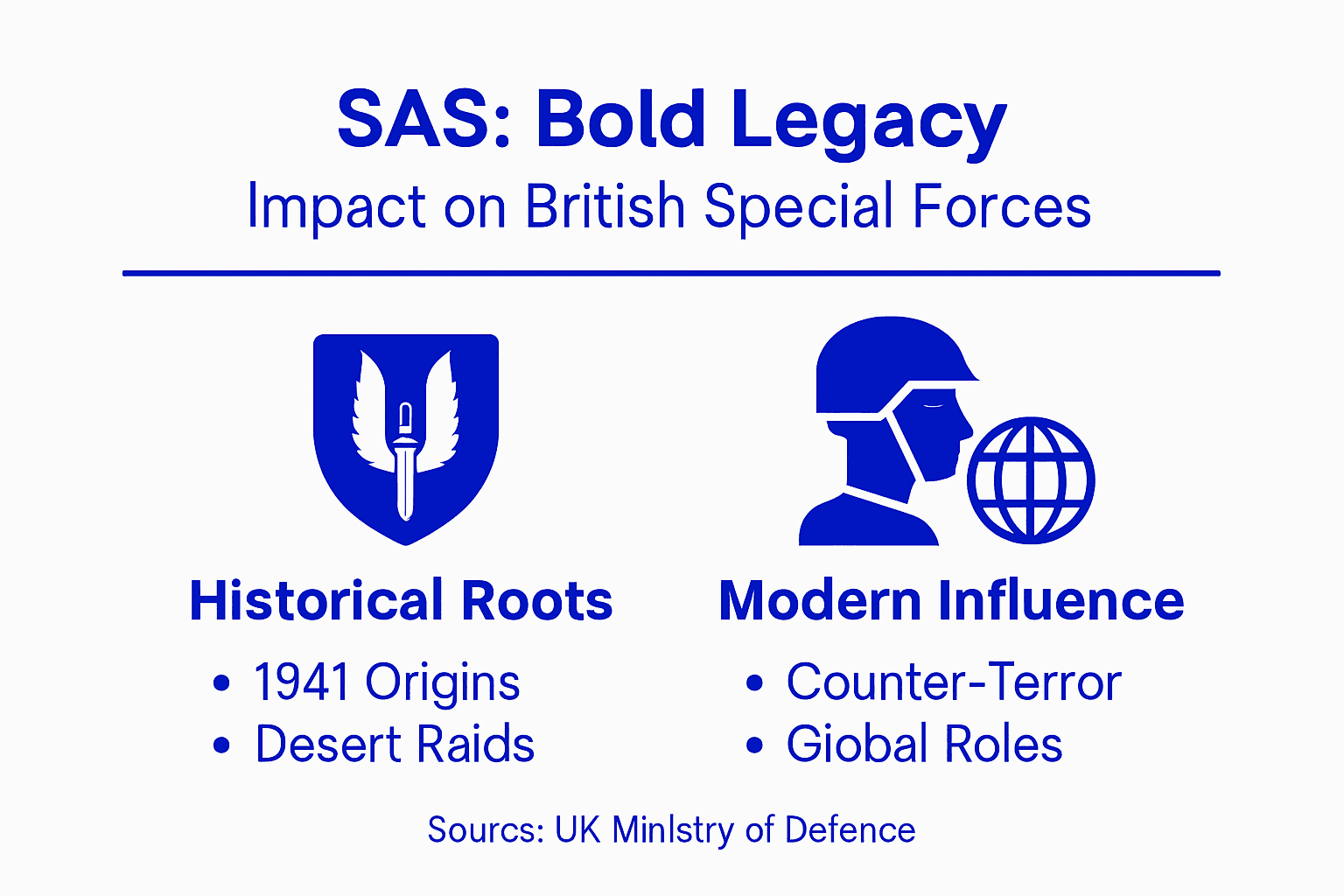
Beyond military circles, the SAS has permeated British cultural consciousness, becoming a symbol of exceptional courage, resilience, and professional excellence. Their legacy is not merely about combat achievements, but about embodying a philosophy of adaptability, mental toughness, and unwavering commitment to mission success.
Pro tip: Understanding institutional legacy requires looking beyond surface achievements to appreciate the deeper cultural and strategic transformations an organization creates.
Honour the Legacy of the SAS with Authentic Military Gifts
The remarkable history of the Special Air Service illustrates the power of tradition, discipline and exceptional courage shaping British forces. If you appreciate the SAS’s unique ethos such as the ‘Who Dares Wins’ motto and their pioneering spirit in unconventional warfare you will understand the importance of preserving these values through meaningful memorabilia. Whether you are a serving member, veteran or admirer, finding the perfect military gift can be challenging when seeking to capture this extraordinary legacy.
Explore our exclusive selection of UK Military gifts and presentation products designed specifically for Army, Royal Navy and RAF personnel and veterans at Regimental Store. Celebrate the profound impact of the SAS with authentic keepsakes that embody their heritage and inspire pride. Act now to honour the enduring spirit of the SAS and support those who serve by visiting UK Military gifts and presentation products today.
Frequently Asked Questions
What were the original objectives of the SAS during World War II?
The original objectives of the SAS included conducting covert surveillance missions, undertaking sabotage operations, disrupting enemy communications and supply lines, executing high-impact raids, and operating with exceptional mobility and innovation.
How did the SAS evolve after World War II?
After World War II, the SAS was re-established in 1947 and expanded its role to include counter-terrorism capabilities, developed advanced selection and training processes, and engaged in high-profile international missions, adapting to asymmetric warfare challenges.
What is the significance of the SAS’s motto ‘Who Dares Wins’?
The motto ‘Who Dares Wins’ embodies the spirit of courage and risk-taking that defines the SAS. It reflects the regiment’s ethos of exceeding the limits and achieving exceptional results in high-pressure situations.
How has the SAS influenced modern British military operations?
The SAS has significantly influenced modern British military operations by developing advanced counter-terrorism strategies, establishing elite training methodologies, introducing innovative operational tactics, and enhancing global military intelligence capabilities.
Recommended
- Parachute Regiment History: Britain’s Airborne Legacy – The Regimental Store Ltd
- Royal Regiment of Scotland: Legacy and Modern Impact – The Regimental Store Ltd
- History of the Royal Marines – Why It Matters for Veterans – The Regimental Store Ltd
- 7 Key Types of British Army Uniforms for Collectors – The Regimental Store Ltd