
Blazer Badge Explained: Meaning, Types, and Traditions
A single british blazer badge can hold more meaning than an entire uniform, carrying stories of honour, tradition, and achievement. These small emblems signal institutional pride across schools, clubs, and regiments, acting as concise markers of affiliation and respect. For many, owning or wearing one is not just about style but about visibly celebrating a connection that might stretch back generations. Discover why these badges remain such powerful symbols across british culture.
Table of Contents
- Blazer Badge Meaning And Core Purpose
- Traditional And Modern Types Of Blazer Badges
- Materials, Design Elements, And Crafting Methods
- Military Significance And Regimental Identity
- Common Uses And Wearing Etiquette
- Buying, Authenticity, And Care Considerations
Key Takeaways
| Point | Details |
|---|---|
| Symbolism of Blazer Badges | Blazer badges signify institutional identity, personal achievement, and professional affiliations within military and organisational contexts. |
| Craftsmanship and Production | The evolution of blazer badges reflects both traditional hand-embroidery and modern manufacturing techniques, offering unique aesthetics and durability. |
| Etiquette and Placement | Proper wearing of blazer badges, including precise positioning and careful maintenance, is crucial for representing professional identity and heritage. |
| Authenticity and Care | When purchasing blazer badges, prioritising craftsmanship and design authenticity ensures a genuine connection to institutional heritage. |
Blazer Badge Meaning and Core Purpose
A blazer badge represents far more than a mere decorative accessory - it is a powerful symbol of institutional identity, professional affiliation, and personal achievement. These meticulously crafted emblems serve as visual narratives that communicate an individual’s military service, regimental heritage, and organisational belonging with precision and pride.
Traditionally, blazer badges function as heraldic representations that encapsulate organisational histories and values. Much like the Wikipedia example of school badges which feature symbolic elements representing institutional heritage, military blazer badges similarly incorporate intricate design elements that tell a profound story. These might include regimental crests, distinctive symbols, historical references, or commemorative imagery that connects the wearer to a rich lineage of service and tradition.
At their core, blazer badges serve multiple critical purposes within military and organisational contexts:
- Identity Marker: Instantly communicating an individual’s specific service branch or unit
- Historical Connection: Preserving and displaying institutional memory and heritage
- Professional Recognition: Signalling specific achievements, qualifications, or specialisations
- Ceremonial Significance: Representing collective honour and shared professional experience
For military personnel, these badges are not merely decorative elements but profound markers of personal and collective identity. Explore our comprehensive guide on Regimental Blazers to understand the deeper cultural significance behind these remarkable symbols of service and belonging.
Traditional and Modern Types of Blazer Badges
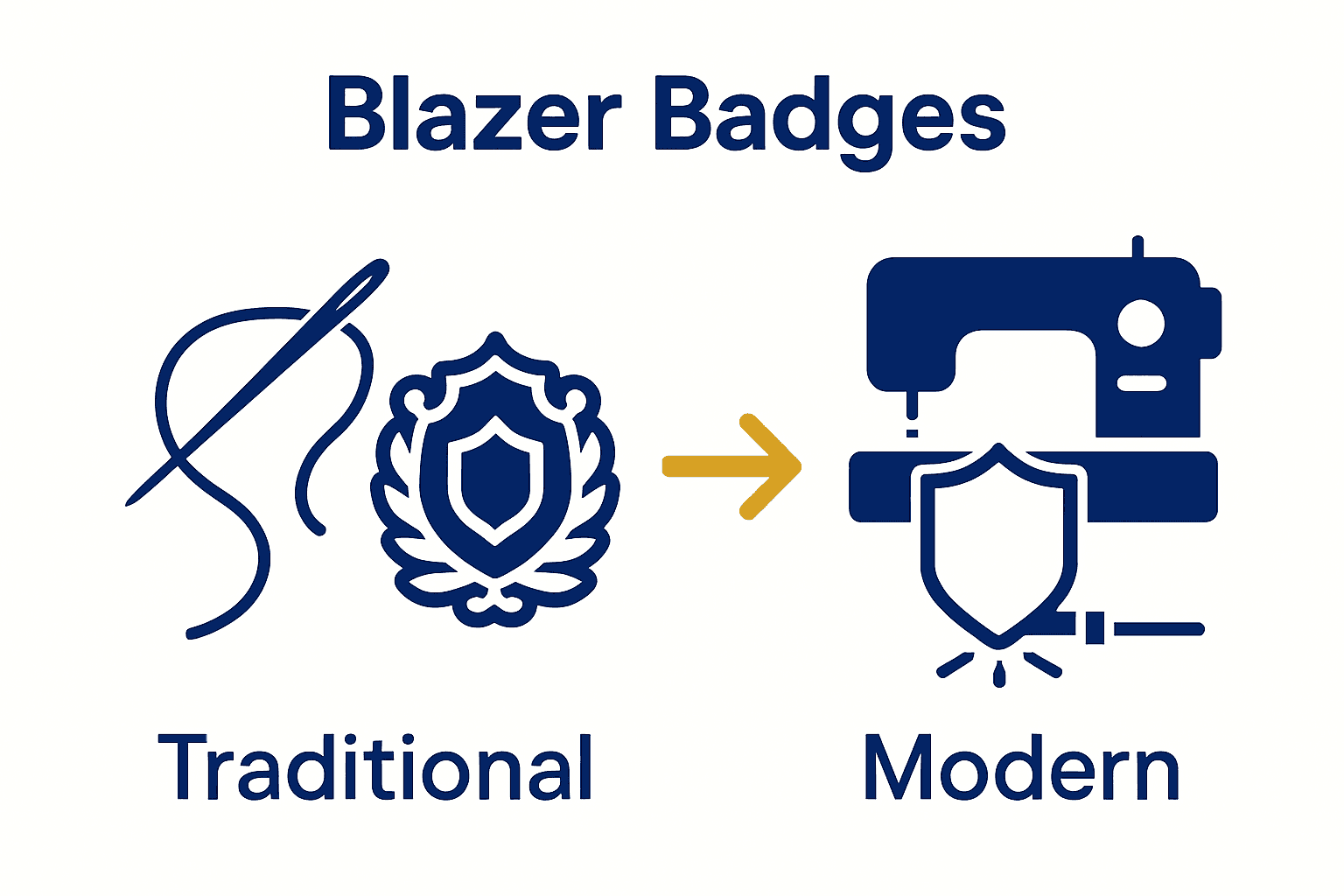
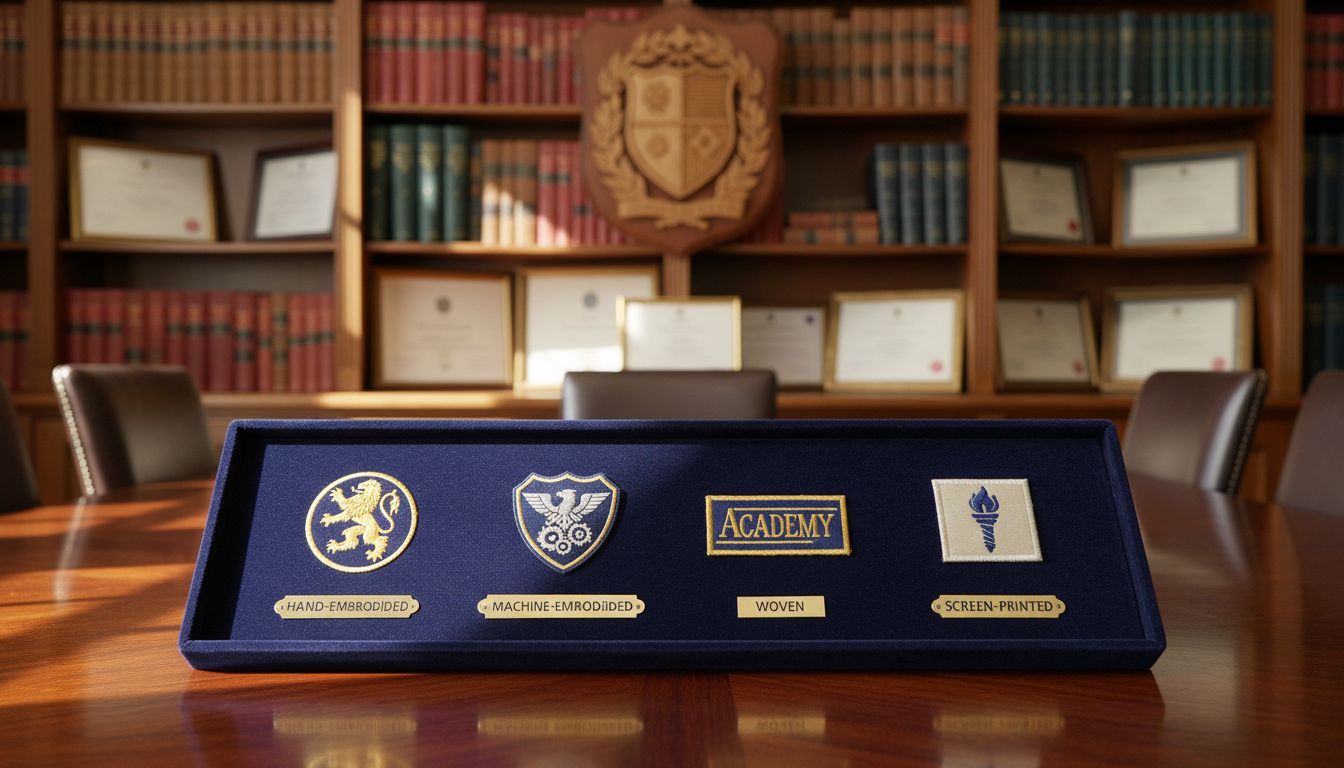
Blazer badges have evolved significantly over time, reflecting both traditional craftsmanship and modern manufacturing techniques. According to Filaspun, there are four primary production methods that define the landscape of badge creation: hand-embroidered, machine-embroidered, woven, and screen-printed badges, each offering unique aesthetic and durability characteristics.
Traditional hand-embroidered badges represent the pinnacle of artisanal craftsmanship, meticulously created using time-honoured techniques that honour military and institutional heritage. These badges often feature intricate detailed work, carefully stitched by skilled artisans who maintain centuries-old embroidery traditions. In contrast, modern manufacturing techniques like machine embroidery and woven production have made badge creation more accessible and cost-effective while maintaining high aesthetic standards.
Badge attachment and design have also diversified, as highlighted by Leonard Hudson. Modern blazer badges now offer multiple attachment options:
- Sew-on Badges: Traditional method maintaining classic appearance
- Velcro Attachments: Offering convenient, removable positioning
- Self-Adhesive Options: Providing quick, temporary badge application
- Laser-Cut Edging: Ensuring precision and clean badge boundaries
- Overlocked Edges: Enhancing durability and preventing fraying
Army Blazer Badges continue to represent a powerful tradition of military identity, blending historical craftsmanship with contemporary manufacturing techniques. Whether preserving regimental heritage or showcasing modern design principles, these badges remain compelling symbols of institutional pride and personal achievement.
Materials, Design Elements, and Crafting Methods
Blazer badges represent a sophisticated art form where craftsmanship meets symbolic storytelling. According to Tiemaker, these intricate emblems are traditionally hand-embroidered using an exquisite combination of gold and silver wire alongside vibrant coloured silks, enabling artisans to create truly unique and meaningful designs.
The materials used in blazer badge production are far from ordinary. Badges UK highlights the remarkable complexity of these crafted symbols, noting that they combine precious metals like gold, silver, and copper bullion wire with an extensive palette of silk thread colours. This rich material selection allows for extraordinary design flexibility, ensuring each badge can be meticulously tailored to represent specific regimental, organisational, or personal narratives.
Key design elements and material considerations include:
- Metallic Foundations: Gold, silver, and copper bullion wires providing structural integrity
- Colour Palette: Unlimited silk thread colours enabling precise visual representation
- Shape Variations: Multiple size and configuration options
- Embroidery Techniques: Hand-stitched methods preserving traditional craftsmanship
- Symbolic Detailing: Intricate design elements communicating institutional heritage
Royal Navy Officers Blazer Badge exemplifies how these meticulously crafted emblems transform simple fabric into powerful narratives of service, honour, and institutional pride. Each badge becomes more than an accessory - it is a carefully constructed piece of living history.
Military Significance and Regimental Identity
Blazer badges are far more than mere decorative accessories; they are profound symbols of institutional heritage that encapsulate the deep-rooted traditions and collective identity of military organisations. Each badge serves as a visual narrative, communicating intricate stories of service, sacrifice, and shared experience that transcend generations of military personnel.
The nuanced symbolism of these badges extends beyond simple ornamentation. As exemplified by the Royal Gibraltar Police Blazer Badge, which represents an embroidered bullion wire replica meticulously crafted to replicate official insignia, these emblems capture the essence of organisational authority and historical continuity. They function as powerful visual markers that instantly communicate an individual’s professional lineage, unit affiliation, and personal achievements.
Key aspects of military and regimental identity embodied by blazer badges include:
- Organisational Lineage: Representing historical connections and unit heritage
- Professional Achievement: Signalling specific qualifications and service milestones
- Collective Memory: Preserving and commemorating institutional traditions
- Personal Honour: Acknowledging individual contributions to military service
- Visual Communication: Instantly recognising shared professional experiences
Explore our comprehensive guide to military memorabilia to understand how these intricate badges serve as more than mere decorative elements, but as living testimonials to military service, embodying the profound narratives of courage, commitment, and collective identity.
Common Uses and Wearing Etiquette
Blazer badges represent a complex visual communication system with deeply ingrained protocols and expectations surrounding their use and presentation. As demonstrated by Wikipedia’s example of institutional uniform traditions, these emblems serve more than a decorative purpose - they are formal representations of institutional heritage and personal achievement.
The wearing of blazer badges follows nuanced unwritten rules that vary across different military branches, organisations, and formal settings. Proper placement is crucial: badges are typically positioned on the left breast of a blazer, aligned precisely to communicate specific information about an individual’s service history, qualifications, and institutional affiliations. The orientation, positioning, and condition of the badge can convey subtle but significant details about the wearer’s professional journey.
Key considerations for blazer badge etiquette include:
- Precise Positioning: Left breast placement, aligned vertically and horizontally
- Condition Management: Maintaining pristine, well-pressed appearance
- Contextual Appropriateness: Understanding suitable occasions for badge display
- Hierarchical Representation: Reflecting rank and service achievements
- Respect for Tradition: Honouring institutional protocols and expectations
Royal Air Force Blazer Badge exemplifies how these meticulously crafted emblems transcend mere decoration, serving as powerful statements of professional identity and institutional pride.
Buying, Authenticity, and Care Considerations
Purchasing a blazer badge requires careful consideration of authenticity, craftsmanship, and historical accuracy. According to Shipton, hand-sewn blazer badges crafted with coloured thread and intricate wires can be custom-made to precisely replicate specific emblems, logos, or institutional crests, ensuring genuine representation of organisational heritage.
Authenticity goes beyond mere visual reproduction. The provenance of a blazer badge speaks volumes about its historical integrity and craftsmanship. Tiemaker emphasises that each blazer badge is meticulously handmade, allowing for unique designs that capture the nuanced spirit of the institution they represent. This personalised approach ensures that each badge is not just an accessory, but a carefully constructed narrative of service and tradition.
Key considerations when purchasing and maintaining blazer badges include:
- Material Quality: Selecting premium threads and metallic wires
- Design Authenticity: Ensuring accurate representation of institutional symbolism
- Craftsmanship: Prioritising hand-embroidered techniques
- Preservation: Proper storage and careful cleaning methods
- Verification: Consulting expert sources for historical accuracy
Royal Navy Officers Blazer Badge represents the pinnacle of this artisanal tradition, offering military personnel and enthusiasts a genuine connection to their organisational heritage through meticulously crafted emblematic representations.
Discover the Perfect Blazer Badge to Honour Your Military Heritage
Understanding the deep symbolism and tradition behind blazer badges can be both inspiring and challenging. Whether you seek to represent your regimental history or celebrate personal achievements, finding a badge that authentically reflects your service is essential. With the intricate craftsmanship and precise heraldry involved, choosing the right blazer badge matters for preserving that proud legacy.
Explore our exclusive collection at the Regiments of the Royal Armoured Corps & Royal Tank Regt Shop where authenticity and quality meet tradition.
Elevate your uniform with an expertly crafted blazer badge that honours your professional journey. Visit The Regimental Store now to find badges that combine historic meaning with impeccable design. Secure your symbol of pride today and wear your story with distinction.
Frequently Asked Questions
What is the significance of a blazer badge?
A blazer badge serves as a powerful symbol of institutional identity, professional affiliation, and personal achievement, representing military service and regimental heritage.
What are the different types of blazer badges?
Blazer badges can be categorized into hand-embroidered, machine-embroidered, woven, and screen-printed types, with each offering unique aesthetic and durability characteristics.
How should a blazer badge be properly worn?
A blazer badge should be positioned on the left breast of the blazer, aligned both vertically and horizontally, to effectively communicate an individual’s service history and qualifications.
What materials are commonly used in the production of blazer badges?
Blazer badges are often made from premium materials such as gold, silver, and copper bullion wire, alongside a variety of coloured silk threads, allowing for elaborate and meaningful designs.
Recommended
- Regimental Blazer: Complete Guide for UK Military Audience – The Regimental Store Ltd
- How a Black Blazer Black Elevates Any Look – The Regimental Store Ltd
- Wire blazer badge for the Royal Air Force and RAF Regiment. – The Regimental Store Ltd
- RAF Veterans Parade Military Blazer in Black or Navy – The Regimental Store Ltd